Liverpool's Firm Reaction Needed in PSG Clash
At Parc des Princes, the memories come flooding back quickly for Liverpool. The last time they walked out here in the Champions League, they were battered for long spells, survived only because Alisson Becker refused to bend, and somehow flew home with a 1-0 win that felt like daylight robbery.
Arne Slot hasn’t forgotten a second of it. Nor has he forgotten Saturday.
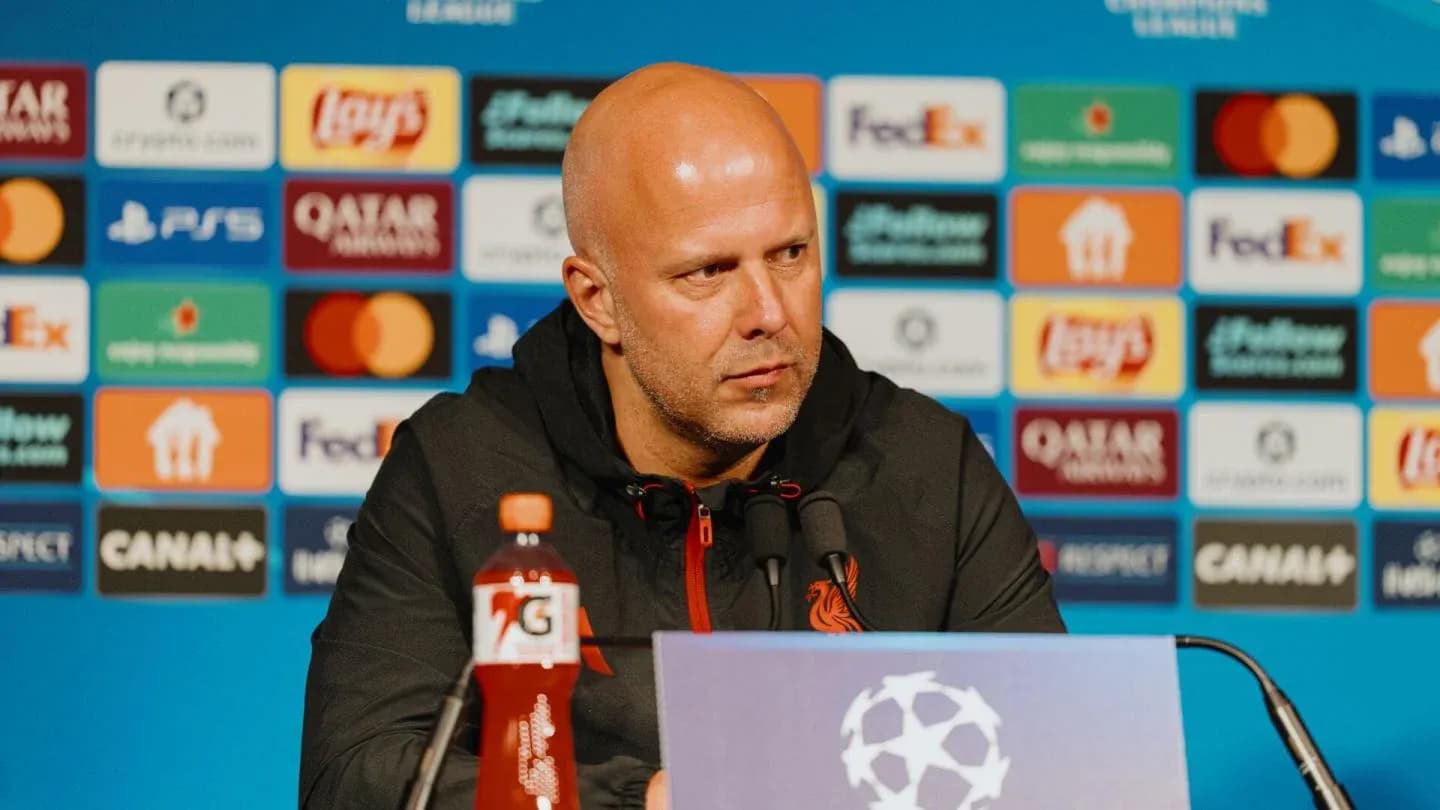
Four days on from a 4-0 humiliation at Manchester City, the Liverpool manager stepped into the bowels of PSG’s stadium and cut straight to the point: his team have had enough warnings. The next one could be fatal.
“We can – as a team – show a strong and firm reaction tomorrow evening,” he said, insisting he saw no players “giving up” even as City cruised at the Etihad. But he knows how quickly a game can run away from them. He has the tape to prove it.
Thirty-five minutes of belief, twenty minutes of chaos
Slot’s confidence, he explained, rests on a very specific slice of football: the first 35 minutes at the Etihad.
Liverpool went toe-to-toe with City in that spell, pressed high, passed with authority, and looked every inch a side that belonged in the last eight of Europe. Then came the punishment.
“Usually in football, moments that hurt you most are just before half-time and just after,” he said. Liverpool lived that cliché in full. Two down by the break. Three down almost immediately after it. City needed just four clear chances to score four times.
Those 20 minutes of disintegration are now the warning label on this entire tie.
“We were able to do very well for 35 minutes,” Slot said. “But I can tell you the 20 minutes we had at City, if we have them tomorrow evening here, we will again concede four goals because these players over here know how to act if we have a 20 minutes of that.”
That is the challenge: 90-plus minutes at PSG’s level, not 35. No blackouts. No spells of panic. Because Paris, he knows, won’t be as forgiving as City were with the ball.
From City’s control to PSG’s suffocating press
Slot drew a clear tactical line between the two opponents. City, he argued, allowed Liverpool periods of controlled possession in Manchester. PSG, under Luis Enrique, will not.
“When we had the control and ball possession in the first 35 minutes, that also had to do with City staying more positional, not going so aggressive towards us,” he said. “Whereas Paris Saint-Germain have shown… that they don't give you any second of time to have the ball comfortably at your feet. It is press, press, press, press, press every second of the game.”
The contrast is stark. At the Etihad, Liverpool’s collapse came from within – a bad 20-minute spell, a series of errors, a loss of structure. In Paris, any hesitation on the ball is likely to be forced from without. PSG’s intensity is a weapon in its own right.
Slot knows this because he’s seen it up close. Last season’s 1-0 Liverpool win here was, in his own words, a freakish outcome. “We deserved to lose here last season 4-0 completely,” he admitted, “much more than we deserved to lose on Saturday 4-0.”
Alisson turned that night into a heist. Donnarumma later did the same in a penalty shootout that pushed PSG towards the trophy. Slot has watched enough of both teams to understand how thin the margins can be.
A club used to setbacks – and comebacks
If there is one thing this Liverpool side have accumulated this season, it is scar tissue. Slot rattled through the mental file.
- The late equaliser conceded at Leeds when they were 3-2 up.
- The stoppage-time blow against Fulham after leading 2-1.
- The long list of dropped points and gut punches that has turned “negativity” into a recurring theme.
“The good thing is that during this year we have become quite experienced in terms of negativity because of all the setbacks we've had this season,” he said. “This was a big one because it was the quarter-final, because it was a big loss, because it was against our rivals. But for me it felt just as bad when we were 3-2 up at Leeds and we conceded in extra-time…”
He didn’t finish the list. There wasn’t time.
What he did lean on, though, was the club’s muscle memory. “The answer lies in the history of Liverpool,” Slot said. “This club has always shown that in tough moments, they stand up again.”
He pointed to the Galatasaray tie as a recent example: poor away, outstanding at Anfield. The pattern is familiar to anyone who has watched Liverpool in Europe over the past decade – fragile on the road at times, ferocious at home.
The task in Paris, then, is clear: survive, compete, and bring the tie back to Anfield with something to chase.
No hiding behind context
Slot refused to dress this quarter-final up with excuses about timing or fixture congestion. When Liverpool came here last season in the Round of 16, they were still alive in the League Cup and lost that final three days after defeat to PSG. The calendar did not soften that blow. It will not soften this one either.
“If you play a quarter-final, it doesn't matter that much where you are in the season,” he said. “We can never take a quarter-final of the Champions League for granted, let alone if you face the champions of Europe that fully deserved to win the Champions League last season and again this season are doing very, very, very well.”
PSG, crucially, have continuity. They kept their core together. Liverpool did not.
“The big difference between these two teams is that Paris Saint-Germain kept the whole group together… and I think our team will look quite different to the team that was here last season,” Slot noted.
The French champions have gone from impressive to, in Slot’s eyes, possibly even more impressive. More rotations. Same control. Same relentlessness.
He doesn’t pretend this tie is anything but a steep climb.
Favourites, fine margins and Donnarumma’s shadow
Does it matter who is favourite? Slot dismissed the label. Over two games, he argued, “a lot can happen”.
He has lived that volatility. Last season, it was penalties that separated these sides. PSG’s triumph in the shootout propelled them towards the trophy. Liverpool were left with the what-ifs.
“Details can decide a lot because who takes penalties best? That is what made the difference last season for Paris Saint-Germain to beat us and then go all the way to win the final,” he said. Donnarumma, he added, “was great”.
Slot still believes you can train for penalties, prepare, control as much as possible. But he also conceded that there is “maybe… a little bit of luck” involved, especially with a goalkeeper in that kind of form.
He is not looking that far ahead this time. Not to another shootout, not to another final. Not even beyond the next week.
“It is first this task tomorrow evening and then on Saturday there's a big game in our stadium against Fulham, and then the next one against Paris Saint-Germain,” he said. Everton away lurks after that. The schedule does not let up. Neither can Liverpool.
Inconsistency laid bare – and a demand
Slot did not dodge the central accusation of Liverpool’s season: inconsistency.
“I cannot debate that; it's completely true that performances and results have been very inconsistent throughout the whole season,” he said. Strong performances against the likes of Real Madrid at Anfield sit alongside collapses like the one at City. Big European nights mixed with those damaging domestic lapses.
“We've had a lot of tough moments and we've stood up a few times but then fallen down again,” he admitted.
That is the cycle he is desperate to break. Not with words in a press room, but with a 90-minute performance that looks more like the first 35 at the Etihad and nothing like the 20 that followed.
Slot still trusts his players’ quality. He also respects PSG’s. “Paris Saint-Germain has a bit of quality as well!” he quipped, a dry understatement that underlined the scale of the task.
Yet his message never strayed far from the same demand: mentality, from first whistle to last. No surrendering of space, no surrendering of rhythm, no surrendering of belief.
Last season, Liverpool walked out of this stadium with a win that felt like a theft. This time, with the champions of Europe waiting and their own form under heavy scrutiny, they may need something even harder to pull off: a performance that proves they still belong among the very best.