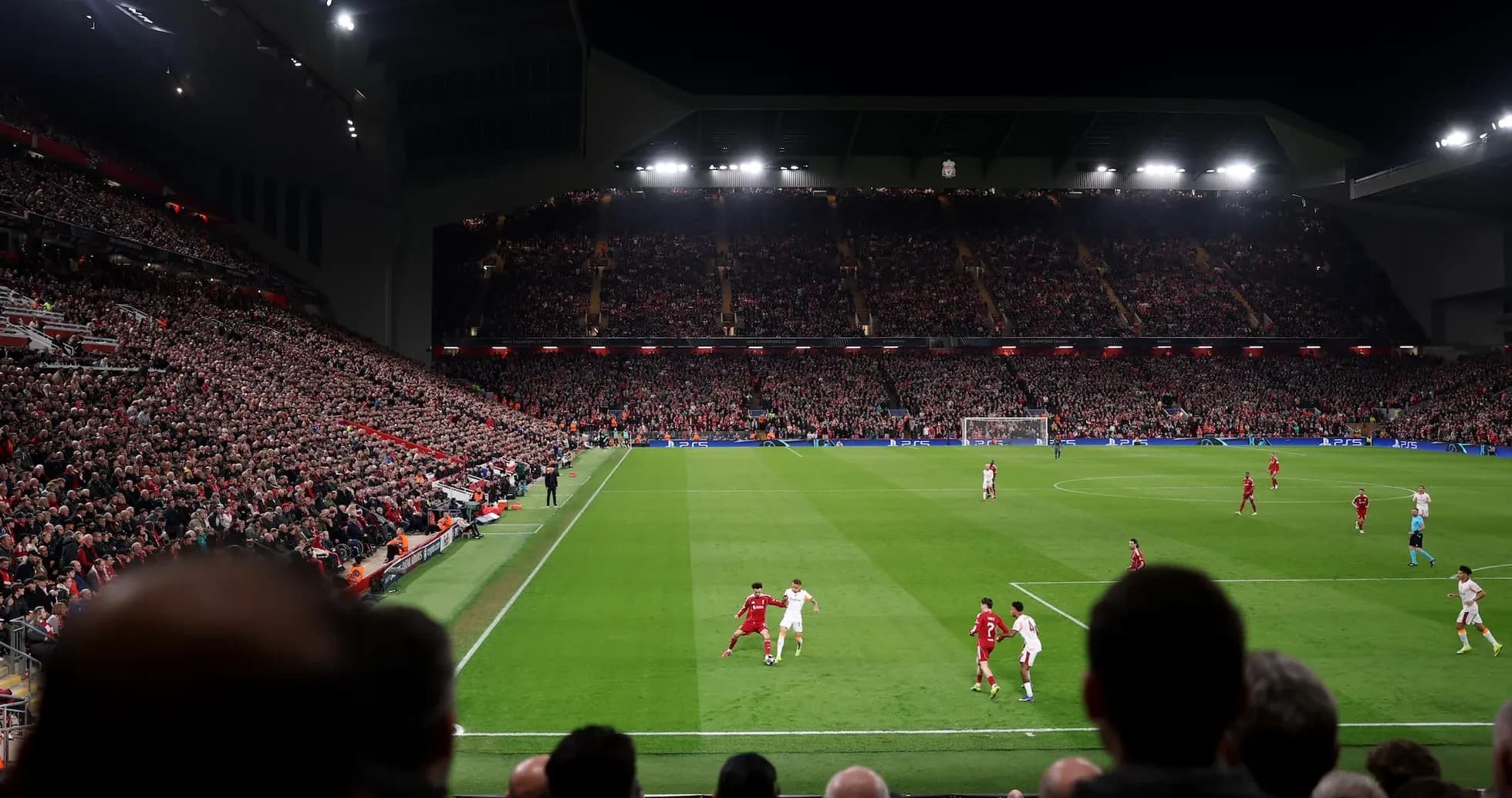
Liverpool vs Galatasaray Tactical Breakdown – UEFA Champions League
Referee: Paweł Raczkowski, Poland
The match is in the second half with Liverpool leading 3–0 (1–0 at the break).
Goals
(All goals from events; total 3, matching the 3–0 scoreline)
- 25' – Liverpool 1–0 Galatasaray - Scorer: Dominik Szoboszlai - Assist: Alexis Mac Allister
- 51' – Liverpool 2–0 Galatasaray - Scorer: Hugo Ekitiké - Assist: Mohamed Salah
- 53' – Liverpool 3–0 Galatasaray - Scorer: Ryan Gravenberch - Assist: none listed in data
- VAR disallowed goal - 57' – Liverpool had a goal disallowed after VAR intervention (“VAR: Goal cancelled”). - This kept the score at 3–0 despite Liverpool briefly thinking they had extended the lead.
- 62' – Liverpool 4th goal on the night in isolation, but 3rd valid in the scoreline - Scorer: Mohamed Salah - Assist: Florian Wirtz
Because of the disallowed goal, the official scoreline remains 3–0, with three valid goals recorded.
Tactical Set‑ups and Initial Game Plan
Liverpool (4-3-1-2, Arne Slot)
- Back four: Jeremie Frimpong – Ibrahima Konaté – Virgil van Dijk – Miloš Kerkez
- Midfield three: Florian Wirtz (left interior) – Ryan Gravenberch (central) – Dominik Szoboszlai (right interior)
- Alexis Mac Allister as the advanced midfielder (nominal “1” behind the strikers) but often dropping to orchestrate.
- Front two: Mohamed Salah (right-leaning forward) and Hugo Ekitiké.
In practice this behaved like a 4-3-3/4-3-1-2 hybrid:
- Frimpong extremely aggressive on the right, providing width.
- Kerkez more balanced on the left, allowing Wirtz to drift inside.
- Mac Allister frequently dropping next to Gravenberch to form a double pivot in build-up, with Szoboszlai pushing higher between the lines.
Galatasaray (4-2-3-1, Okan Buruk)
- Back four: Sacha Boey – Wilfried Singo – Abdülkerim Bardakcı – Ismail Jakobs
- Double pivot: Lucas Torreira – Mario Lemina
- Three behind the striker: Barış Alper Yılmaz – Gabriel Sara – Roland Sallai
- Centre-forward: Victor Osimhen.
Their idea was a compact 4-2-3-1 mid-block, Torreira and Lemina screening the centre, with Osimhen as the outlet for transitions. Wide players (Barış and Sallai) started relatively narrow to protect half-spaces.
Statistical Imprint and Territorial Control
From the match statistics:
- Possession: - Liverpool 62% – 38% Galatasaray
- Shots: - Total shots: Liverpool 32 – 4 Galatasaray - Shots on goal: Liverpool 16 – 1 Galatasaray
- Expected goals (xG): - Liverpool 5.02 – 0.18 Galatasaray
- Goalkeeper saves: - Alisson 1 – Uğurcan Çakır 11
- Passing: - Liverpool: 527 passes, 444 accurate (84%) - Galatasaray: 317 passes, 228 accurate (72%)
- Corners: - Liverpool 6 – 2 Galatasaray
- Fouls: - Liverpool 15 – 7 Galatasaray
Blocked shots (Mirror Rule):
- Liverpool had 6 of their shots blocked by the Galatasaray defense.
- Galatasaray had 1 of their shots blocked by the Liverpool defense.
These numbers underline:
- Full territorial and chance creation dominance by Liverpool, reflected in both volume (32 shots) and quality (xG 5.02).
- Galatasaray reduced to very low shot volume and low xG, indicating they rarely reached meaningful shooting positions.
Liverpool’s Attacking Structure and Patterns
1. Build-up and progression
- With Konaté and Van Dijk comfortable under pressure, Liverpool built in a 2-3 structure:
- CBs: Konaté – Van Dijk
- “3” ahead: Kerkez (narrow), Gravenberch, Frimpong high/inside or Mac Allister dropping.
- Mac Allister’s dropping movement created overloads on the first line and allowed:
- Szoboszlai to push closer to the forwards.
- Wirtz to drift inside as a left half-space playmaker.
This produced:
- Constant central superiority against Torreira and Lemina.
- The ability to circulate quickly from side to side, dragging Galatasaray’s block out of shape.
2. Right-side emphasis and Salah’s role
- Frimpong’s high starting position pinned Jakobs, while Salah played as an inside forward rather than a touchline winger.
- Patterns:
- Vertical passes from Van Dijk or Gravenberch into Salah between the lines.
- Immediate lay-offs to Szoboszlai or Mac Allister, followed by switches to Wirtz on the opposite side.
- The 51' goal (Ekitiké, assisted by Salah) reflects:
- Salah receiving in a pocket, turning or combining, then releasing Ekitiké attacking the channel between full-back and centre-back.
3. Central runners and timing
- Szoboszlai and Gravenberch constantly attacked spaces behind Torreira and Lemina:
- 25' goal (Szoboszlai): - Mac Allister found space to receive and play a line-breaking pass. - Szoboszlai’s run from midfield into the right half-space exploited Galatasaray’s static double pivot.
- 53' goal (Gravenberch): - Follows the same pattern: second-wave runner arriving at the edge of the box or just inside, after the forwards and Szoboszlai occupy the back line.
4. Left-side creativity with Wirtz
- Wirtz often tucked inside, allowing Kerkez to choose his moments to overlap.
- The 62' goal (Salah, assisted by Wirtz):
- Wirtz operating between the lines, likely receiving in the left half-space.
- A vertical or diagonal pass that found Salah in a finishing position, showing Liverpool’s ability to create from both flanks, not just through Salah’s side.
Galatasaray’s Defensive Approach and Problems
1. Mid-block structure
- Base: 4-2-3-1, Torreira and Lemina screening the centre.
- Osimhen tasked with pressing one centre-back while screening passes into midfield.
- The three behind him tried to stay compact, but:
- Liverpool’s numerical superiority in midfield (3+Mac Allister vs 2) repeatedly pulled them out of shape.
- Wirtz and Szoboszlai’s intelligent positioning in half-spaces forced the wide midfielders to choose between tucking in or tracking full-backs.
2. Difficulty defending half-spaces
- Liverpool consistently found pockets between full-back and centre-back:
- Frimpong’s width dragged Jakobs wide.
- Salah’s inside positioning dragged Bardakcı and Singo into uncomfortable zones.
- This led to:
- Late or reactive pressure on ball-carriers.
- Clear shooting opportunities, reflected in the 16 shots on goal and xG 5.02.
3. Box defending and last-ditch interventions
- Despite conceding three, the 6 blocked shots show Galatasaray’s back line and double pivot often had to resort to emergency defending:
- Sliding blocks on the edge of the box.
- Compactness in the central channel, but only after the ball had already entered dangerous zones.
- Uğurcan Çakır’s 11 saves underline that the defensive structure was repeatedly broken before the last line, leaving him exposed.
VAR: Disallowed Goal and Mental Momentum
At 57', a Liverpool goal was disallowed after VAR intervention (“Goal cancelled”).
Tactical and psychological impact:
- Tactically, it showed Liverpool’s continued ability to penetrate Galatasaray’s block even after going 3–0 up.
- Psychologically:
- Brief reprieve for Galatasaray, but the pattern of play remained one-sided.
- Liverpool did not drop intensity; they scored again (Salah at 62') shortly after, confirming sustained control.
Substitutions and Their Tactical Effects
All substitutions described using the required template.
Galatasaray Changes
- 46' – Double change at half-time, signalling a search for more attacking threat and fresh legs.
Tactical effect: - At 46', Leroy Sané came on for Victor Osimhen.
- At 46', Noa Lang came on for Sacha Boey.
- Sané as a more mobile forward/inside winger type, potentially shifting to something closer to a 4-2-3-1 with a false 9 / wide 9.
- Lang’s introduction for a right-back suggests:
- Either a move to a back three in possession with Singo sliding wide.
- Or a very aggressive shape, pushing Lang high to chase the game, risking the flanks defensively.
- 60' – Midfield energy and creativity tweak.
Tactical effect: - At 60', Yunus Akgün came on for Lucas Torreira.
- Sacrificing a pure holding midfielder for a more offensive profile indicates:
- A switch towards a 4-1-4-1 or 4-3-3, with Lemina as the single pivot.
- Attempt to add more ball-carrying and final-third presence, but it further weakened central protection against Liverpool’s midfield runners.
- 73' – Defensive rotation on the left.
Tactical effect: - At 73', Eren Elmalılı came on for Abdülkerim Bardakcı.
- Fresh legs in the back line, possibly moving Jakobs inside or simply rotating the left-sided centre-back/full-back roles.
- With Liverpool already dominant, this was more damage limitation than a structural fix.
- 80' – Attacking substitution with incomplete data.
Tactical effect: - At 80', Mauro Icardi came on for an unspecified Galatasaray player (player not listed in data).
- Adding a penalty-box striker hints at a more direct approach:
- Crosses and long balls to Icardi.
- Sané and Lang supplying width and deliveries.
- However, with Galatasaray producing only 4 shots in total and xG 0.18, the team never established the field position to exploit Icardi’s strengths consistently.
Liverpool Changes
- 67' – Managing energy at right-back.
Tactical effect: - At 67', Curtis Jones came on for Jeremie Frimpong.
- Jones, a midfielder, coming on for an attacking full-back suggests:
- A shift towards greater control and ball retention.
- Possible structural change:
- Gomez staying on the bench means Jones may have slotted into midfield, with someone adjusting wide, or Liverpool temporarily altered their shape to a more conservative right side.
- Functionally, Liverpool could afford to lower the attacking risk on that flank at 3–0.
- 74' – Rotating the star forward.
Tactical effect: - At 74', Cody Gakpo came on for Mohamed Salah.
- Like-for-like in terms of position (forward), but with a different profile:
- Gakpo more comfortable as a carrier and link player.
- This maintained a threat in behind while resting Salah, with the tie largely under control.
- 89' – Triple late change to protect legs and give minutes.
Tactical effect: - At 89', Federico Chiesa came on for Hugo Ekitiké.
- At 89', Trey Nyoni came on for Ryan Gravenberch.
- At 89', Rio Ngumoha came on for Florian Wirtz.
- With the game effectively decided, these changes:
- Preserved key players’ fitness (Ekitiké, Gravenberch, Wirtz).
- Introduced fresh attackers and midfielders to stretch a tired Galatasaray defense.
- Chiesa’s presence in particular maintained vertical threat and wide 1v1 potential, ensuring Liverpool did not completely retreat into a low block.
Defensive Work and Out-of-Possession Shapes
Liverpool
- Out of possession, they often settled into a 4-3-3 pressing shape:
- Salah and Ekitiké leading the line, with one pressing centre-back and the other screening passes.
- Szoboszlai and Wirtz stepping up from midfield to press Galatasaray’s full-backs and pivots.
- The low shot count conceded (4 shots, only 1 on target, xG 0.18) indicates:
- Effective counter-pressing immediately after losing the ball.
- Strong control of central zones by Gravenberch and Mac Allister.
- Van Dijk and Konaté dealing comfortably with any direct balls towards Osimhen and later Icardi.
Galatasaray
- Once behind, their pressing became disjointed:
- Osimhen/Sané sometimes pressing alone without support from the second line.
- Gaps opened between the front and midfield lines, exploited by Mac Allister’s dropping and Szoboszlai’s runs.
- Their 7 fouls compared to Liverpool’s 15 show:
- They were often too late to apply intense pressure high up.
- Liverpool were more proactive in stopping transitions early.
Verdict: Where the Tie Stands and Statistical Edge
Based on the available match data (treated as “overall this season” for this fixture):
- Liverpool’s 3–0 lead at Anfield is fully supported by:
- Massive shot and xG superiority (32 shots, xG 5.02 vs 4 shots, xG 0.18).
- Territorial dominance (62% possession, higher passing volume and accuracy).
- Repeated penetration of Galatasaray’s block (16 shots on goal, 6 more blocked).
- Galatasaray’s structure:
- Could not cope with Liverpool’s midfield overloads and half-space occupation.
- Offered limited attacking threat despite introducing Sané, Lang, Akgün, and Icardi.
From a tactical and statistical standpoint, Liverpool hold a clear and deserved advantage in this 1/8 final tie, combining structural superiority, individual quality in key zones, and a sustained ability to create high-quality chances while conceding almost none.