Liverpool's Managerial Gamble: The Alonso Dilemma
Liverpool did not just sack a manager. They detonated a debate that will run all summer.
Arne Slot, the man who delivered a Premier League title in his first season, is out after a fifth-place finish in his second. On its own, that is a ruthless but recognisable decision from a club with elite ambitions. It is the timing that has left Anfield restless.
Because the Xabi Alonso train has already left the station.
Alonso Missed, Questions Multiply
Earlier this year, Alonso walked away from Real Madrid and, for a brief window, the stars seemed to align. A former Liverpool midfielder, adored on the Kop, fresh from an impressive spell at Bayer Leverkusen and with heavyweight experience behind him. The links were strong, the narrative irresistible.
He chose Chelsea. Liverpool chose to stand by Slot.
Only weeks later, Fenway Sports Group pulled the plug on the Dutchman, and that sequence of events now hangs over the club’s hierarchy like a cloud. If there was even a flicker of doubt about Slot’s long-term suitability, why not move for Alonso when he was free and willing to talk?
That is the crux of Jamie Carragher’s frustration.
Speaking on The Overlap, the former Liverpool defender did not bother to sugar-coat his view of the club’s strategy, and of sporting director Richard Hughes in particular. Alonso, he argued, was not just an option. He was the option.
“I would have changed him (Slot) for Xabi Alonso,” Carragher said. “As soon as he went to Chelsea, I was thinking that I would keep Slot.”
He then laid out why the Spaniard, in his eyes, should have been irresistible: the way he elevated Florian Wirtz at Leverkusen, the glittering playing career, the elite coaches he learned under, and his exposure to the intensity of Real Madrid.
“With Alonso, you have an incredible playing CV, the managers he has been coached by. What he did at Leverkusen. He has managed Real Madrid. I know it didn't go well, but he is used to that pressure and scrutiny.”
The implication was clear. If Liverpool were going to roll the dice, this was the man worth gambling on. Instead, they waited, watched him commit to Stamford Bridge, and only then decided Slot was no longer the future.
Iraola on the Horizon, Doubts on the Table
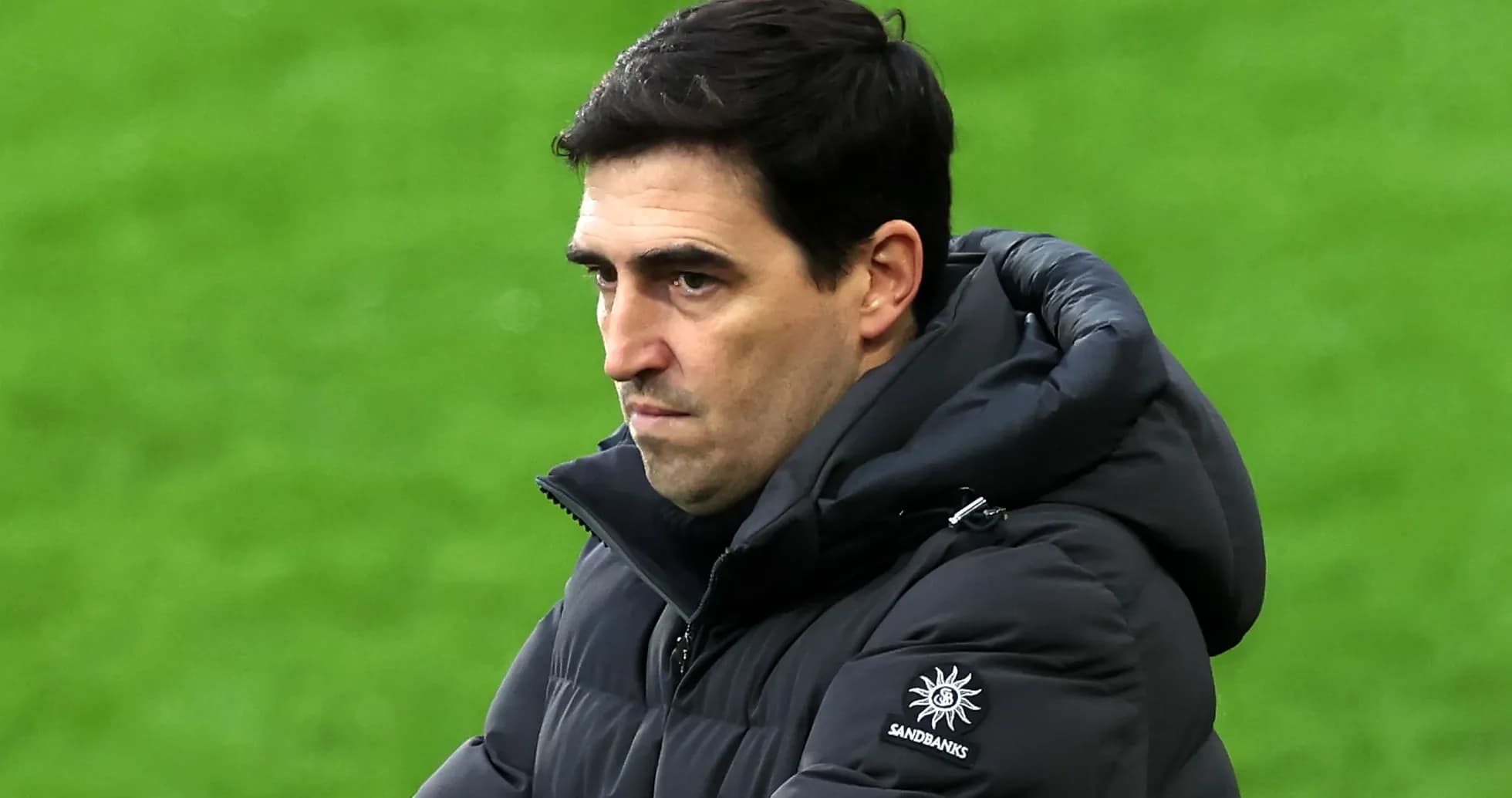
Now the focus shifts to Andoni Iraola, the man widely tipped to inherit the Anfield hot seat. On paper, he fits the modern template: aggressive, front-foot football, a coach who relishes chaos and intensity. His work at Bournemouth, where he navigated the loss of key players and still moulded a competitive side, has not gone unnoticed.
Yet Carragher sees red flags. Not about Iraola’s talent, but about the fit.
Iraola’s philosophy demands a specific type of squad – legs, lungs, and relentless pressing from front to back. Liverpool’s current group was built for different iterations of high-energy football, but not necessarily this extreme version. There is a difference between a side that presses and a side that lives permanently on the edge.
“If Liverpool chose Iraola over Alonso, it is very worrying for Liverpool,” Carragher warned. “If it is because Alonso wants to play a back three, or his style of play, fair enough. But I am not sure Liverpool has the players to play Iraola's high-pressing game.”
That is not a casual concern. It goes to the heart of squad construction and identity. Do Liverpool have the personnel to instantly mirror Iraola’s demands, or will they need a major overhaul just to give the new manager a fair shot?
A Summer of Upheaval
Slot’s dismissal is only the start. This is a summer that will reshape Liverpool from touchline to training pitch.
Mohamed Salah has already gone, leaving a gaping hole on the right wing and a brutal recruitment challenge: find a world-class replacement in a market where everyone knows you are desperate. At the same time, an entirely new backroom staff must be assembled.
Slot’s exit takes assistants Sipke Hulshoff, Giovanni van Bronckhorst, and Ruben Peeters with him, stripping away the existing support structure and leaving a bare framework for the next coach to rebuild. That kind of churn is destabilising even in the best-planned transition.
Iraola has shown he can handle turbulence. At Bournemouth he coped with the departure of key players and still imposed his ideas. But the stakes at Anfield are different. Every tactical tweak is dissected, every selection questioned, every dip in form amplified across the globe.
Liverpool have chosen a brutal moment to reset. They have let a favourite son in Alonso slip away, parted with a title-winning coach weeks later, and are now preparing to hand the reins to a manager whose style may demand surgery on the squad.
The club insists this is a calculated evolution. The supporters, and Carragher among them, are entitled to ask: is it a masterplan – or a gamble that could define the next decade on Merseyside?