Liverpool vs Paris Saint Germain: Tactical Inversion in Champions League Quarter-Final
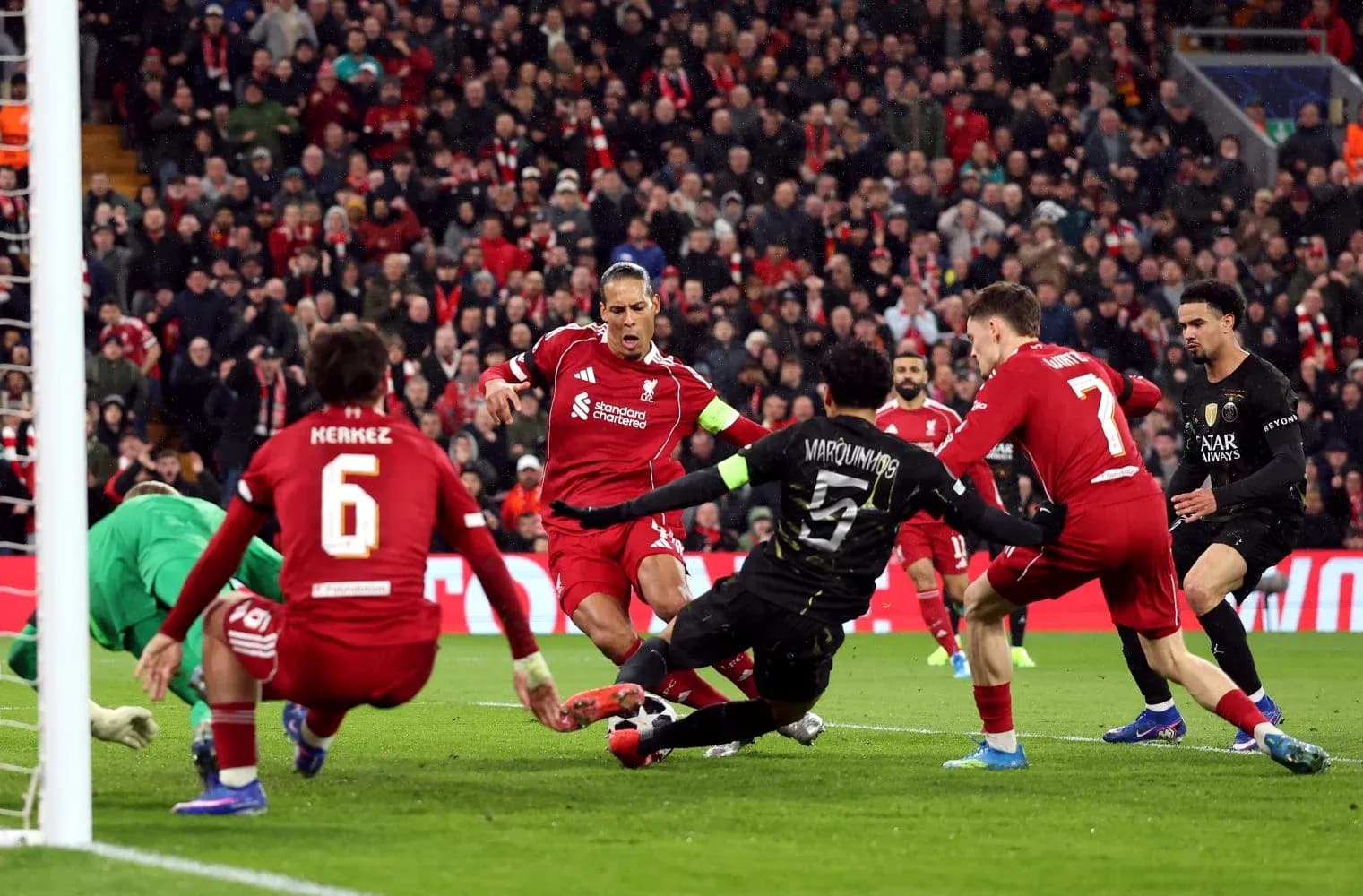
Anfield under lights, the Champions League anthem drifting into a cool Liverpool night, and a quarter-final that finished with a jolt rather than a roar. Following this result, Liverpool’s 2–0 home defeat to Paris Saint Germain felt like a tactical inversion of their seasonal identities: the English side blunted and imprecise, the French champions cold, efficient and ruthless.
I. The Big Picture – Styles Colliding, Hierarchies Reordered
Heading into this game, Liverpool had carved out a distinctly front-footed European profile. In total this campaign they had played 12 Champions League matches, winning 7 and losing 5, with no draws – a high-variance, high-intensity trajectory. At home, they were scoring an average of 2.5 goals per match and conceding 1.3; across all venues, 24 goals for and 13 against underlined an aggressive, risk-embracing approach. Their group-stage work had earned them 18 points and 3rd rank in the competition’s wider standings, with a goal difference of +12 (20 scored, 8 conceded) in that phase.
Paris Saint Germain arrived as a different kind of heavyweight. Across 14 Champions League fixtures, they had been more balanced and controlled: 9 wins, 3 draws, just 2 defeats. On their travels they averaged 2.6 goals for and 1.0 against; overall, 38 scored and 17 conceded for a goal difference of +21. Their 11th place in the broader table, with 14 points and a +10 goal difference (21 for, 11 against) from the primary phase, hinted at a side that had grown into the competition rather than dominated it from the outset.
The final scoreline at Anfield – Liverpool 0, Paris Saint Germain 2 – flipped the expected script. The home side, used to overwhelming visitors, were instead methodically dismantled by a PSG team that married their attacking firepower with an increasingly mature defensive structure.
II. Tactical Voids – Absences That Bent the Game
Liverpool’s team sheet carried a quiet but significant story. Alisson’s muscle injury meant that the European campaign rested in the gloves of G. Mamardashvili, a high-quality goalkeeper but not the long-standing reference point of the back line. In front of him, the injuries to S. Bajcetic, C. Bradley and W. Endo, plus the inactivity of H. Davies and R. Williams, stripped away some of the squad’s rotational depth and, crucially, its options for a natural holding midfielder.
Arne Slot’s choice of a 4-2-3-1 with R. Gravenberch and D. Szoboszlai as the double pivot was bold but exposed. Without Endo’s screening presence, Liverpool leaned into technical control rather than pure protection. That left I. Konate and V. van Dijk guarding a lot of space against one of Europe’s most fluid front threes.
PSG’s absences were fewer but still notable. F. Ruiz (knee injury) and Q. Ndjantou (muscle injury) reduced midfield depth, yet Enrique Luis could still roll out his preferred 4-3-3 with a full-strength core: J. Neves, Vitinha and W. Zaire-Emery in midfield, behind a front line of D. Doue, O. Dembele and K. Kvaratskhelia.
Disciplinary patterns across the season hinted that the game might tilt in terms of control. Liverpool’s yellow cards cluster between 46–60 minutes (25.00%) and 31–45 plus added time (18.75%), suggesting a side that often ramps up aggression as halves close or restart. PSG, by contrast, see 37.50% of their yellows in the 76–90 window, with another 25.00% between 16–30, reflecting a team that can become cynical late on but usually keeps its shape early.
On the night, it was Liverpool who felt more ragged, their usual emotional surge never quite converting into sustained pressure.
III. Key Matchups – Hunter vs Shield, Engine Room vs Enforcer
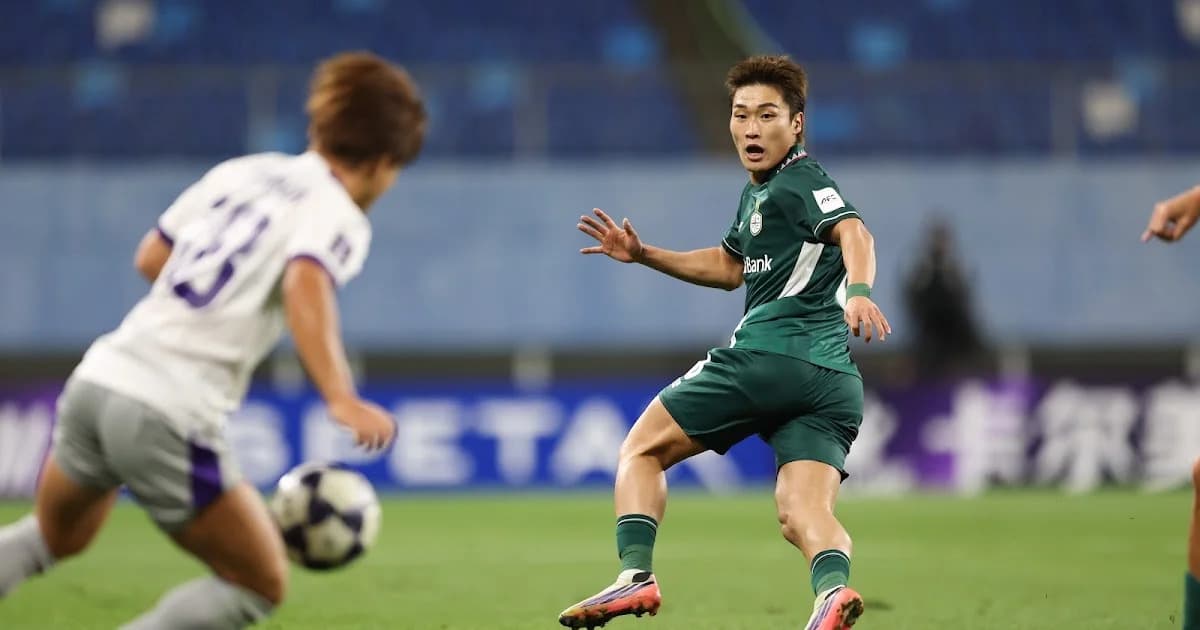
The defining duel of this tie was always going to be PSG’s top scorer and creator against Liverpool’s defensive shield. K. Kvaratskhelia came into the quarter-final as one of the competition’s elite attackers: 8 goals and 5 assists in 13 appearances, with 26 shots (14 on target) and 16 key passes. His dribbling volume – 38 attempts with 19 successful – made him the natural “Hunter” in this narrative.
The “Shield” was not just V. van Dijk and I. Konate, but the entire Liverpool defensive ecosystem. In total this campaign they had conceded only 13 goals in 12 matches, with 5 clean sheets and a home average of 1.3 goals against. Their best European performances had come when the double pivot could compress the middle, allowing the centre-backs to dominate aerially and in duels.
Yet the 4-2-3-1 shape, with F. Wirtz, H. Ekitike and A. Mac Allister all looking to receive between the lines, meant Liverpool’s midfield often had more creative than destructive instincts. PSG’s left-sided triangles – N. Mendes, Kvaratskhelia and Vitinha drifting over – repeatedly asked Konate and J. Frimpong to defend wide and deep, stretching Liverpool’s compactness.
In the engine room, the contrast was even sharper. Vitinha, with 6 goals and 1 assist across 14 matches, is not a classic destroyer but a tempo dictator: 1,463 passes at 93% accuracy and 16 key passes. Opposite him, D. Szoboszlai carried Liverpool’s dual burden of creator and presser: 5 goals, 4 assists, 30 key passes and 23 tackles in 12 appearances. The Hungarian’s ability to step out and engage PSG’s midfield met a trio who were comfortable playing through pressure.
Without a natural holding midfielder, Liverpool’s “enforcer” role became a shared responsibility – and that diffusion hurt them. PSG could overload either half-space, safe in the knowledge that the central block behind them was stable.
IV. Statistical Prognosis – Why 0–2 Felt Inevitable as the Game Wore On
From a season-long perspective, PSG’s attacking metrics suggested that if they weathered the early Anfield storm, the tie would swing their way. On their travels they average 2.6 goals for and 1.0 against, with 3 away clean sheets and only 1 match in which they failed to score. Liverpool, for all their home scoring power, had already failed to score once at Anfield in Europe and had lost 2 of 6 home fixtures.
The expected goals story, even without explicit xG numbers in the data, can be inferred from patterns. PSG’s front three combine volume and efficiency: Kvaratskhelia’s 14 shots on target from 26 attempts, Doue’s 8 on target from 12, and Dembele’s constant threat stretching back lines. Behind them, Hakimi’s 21 key passes and 5 assists from right-back add a second-wave danger that few sides can match.
Defensively, PSG’s 17 goals conceded in 14 matches – an average of 1.2 overall and 1.0 on their travels – reflect a unit that bends but rarely breaks. Marquinhos and W. Pacho, shielded by Neves and Zaire-Emery, were well-equipped to handle A. Isak’s movement, especially once Liverpool were forced to chase the game and stretch their own structure.
Following this result, the numbers and the narrative align. Liverpool’s high-risk, high-reward European profile finally collided with a side capable of matching their attacking ceiling while operating with greater defensive control. The 2–0 scoreline at Anfield was not just a one-off blow; it was the logical outcome of a quarter-final where PSG’s balance, depth and star power – epitomised by Kvaratskhelia and Vitinha – found their full expression against a Liverpool team missing its anchor and, on the night, its usual ferocity.