Liverpool W vs Arsenal W: FA WSL Late-Season Clash
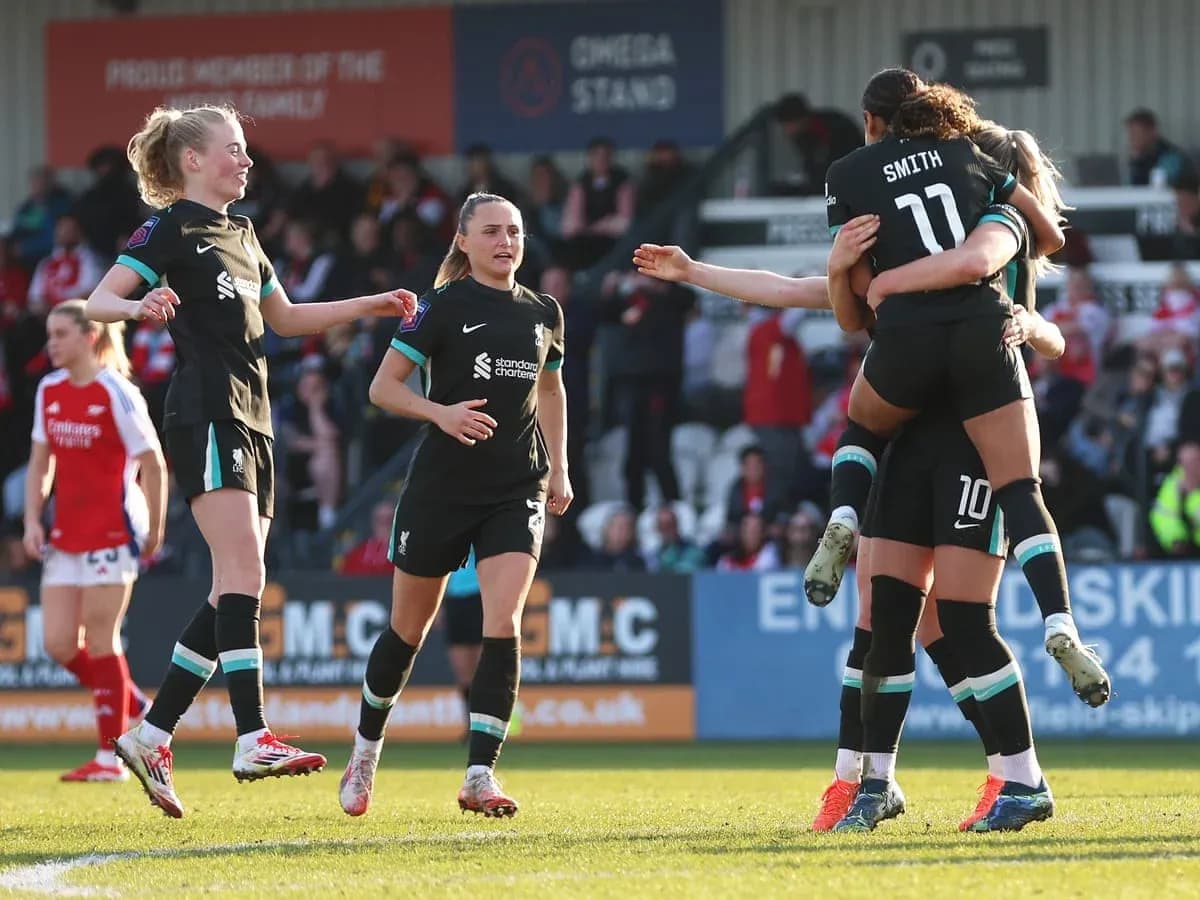
Liverpool W host Arsenal W at Anfield in a late‑season FA WSL fixture that carries very different stakes for each side: Liverpool sit 11th with 17 points and a -11 goal difference in the league phase (20 scored, 31 conceded), still needing to secure safety, while Arsenal arrive 3rd on 45 points with a +36 goal difference (49 scored, 13 conceded) and are protecting their Champions League qualification position and any outside title hopes.
Head-to-Head Tactical Summary
The recent head-to-head record is tilted towards Arsenal but with a notable Liverpool upset. On 6 December 2025 at Emirates Stadium in the FA WSL (Regular Season - 10), Arsenal beat Liverpool 2-1, having been level 1-1 at half-time. Earlier in the 2025 calendar year, on 22 March 2025 again at Emirates Stadium in the FA WSL (Regular Season - 17), Arsenal recorded a 4-0 home win, leading 3-0 at half-time. In the FA Women's Cup quarter-finals on 9 March 2025 at Mangata Pay UK Stadium, Liverpool produced a 1-0 away win after a 0-0 first half, showing they can execute a compact cup game plan against this opponent. Looking further back in league play, Arsenal have taken two away wins: 1-0 at St Helens Stadium on 15 December 2024 (Liverpool W vs Arsenal W, half-time 0-1) and 2-0 at Prenton Park on 28 January 2024 (half-time 0-0). Overall, Arsenal have dominated league meetings, while Liverpool’s single 1-0 cup win illustrates that a low-scoring, defensive approach can disrupt Arsenal in knockout-type scenarios.
Global Season Picture
- League Phase Performance: In the league phase, Liverpool W are 11th with 17 points from 21 matches, scoring 20 and conceding 31. Their home record is more stable (3 wins, 3 draws, 4 losses, 12 goals for, 12 against) than their away form. Arsenal W are 3rd with 45 points from 20 matches, with 49 goals for and 13 against, reflecting a high-output attack and a very controlled defense. Away from home they have 6 wins, 3 draws and just 1 loss, with 22 goals scored and 7 conceded.
- Season Metrics: In the league phase, Liverpool’s numbers point to a fragile balance: they average 1.0 goals scored and 1.5 conceded per match (20 for, 31 against over 21 games), with 9 matches where they failed to score and only 4 clean sheets, underscoring an inconsistent attack and a vulnerable defense. Their disciplinary profile shows yellow cards clustered late (61–75 and 91–105 minutes), indicating rising defensive stress phases. Arsenal, in the league phase, average 2.5 goals scored and 0.7 conceded per match (49 for, 13 against over 20 games), with 10 clean sheets and only 3 games without scoring, supporting the view of a dominant two-way side. Their card distribution is more evenly spread, with a slight increase in the final 30 minutes, consistent with sustained pressing rather than desperate defending.
- Form Trajectory: In the league phase, Liverpool’s current form string “LLWDW” signals volatility but some late-season resilience: two wins in the last five mixed with three defeats, which is just enough to keep them in touch with safety but not secure. Arsenal’s “WDWWW” shows a strong upward curve: four wins and one draw in the last five, matching their season-long consistency and suggesting they are finishing the campaign with momentum rather than fatigue.
Tactical Efficiency
In the league phase, Liverpool’s efficiency profile is that of a reactive side: a goal difference of -11 (20 for, 31 against) over 21 matches and frequent failures to score indicate that when they open up, they struggle to outscore opponents, and when they sit deep, they often lack the transition punch to turn defensive work into goals. The distribution of their formations (notably repeated use of 4-1-4-1 and 4-2-3-1) aligns with a mid-block approach that can congest central zones but still concedes 1.5 goals per game, suggesting that their defensive structure is being broken by higher-quality attacks rather than pure tactical naivety.
Arsenal’s league-phase numbers (49 scored, 13 conceded) point to a highly efficient attack-defense balance: they convert territorial dominance into goals at a rate of 2.5 per match while allowing only 0.7, and their 10 clean sheets show that their pressing and rest-defense mechanisms are robust. Against Liverpool specifically, recent league results of 2-1, 4-0, 1-0 and 2-0 underline a recurring pattern: Arsenal generally control chance volume and convert it, while limiting Liverpool to sparse opportunities. The outlier is Liverpool’s 1-0 FA Women's Cup away win, which demonstrates that if Liverpool can compress space and keep the game low-event, Arsenal’s attack can be blunted, but that approach has not yet translated into league success. Heading into Anfield, the comparative efficiency strongly favors Arsenal sustaining pressure and creating multiple scoring situations, while Liverpool’s best route lies in replicating the cup template: compact shape, low risk, and maximising set-pieces and transitions.
The Verdict: Seasonal Impact
From a seasonal standpoint, this fixture is close to must-not-lose territory for Liverpool W and high-stakes for Arsenal W’s ambitions above 3rd place. A Liverpool win would be a major safety step: it would push them further from the relegation zone in the league phase and provide a signature result against a top-three side, reinforcing belief in a pragmatic, low-risk game model that has already worked once in the FA Women's Cup. Even a draw would be valuable, adding a point against elite opposition and keeping their negative goal difference from worsening, which could matter in tight survival calculations.
For Arsenal, anything short of a win would damage both their Champions League qualification security and any residual title aspirations. With 45 points from 20 matches and such a dominant goal difference, they are on a trajectory that assumes victories in fixtures like this; dropping points at Anfield would open the door for rivals to close the gap and could force them into a more pressurised run-in. A win, by contrast, would consolidate their top-three status, maintain pressure on the sides above them, and confirm that the FA Women's Cup defeat was an anomaly rather than a tactical blueprint for others. In forward-looking terms, this match profiles as a potential inflection point: for Liverpool, a result here can reframe the narrative from survival anxiety to controlled escape; for Arsenal, it is a test of whether their season-long efficiency can be translated into the ruthless accumulation of points required for sustained title and Champions League contention.