Liverpool’s Rebuild After Salah: Jacquet Deal Done
Liverpool have made the first move. The agreement for Jeremy Jacquet, the highly rated centre-back from Rennes, is already in place and will kick in this summer. It’s a smart, proactive step from a club that knows the scale of what’s coming.
Because this is not a tweak. It’s a reset.
A defence that has conceded more than 50 Premier League goals needs reinforcing. A forward line is about to lose Mohamed Salah, one of the greatest players in the club’s modern history. Andy Robertson is heading for the exit. Alisson could follow. Ibrahima Konaté has not yet committed his future. For a team that spent a record £446m last summer and will push well beyond half a billion with Jacquet’s £60m arrival, the bill for the next phase could again run into hundreds of millions.
And yet, they have no choice.
Defence: Jacquet in, Konaté question, full-back puzzle
Jacquet’s signing gives Liverpool a new anchor at the back. The Frenchman is expected to grow into a central role and, in time, help lead a line that has been far too porous this season. He could also soften the blow if Konaté were to leave.
Inside the club, though, there is still quiet confidence that Liverpool’s No. 5 will eventually sign fresh terms rather than walk away for nothing. If that happens, the urgency to spend big again at centre-back eases. Virgil van Dijk is staying. Giovanni Leoni is on track to return from injury later in the summer. With Jacquet added to that mix, the spine suddenly looks less fragile.
The wider areas are more complicated.
On the right, Conor Bradley is unlikely to feature until next year. That leaves Jeremie Frimpong and Joe Gomez as options, both talented but both with injury records that demand a contingency plan. Liverpool cannot afford to be in a position where Curtis Jones or Dominik Szoboszlai are dragged out of midfield to plug gaps at full-back. Another right-sided defender would not be a luxury; it would be protection for the structure of the team.
On the left, Robertson’s departure looms large. The Scot has been a defining presence for years, and replacing his energy and consistency is no small task. Yet Liverpool may already have their solution in-house. Kostas Tsimikas, set to return, and last summer’s signing Milos Kerkez could share the role, reducing the need for another expensive foray into the market on that side.
Midfield depth vs. doubts
In the centre of the pitch, numbers are not the problem.
If nobody leaves and if Jones and Szoboszlai are allowed to stay where they belong, Liverpool have enough bodies to get through a season. The question is quality, not quantity. Several midfielders have endured difficult campaigns, and Alexis Mac Allister’s level has come under scrutiny after a stuttering year.
But with so much to do elsewhere, the club may decide that this is an area to park for now. The money and attention will be dragged towards the flanks and the back line, where the gaps are glaring and the stakes higher.
Life after Salah: no single saviour
Out wide, the situation is stark.
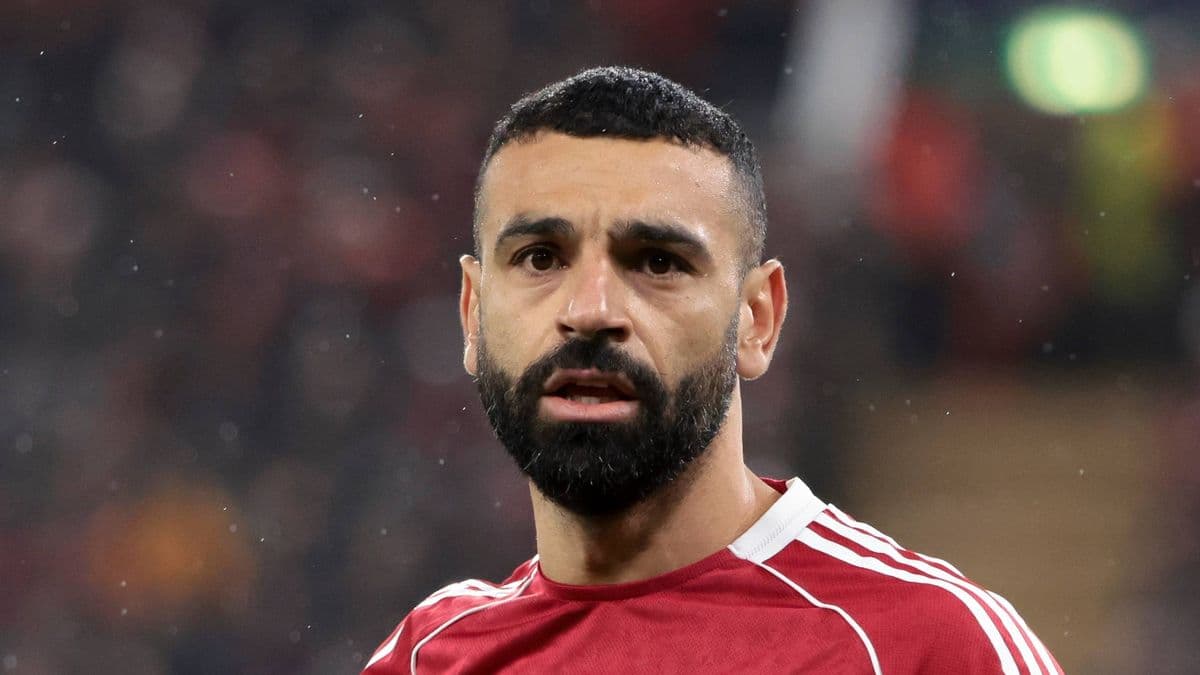
Salah is going. There is no like-for-like replacement, no one player who can simply be dropped into his position and expected to deliver a decade of goals, assists, and moments that define seasons. Rio Ngumoha has offered flashes of promise, but he is still a teenager. Throwing him the keys to the right wing at this stage would be unfair on him and reckless for Liverpool.
The solution has to be shared responsibility. Spread the goals, share the threat, build an attack that does not lean so heavily on one man. That is the only realistic path.
Liverpool know where to look. They have shopped at RB Leipzig before, and the German club’s current squad again offers intriguing options. Antonio Nusa and Yan Diomande stand out as players who could be prised away. A combined outlay of around £150m might be enough, with the majority of that sum likely needed to land the Ivory Coast international.
Nusa and Diomande bring youth, pace, and upside. They fit the profile of a Liverpool front line built for the next cycle. But they are 21 and 19. Talented, yes. Ready to shoulder the full weight of replacing Salah? No. Asking them to do that alone would be as unrealistic as expecting Ngumoha to carry the torch.
Which is where a more established name enters the frame.
Barcola and the £300m question
Bradley Barcola would change the picture. Already a Champions League winner with Paris Saint-Germain and still young enough to grow, he offers something Liverpool badly need: proven big-game temperament and versatility.
Barcola can operate wide or drift into central areas, just like Nusa. That flexibility would be vital next season as Liverpool juggle a reshaped attack. The article’s reference to easing the burden on Alexander Isak with Hugo Ekitike injured clearly belongs to another club’s situation, but the principle holds at Anfield: Liverpool must protect their main forwards from being run into the ground.
Bringing in Barcola would not be cheap. A fee in the region of £70m would take Liverpool’s total outlay for this rebuild to around £300m once Jacquet is factored in. That is a staggering figure, even by modern standards, but it would go a long way towards covering their most urgent attacking needs.
Jacquet to fortify the back line. A new right-back to stabilise the shape. Tsimikas and Kerkez to fight it out on the left. A midfield trusted, for now, to respond. Nusa, Diomande, and potentially Barcola to share the load in the post-Salah era.
Liverpool have made their first move. The next few will decide whether this is a gentle transition or the start of a brutal, expensive scramble to stay among the elite.