Liverpool’s Transfer Strategy and World Cup Highlights
Liverpool’s accountants will not be popping champagne for this one, but the headlines would have you believe otherwise.
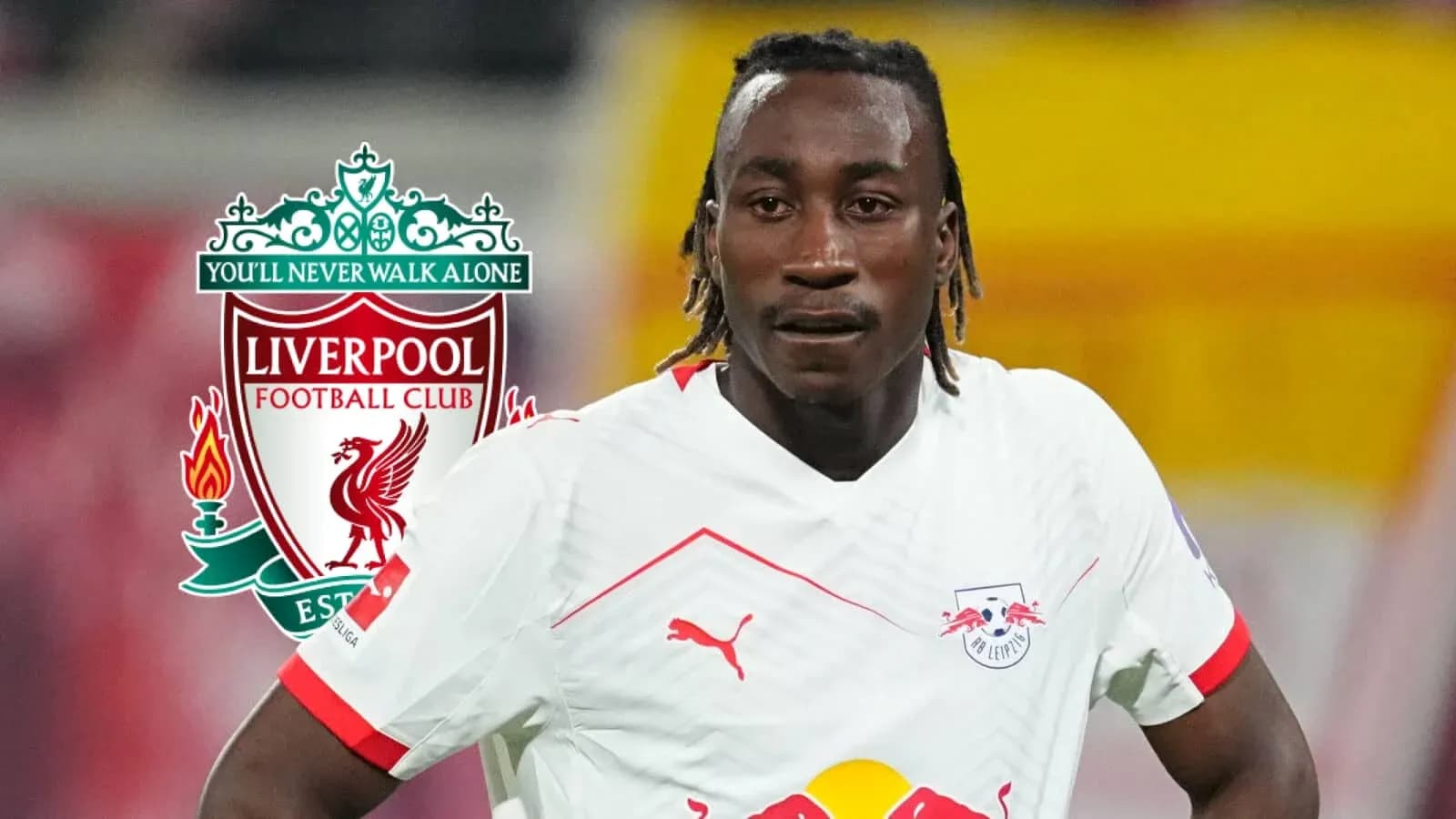
Somewhere between a World Cup singalong, England’s slushie machine and a manufactured Mo Salah “row”, a fairly routine sell-on clause has been dressed up as a transfer masterstroke that will supposedly nudge Liverpool towards Yan Diomande.
It won’t. Not really.
Wonderwall, again
The World Cup build-up has already produced its first nostalgia play. The Sun splashed on Noel Gallagher “backing” a campaign to make Wonderwall England’s official anthem.
The reality? Gallagher offered a polite blessing and a shrug.
“Wonderwall belongs to the people, and it was a magical moment between the people and the players. Best of luck to everyone who’s made the trip out there,” he said. Warm words, yes. A front-page crusade, hardly.
The supporting cast only underlined the thinness of the story. Rob Rinder and Olly Murs were rolled out as celebrity ballast, both calling for the song to soundtrack England’s campaign. If that’s the A‑list driving a “clamour”, the campaign might need a late fitness test.
Slushies and “Jordan Ice Pickford”
The real “exclusive” in The Sun came from England’s base in Kansas, where Tom Barclay revealed the presence of slushie machines at the Swope Soccer Village.
We were even given a primer on what a slushie is – crushed ice, flavoured syrup, and in England’s case, electrolytes for recovery – as though no reader had ever walked past a corner shop.
Each day, players are offered two flavours. Blueberry, raspberry, and a mysterious green option “believed to be either apple or lime” have all featured. Even the colour of the ice has a name attached.
The drinks are rebranded daily with player puns: “Jordan Ice Pickford”, “Ice, Rice Baby”, “Freeze James”, “Jarell Thirst Quencher”, “Dan Brrrrrrn”, “Eberrrrrechi Eze”, “Ice Lolly Watkins”, “Marcus Rashberry”, “Cold Trafford” for James Trafford, and “Bluekayo Saka” when the mix turns blue.
It is light, almost painfully so, but it tells you plenty about the modern tournament news cycle: if there is no drama, the ice machine will do.
The Mo Salah “dig” that wasn’t
On the pitch, the stories carry more weight. Egypt recorded their first ever World Cup win, and Mohamed Salah became his country’s record scorer at the tournament. It should have been a straightforward celebration.
Instead, one headline on the Mirror’s website led with: “Egypt manager breaks down in tears and makes sly Mo Salah dig after World Cup heroics.”
The implication was clear: a swipe at the Liverpool forward just as he hit another historic landmark. The reality was different.
Hossam Hassan’s comments were interpreted as criticism not of Salah, but of how some previous coaches have used him. The Mirror itself acknowledged it was “a dig, seemingly, at the mishandling of Liverpool icon Mohamed Salah,” directed “towards some of the tacticians that have had Salah at their disposal.”
So the “sly Mo Salah dig” turned out not to be aimed at Salah at all. Yet the line remained, because Salah’s name in conflict still sells.
Liverpool’s “clever transfer trick”
Then to Liverpool, and a headline from the Daily Express that promised financial ingenuity: “Liverpool’s clever transfer trick pays off as medical takes place today.”
It sounded like a coup. Another stroke from the data-driven brains that brought in the likes of Mohamed Salah, Alisson and Virgil van Dijk. A move that would “bank a significant sum” and, we were told, might help in the chase for Yan Diomande.
Strip away the drama, and the story is straightforward. Bobby Clark is set to join Derby County for £6m. Liverpool, who previously held his registration, inserted a 17.5 per cent sell-on clause. That “clever transfer trick” will bring them just over £1m.
In isolation, it is smart business. A homegrown player moves on, and a club that trades well gets rewarded for its foresight. But “significant sum” is doing heavy lifting here.
The piece eventually admits as much: “While not a huge amount of money in the grand scheme of things, it will represent a welcome boost for Liverpool as they go in search of reinforcements in the summer market.”
One-hundredth of a Diomande, perhaps. Useful, yes. Transformative, no.
Lineker, the BBC and the “last laugh”
Away from the transfer market, The Sun’s website turned to the podcast battle between the BBC and Gary Lineker, declaring: “BBC have last laugh as ratings in podcast war vs Gary Lineker revealed.”
The numbers tell a more nuanced story. Lineker, fresh from signing a £14m Netflix deal, has been drawing over 100,000 daily viewers for his show, filmed in New York and built around conversations with familiar faces from the game.
The BBC’s Football Daily podcast, by contrast, has hit “a peak of nearly 250,000 daily streams” with episodes “regularly bringing in more than 100,000 viewers on iPlayer alone.”
Strong figures, and a reminder of the BBC’s reach. But the idea of a “last laugh” in a landscape where both products are thriving feels forced. This is not a war; it is an ecosystem where multiple shows can flourish.
Neville, Maguire and England’s back line
Finally, to Phil Neville, who offered a blunt assessment in The Times: “Harry Maguire couldn’t play in this side – Tuchel was right to ditch him.”
The argument sits beneath a standfirst that explains Gareth Southgate’s thinking: England’s head coach wants “only fast, athletic centre backs who can defend man-to-man,” a sharp contrast, it is claimed, to Manchester United’s compact, counter-attacking approach.
That tactical divide has shaped selection. Maguire, once a cornerstone for club and country, now watches as others step in. The line about pace and athleticism jars slightly when you look at some of the names involved – Dan Burn and John Stones are hardly sprinters – but the principle is clear.
England want defenders who can hold a high line, defend wide spaces and recover when the press breaks. Maguire, for all his strengths, no longer fits that profile in the eyes of his managers.
From slushie flavours to sell-on clauses, the game’s fringes keep filling columns while the real questions – about how England will defend in knockout football, how Liverpool reshape around Salah’s timeline, how clubs actually fund the next Diomande – wait for sharper scrutiny.