Luca Zidane: A New Chapter in Football's Famous Surname
The name on the back of the green shirt did what names sometimes do in football. It stopped people in their tracks.
Zidane.
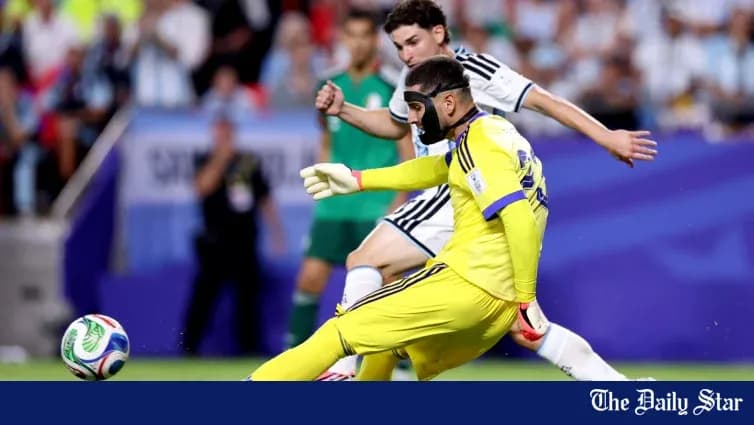
For a split second, memories rushed in: the balletic volley in 2002, the drag-backs, the 1998 World Cup trophy raised under Parisian floodlights. But this was not Zinedine gliding through a midfield. This was Luca Zidane, his son, standing alone in the penalty area, masked and braced, guarding Algeria’s goal against the reigning world champions.
No. 1, not No. 10. Same surname. Very different stage.
A famous name, a different flag
Luca Zidane is 28 now, long past the point where he is simply “Zizou’s kid” in academy systems. Born in France, shaped in Spain during his father’s years at Real Madrid, he has taken a route that is both deeply personal and unmistakably symbolic: he chose Algeria.
The choice runs straight through his family history. Zinedine Zidane’s parents were Algerian, and that identity never sat in the background at home. Luca has spoken often about that upbringing, the food, the language, the stories, the sense that Algeria was not some distant origin but a living part of their daily lives.
“We’ve lived in an Algerian culture since we were small,” he said in an earlier interview. “It’s an honour to play for Algeria.”
On this night, that honour came wrapped in the sound of a World Cup anthem and the sight of Lionel Messi walking towards him with the ball under his arm.
A World Cup debut under fire
Every goalkeeper dreams of a World Cup debut. Few imagine it will arrive against Argentina, the defending champions, with Messi in full command.
Algeria were outgunned, beaten 3-0, Messi scoring all three. For Luca, it was an unforgiving introduction: the smallest mistake magnified, the greatest player of his generation circling the box, the scoreboard ruthless.
Yet the story of his appearance went beyond the goals he conceded. It was the fact that he was there at all.
Just weeks earlier, his tournament looked over. Playing for Granada in La Liga in April, Luca suffered a heavy collision that left him with a fractured jaw, injuries to his chin and a severe concussion. For a goalkeeper, that kind of trauma does more than threaten a World Cup; it questions the very instinct to dive at onrushing boots again.
Doctors treated. Time healed. The clock to the World Cup kept ticking.
He made it. Masked, but present.
The mask and the moment
Under the stadium lights, the black protective face mask added a layer of drama. It made him instantly recognisable, a lone, dark figure in front of goal, part gladiator, part survivor.
It was not a fashion statement. It was a necessity, shielding the fractures that had put his participation in doubt. Every high ball, every punch clear, every dive carried a reminder of what he had come through just to stand in that six-yard box.
Yet Algeria’s coaching staff had seen enough in his recovery and his club form to hand him the No. 1 jersey for the country’s return to football’s biggest stage. They did not choose the surname. They chose the goalkeeper.
A surname returns to the World Cup
For fans around the world, the sight of “Zidane” at a World Cup stirred something deeper than simple nostalgia. It bridged eras.
They remembered the playmaker who owned midfields, the captain who lifted the trophy in 1998 and dragged France to another final in 2006. Two decades on, the name is back at the tournament, not orchestrating attacks but trying to repel them.
This is not a sequel to Zinedine’s story. It is a different tale, set in a different shirt, carrying the same family roots in another direction.
Algeria have their goalkeeper. The World Cup has another Zidane. And somewhere between the noise of Argentina’s celebrations and the quiet of a lone keeper walking down the tunnel, a new chapter in one of football’s most famous surnames has begun.