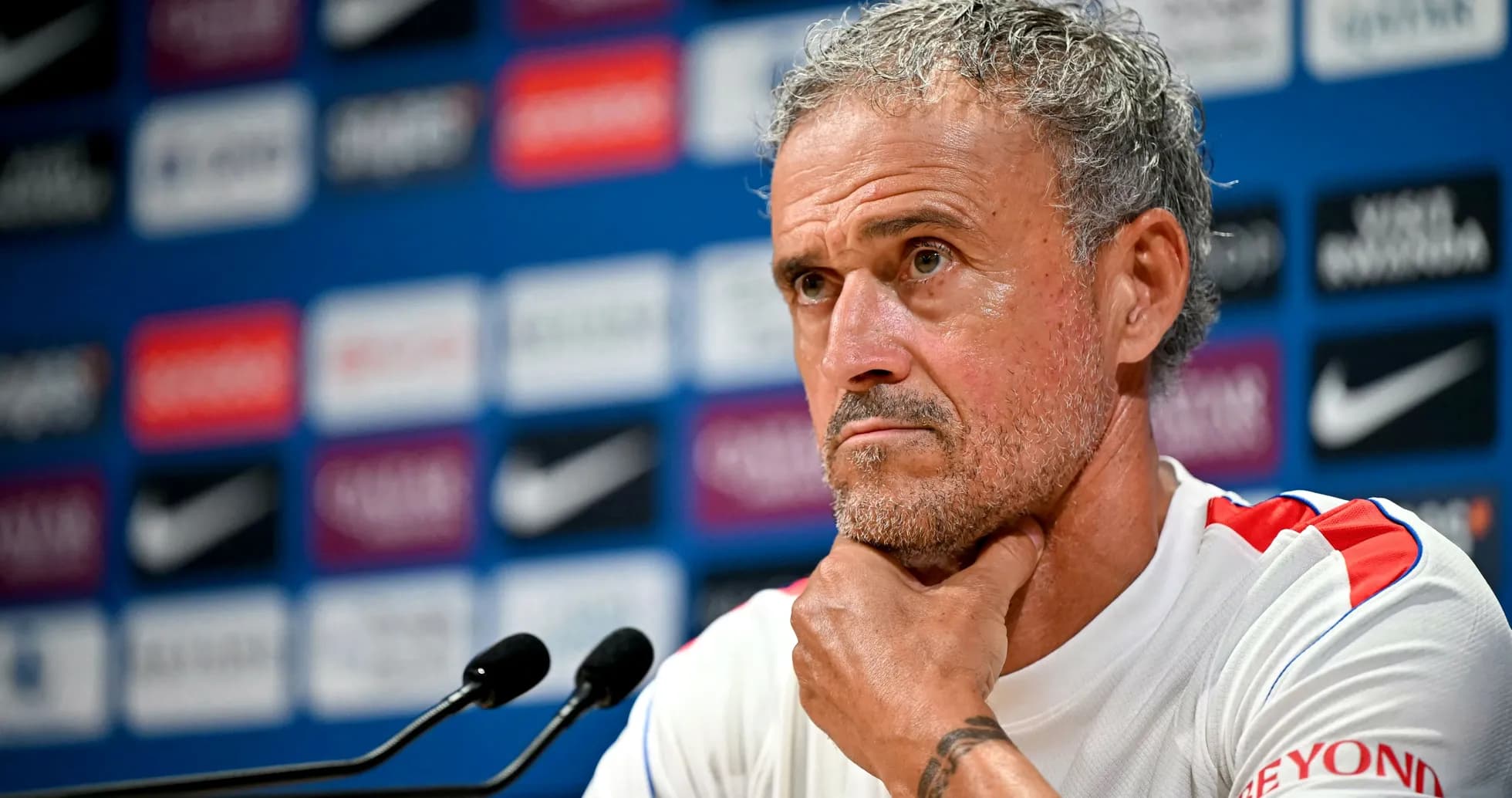
Luis Enrique Signs Contract Extension with PSG Until 2030
Paris Saint-Germain have nailed their colours to the mast: Luis Enrique is their man for the long haul.
The club have confirmed the Spaniard has signed a contract extension that keeps him in charge at the Parc des Princes until 2030, a bold commitment from an institution once synonymous with revolving-door management.
From quick fixes to a long game
PSG announced the deal on their official channels, but the message ran far deeper than a routine renewal. This is a strategic pivot. A club that once chased short-term solutions and star-driven projects has chosen continuity, structure and a coach whose ideas now define the entire sporting model.
The four-year extension reflects the total satisfaction of the hierarchy. Nasser Al-Khelaifi and the board see Enrique not just as the head coach, but as the cornerstone of the project – the reference point around which everything else turns.
Under his watch, PSG have shifted from a constellation of individual superstars into a tightly drilled side built on high-intensity pressing, collective work and tactical discipline. The squad now looks less like a gallery and more like a machine.
A trophy avalanche
Since arriving in 2023, Enrique has attacked the club’s ambitions with ruthless efficiency. The numbers are staggering: 12 trophies in just over three seasons.
- Three Ligue 1 titles.
- Two French Cups.
- Two French Super Cups.
And the impact has stretched beyond France’s borders. PSG have lifted two UEFA Super Cups and the FIFA Intercontinental Cup under his guidance, turning domestic dominance into global recognition.
Yet one achievement towers above the rest.
Cracking the Champions League code
In 2025, Enrique delivered what so many of his predecessors could not: PSG’s first-ever Champions League crown. It broke the club’s long-running psychological barrier in Europe and rewrote its place in the modern hierarchy.
The story didn’t stop there. A year later, PSG defended the trophy, confirming that 2025 was no one-off miracle. Two consecutive Champions League titles turned them from contenders into the team everyone else measures themselves against on the continent.
That European breakthrough is the crown jewel of Enrique’s tenure, and it has fundamentally altered how PSG view themselves – and how others view them.
Building a dynasty, not a moment
This extension is not a simple thank you for the medals. It is the foundation stone for what PSG hope will be a lasting dynasty.
The club want to step away from the boom-and-bust cycles of previous eras. Short-term fixes are out. A long-term sporting project is in – one that prioritises a clear identity, tactical continuity and the development of young talent.
Enrique has driven that cultural shift. He has integrated promising youngsters into the first team without diluting standards, ensuring that the style of play remains recognisable regardless of who starts on a given night. High-profile egos still exist in the dressing room, but they now orbit around a “team-first” mentality that has brought rare stability to Paris.
Power beyond the touchline
The security of a deal running to 2030 gives Enrique something elite coaches rarely enjoy: a genuine five-year horizon.
He can now plan recruitment and academy integration with a long view, not just to survive the next transfer window. His influence stretches well beyond the technical area. Enrique works closely with the recruitment department, targeting players who fit the specific technical and tactical demands of his system rather than simply the biggest names on the market.
That alignment between coach and club has become one of PSG’s most valuable assets.
With the distraction of contract speculation removed, Enrique can fully concentrate on the next evolution of his side. The challenge now is to keep refreshing a winning formula, to tweak and innovate so that the style that delivered back-to-back European crowns does not stand still while rivals scramble to catch up.
PSG have chosen their architect. The question for the rest of Europe is simple: who can stop the empire he is trying to build by 2030?