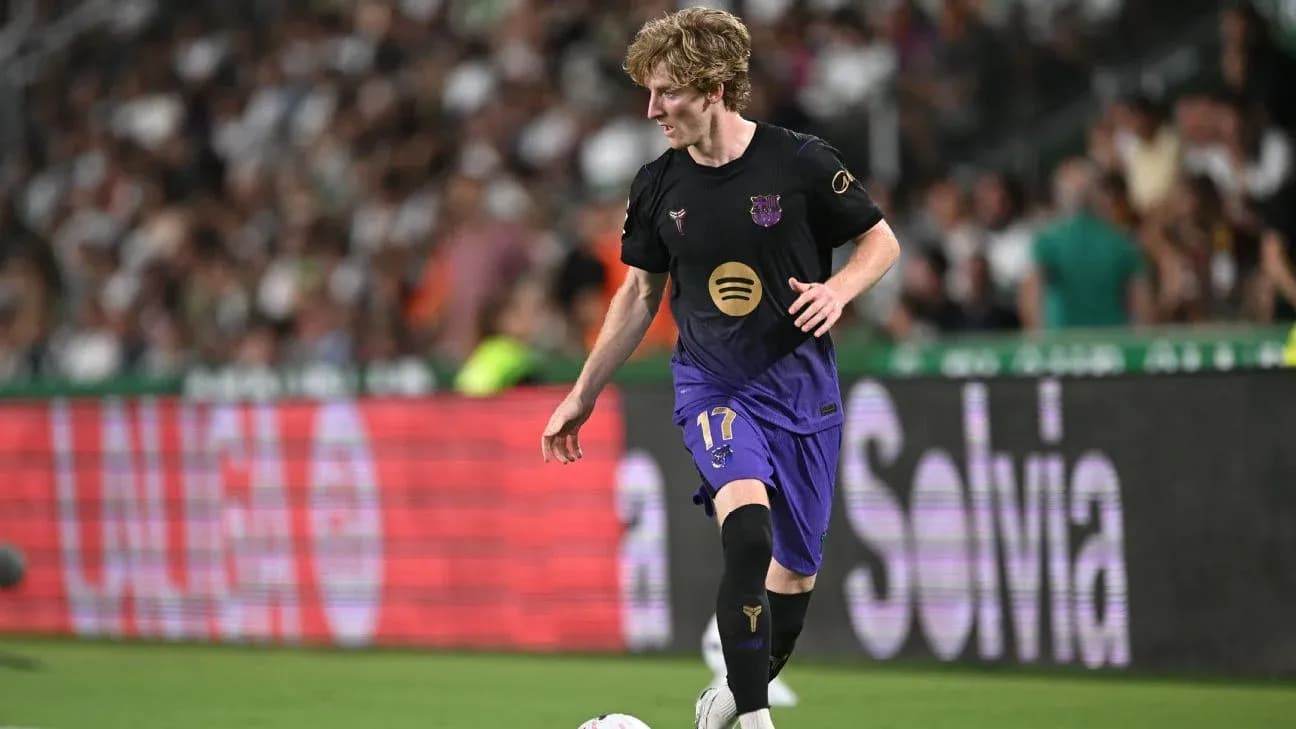
Malik Tillman Reimagined as a Modern No.8
Malik Tillman, reimagined – and on the clock
Malik Tillman walked out of the World Cup a different player. Not just in reputation, but in role. Mauricio Pochettino did what two managers at Bayer Leverkusen never quite managed: he tore up the old scouting report and rebuilt the American as a modern No.8.
The silky No.10 who floated between the lines at PSV was largely shelved. In his place, Pochettino unleashed a pressing, ball-carrying midfielder who hunted the ball, drove through lines and still found time for the highlight-reel stuff. Those two outrageous free kicks? They’re already stitched into USMNT folklore.
Now comes the awkward part: club football.
Leverkusen are not the team he joined a year ago. Back then, they were fresh off breaking Bayern Munich’s grip on the Bundesliga in 2024, a Champions League regular with swagger and depth. That glow has gone. A flat, joyless campaign dumped them into the Europa League and left the squad looking battered and short of ideas.
Tillman never really caught fire in that environment. Six goals and one assist across all competitions is a modest return for a player of his talent at a club of that size. The numbers tell the story: he drifted rather than dominated.
This season has to be different.
Carles Martínez Novell arrives as the reset button. His work at Toulouse – squeezing invention and structure out of limited resources for four years – made him one of the more intriguing appointments in Europe. He’s a coach on the rise, and Leverkusen, bruised but ambitious, look the right kind of platform.
His football is progressive, front-foot, and that should suit Tillman. There’s room for him either as a Pochettino-style No.8, crashing into pressing triggers and carrying the ball through midfield, or as a more traditional No.10, closer to goal and free to orchestrate. The key is simple: he will get space in this team.
And the fixture list has handed him a soft landing. Elversberg, new to the Bundesliga and still feeling their way at this level, offer as gentle an introduction as you’re likely to find. If Tillman wants to turn a strong international summer into a real club-season statement, this is the stage to start doing it.
Brenden Aaronson, the worker who needs an edge
Brenden Aaronson is one of those players coaches love and stat sheets often underrate. He never stops. High effort, high energy, always buzzing into pockets and chasing lost causes. Each year, he looks a little sharper as a playmaker.
Still, the nagging question lingers: is this enough? For a player with his engine and technical base, 33 goals and 31 assists in 268 league matches feels light. It hints at a career that has been useful, but not yet decisive.
What he does have is trust, and that is not easily won. Daniel Farke has stuck with him through some edgy spells at Leeds, when minutes and confidence both looked fragile. Now, Aaronson appears to have crossed the line from squad option to nailed-on starter in this system.
His first league outing of the season underlined exactly why managers keep turning back to him. Stationed on the left wing in a 1-0 win over Nottingham Forest, he didn’t create a single chance. On paper, that’s underwhelming for an attacking player. On the pitch, the picture changed: seven defensive contributions, 14 sprints, six ball recoveries. He ran, harried, tucked in, and made Leeds harder to play through.
That’s Aaronson in a nutshell: the invisible work that tilts games.
The issue, as ever, is what happens in the final third. Leeds have tried to balance that by signing Harry Wilson for the right flank, a more natural source of goals and delivery. Wilson’s presence should ease some creative responsibility on Aaronson, who is limited as a pure playmaker.
But Leeds still need someone to light the fuse. Against a well-drilled Brentford side on Sunday afternoon, industry alone won’t be enough. At some point, Aaronson has to turn all that running into something more ruthless – a cut-back, a shot, a decisive pass. The system is giving him a platform. The season will ask whether he can finally tilt his numbers to match his influence.
Antonee Robinson and Fulham’s beautiful chaos
Alvaro Arbeloa’s first league match in charge of Fulham was pure chaos – the entertaining kind. The Cottagers lost 3-2 to Chelsea, but it was the sort of defeat that leaves a crowd buzzing rather than broken. There is talent everywhere in this squad, especially among the younger, creative players. Arbeloa, who once struggled to manage the star-laden Real Madrid dressing room, might have found a more natural canvas here.
Fulham were wild, open and ambitious. They were also fun.
Antonee Robinson fit that script almost perfectly. His role in this setup is fascinating. Arbeloa wants his full backs to be bold, almost reckless at times, to flood forward and help create that “controlled chaos” in the final third. Robinson has built his career on exactly that instinct – sprinting into space, overlapping, and asking questions with the ball.
Against Chelsea, his passing told the story. Robinson played more line-breaking passes than Fulham’s left winger, Cesar Palacios. From left-back. That’s exactly what Arbeloa wants: defenders who play like midfielders when they cross halfway.
There was a cost. Cole Palmer produced a clinic on the night, and Robinson struggled badly at times to contain him. Palmer twisted and drifted, dragging Fulham’s left side all over the pitch. Robinson simply couldn’t get tight enough, often enough.
So the next assignment matters. He needs a defensive rebound.
Sunderland arrive in a strange state of their own. Against the odds, they qualified for Europe last season and now face the juggling act of league form and a demanding Europa League schedule. Fatigue, rotation, and focus will all be tested. On paper, they look exactly like the kind of side a high-energy Fulham can overwhelm if they get the tempo right.
For Robinson, it’s an opportunity: same attacking licence, sharper defensive edge. If he gets that balance right, Arbeloa’s wild Fulham might start to look a little more dangerous than chaotic.
Ricardo Pepi, stuck in place – or ready to explode?
Ricardo Pepi’s World Cup was supposed to be a launchpad. Instead, it became a pause. He went into the tournament locked in a straight fight with Folarin Balogun for the USMNT starting striker role. He left with zero goals, zero assists and roughly 200 minutes of frustration.
Those numbers cut deep for a forward who seemed on the cusp of a breakout on the biggest stage.
The months since have been just as uneven. In January, reports had him close to a Premier League move, the kind of step that can reshape a career. Then came the broken arm. The transfer never materialised. Back at PSV, he did what he does best – score – but the sense of a missed jump in level lingered.
This summer brought more of the same. No big move, no fresh start. And yet, on the pitch, Pepi keeps ticking over. He has scored in each of his last two games and remains central to PSV’s plans.
For the Dutch champions, the equation is simple. Pepi is their main man up top. They need his goals. They have a title to defend and a Champions League campaign looming, with all the physical and mental strain that brings.
Before that, there’s Utrecht at home. It’s the kind of fixture that can quietly set a tone. Pepi already has two goals in three league outings; keep that rhythm, and the narrative around him changes fast. From “stalled” to “ready for the next step” can happen in a month if the ball keeps hitting the net.
The World Cup disappointment still shadows his story. So does the transfer that never came. But for a striker, there’s always a simpler truth: score, and everything else tends to follow.