Mallorca vs Villarreal: La Liga Showdown with Survival Stakes
Estadi Mallorca Son Moix stages a meeting of contrasting agendas on 10 May 2026, as 15th‑placed Mallorca host Champions League‑chasing Villarreal in La Liga’s Regular Season – 35. With the hosts still not mathematically safe and the visitors sitting 3rd and targeting a top‑four finish, the stakes are clear: survival security on one side, European consolidation on the other.
Context and stakes
In the league, Mallorca arrive with 38 points from 34 games, a goal difference of -9 and a record of 10 wins, 8 draws and 16 defeats. Their recent form line of WLDWW suggests a late‑season uptick, but the underlying picture is of a side that has had to grind for every point.
Villarreal, by contrast, have put together a strong campaign. They are 3rd with 68 points, a +25 goal difference and 21 wins from 34. Their form sequence of WWDWL underlines a team that has largely sustained a high level, even if the odd setback has prevented them from truly joining a title race.
At home, Mallorca are far more competitive: 8 wins, 5 draws and only 4 defeats from 17, scoring 27 and conceding 20. Villarreal’s away record is solid but not dominant – 7 wins, 4 draws and 6 losses, with 23 scored and 24 conceded. That home‑away contrast is a key thread in this fixture’s tactical balance.
Tactical outlook: Mallorca
Across all phases, Mallorca’s season profile is that of a cautious, often reactive side that leans on structure and set moments. They have scored 42 and conceded 51 in 34 league matches, averaging 1.2 goals for and 1.5 against per game. At Son Moix, those numbers improve to 1.6 scored and 1.2 conceded per match, reinforcing the sense that this is a team built around home solidity.
Their tactical flexibility is evident in the formations used. The 4‑2‑3‑1 has been the default (19 matches), with spells in 4‑3‑1‑2 (6), 5‑3‑2 (4), 4‑4‑2 (3) and occasional 4‑3‑3 and 4‑3‑2‑1. That variety hints at a coach willing to adjust to opponent strengths, and against a high‑powered Villarreal attack, a back five or a double‑pivot shield in front of a back four feels likely.
Defensively, Mallorca have managed 5 clean sheets across all phases (3 at home), but have also endured a longest losing streak of 4. Their biggest home defeat has been 0-3, while their standout home win was 4-1, showing a relatively narrow performance band at Son Moix: they rarely get blown away there, but also rarely run riot.
Discipline could be a subplot. Mallorca’s yellow cards spike between 46-60 minutes (22.67% of their total) and again late on (a combined 32% from 76-90 and 91-105), suggesting that fatigue or game‑state pressure often drags them into fouls. Red cards have come notably in the 31-45 and 91-105 ranges.
Personnel issues, however, are severe. A cluster of absentees strips depth and leadership:
- Confirmed missing: L. Bergstrom (injury), M. Joseph (knee injury), M. Kumbulla (muscle injury), P. Maffeo (suspended – yellow cards), A. Raillo (injury), J. Salas (knee injury).
- Questionable: J. Kalumba, P. Torre, J. Virgili (all listed with injuries).
The loss of Maffeo and Raillo in particular points to a patched‑up defensive line, precisely against one of the league’s most dangerous attacks. With Kumbulla also out, centre‑back options are stretched, which may tilt Mallorca further towards a conservative block and extra protection in front of the back four.
In attack, everything orbits Vedat Muriqi. The Kosovan is having an outstanding league season: 21 goals and 1 assist in 33 appearances, with 82 shots (44 on target) and a 7.06 average rating. He has drawn 58 fouls, won 209 of 408 duels and is the clear focal point for long balls, crosses and set pieces. Importantly for penalty dynamics, he has scored 5 spot‑kicks but also missed 2, so while he is prolific, his record from the spot is not flawless.
Mallorca as a team have converted all 5 of their penalties this season according to the aggregate stats, but with Muriqi’s two misses in the player data, there is a clear data conflict; what is certain is that he shoulders the bulk of responsibility in high‑leverage moments.
Tactical outlook: Villarreal
Villarreal arrive as one of La Liga’s most balanced outfits. Across all phases they have scored 64 and conceded 39, averaging 1.9 goals for and 1.1 against per game. Away from home, they still maintain 1.4 goals scored on average, though they concede 1.4, which keeps matches relatively open.
Tactically, the visitors are stable: a 4‑4‑2 has been used in 33 of 34 matches, with only a single outing in 4‑3‑3. That consistency has underpinned a biggest winning streak of 6 and an attacking identity that leans on width, combination play between the lines and a dual‑threat front line.
They have kept 8 clean sheets (3 away) and have a clear ceiling: their biggest home win is 5-0, while away they have a 1-3 as their top margin. Their heaviest away defeat has been 4-1, so they are not immune to being exposed on the road, but generally manage game control.
Card data shows a tendency to pick up yellows late: 47.37% of their bookings arrive from 61-90 minutes, with a particular spike from 76-90 (25%). Reds have appeared in the 31-45 and 76-90 ranges, pointing to potential volatility if the match becomes stretched or ill‑tempered.
In terms of absences, Villarreal’s list is lighter: P. Cabanes (knee injury) and J. Foyth (Achilles tendon injury) are both ruled out. The loss of Foyth removes a versatile defensive option, but the overall core of the side remains intact.
Going forward, Villarreal boast multiple threats. Georges Mikautadze has 11 goals and 5 assists in 29 appearances, with 50 shots (28 on target) and 24 key passes, while Alberto Moleiro has contributed 10 goals and 4 assists, with 35 key passes and 59 dribble attempts (30 successful). Both are creative and goal‑dangerous, and both can hurt a weakened Mallorca back line from different zones.
From the spot, Villarreal have scored all 5 of their penalties this season as a team, and neither Mikautadze nor Moleiro has missed a penalty in the league campaign. That composure from 12 yards could be decisive in a tight game.
Head‑to‑head: Villarreal dominance
The last five competitive meetings, all in La Liga, paint a one‑sided picture:
- 22 November 2025, Estadio de la Ceramica: Villarreal 2-1 Mallorca – Villarreal win.
- 20 January 2025, Estadio de la Cerámica: Villarreal 4-0 Mallorca – Villarreal win.
- 14 September 2024, Estadi Mallorca Son Moix: Mallorca 1-2 Villarreal – Villarreal win.
- 20 January 2024, Estadio de la Cerámica: Villarreal 1-1 Mallorca – draw.
- 18 August 2023, Estadi Mallorca Son Moix: Mallorca 0-1 Villarreal – Villarreal win.
Across these five league fixtures, Villarreal have 4 wins, Mallorca have 0, and there has been 1 draw. At Son Moix specifically, Villarreal have won both of the last two visits, 0-1 and 1-2.
Key battles and game pattern
- Mallorca’s defensive patchwork vs Villarreal’s front four With Raillo, Kumbulla and Maffeo out, Mallorca’s back line will be reconfigured and potentially short on both height and cohesion. Villarreal’s wide players and second‑line runners like Moleiro can target the channels and half‑spaces, especially if Mallorca sit deep in a 5‑3‑2 or 4‑2‑3‑1.
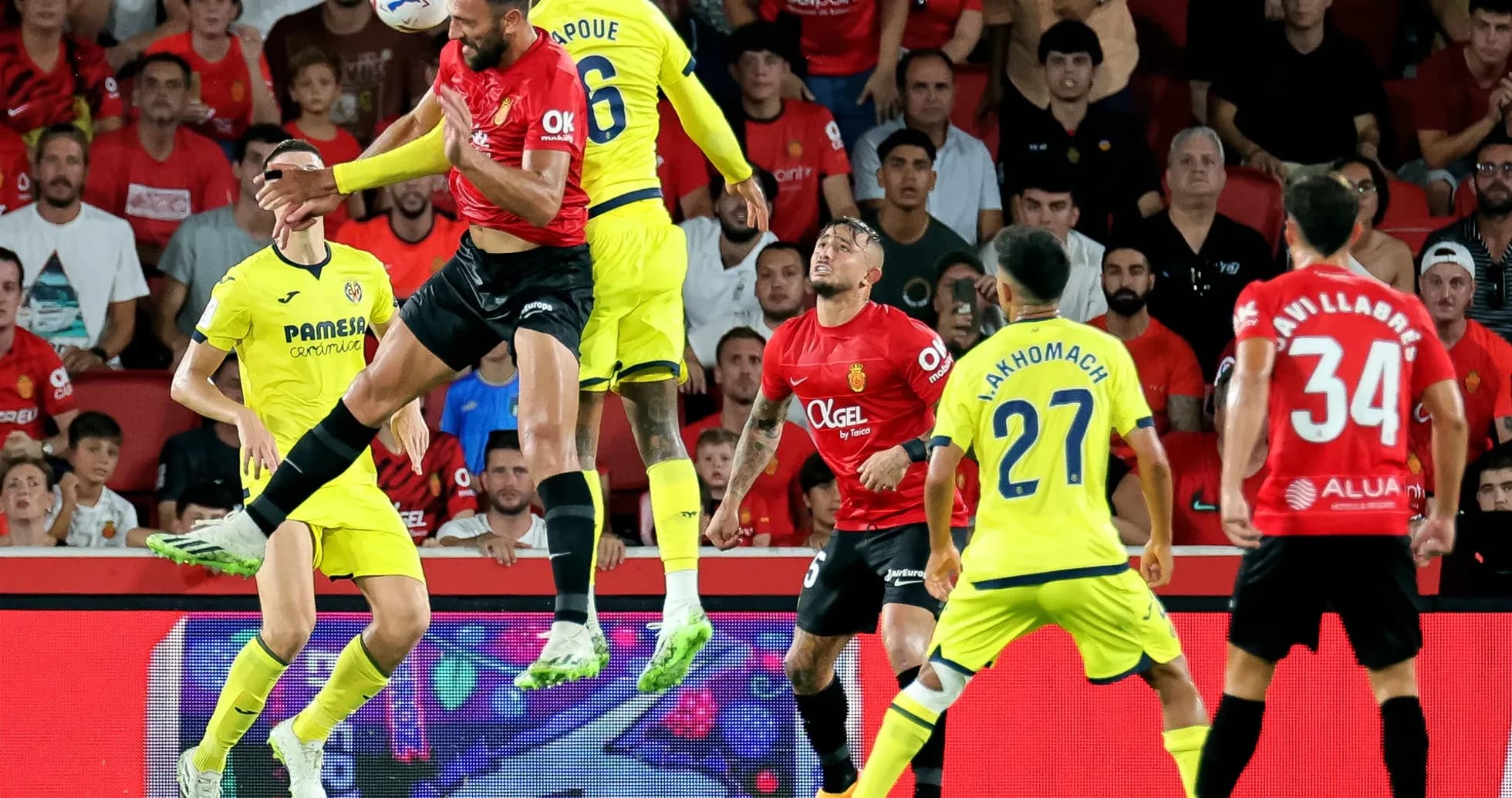
- Muriqi vs Villarreal’s centre‑backs Muriqi’s aerial presence and duel volume make him the natural out‑ball for Mallorca. Villarreal’s ability to win first or second balls around him will go a long way to determining whether the hosts can progress up the pitch or are pinned back.
- Set pieces Given Mallorca’s reliance on Muriqi and their home scoring rate, corners and free‑kicks around the box are likely to be crucial. Villarreal, with a strong attacking record but a middling away goals‑against figure, must manage these moments carefully.
- Tempo and discipline after half‑time Both teams see a spike in cards after the interval. If Villarreal push for control early in the second half, the risk of fouls and potential dismissals could shape the final half‑hour.
The verdict
On form, league position and recent head‑to‑head record, Villarreal are clear favourites. They possess more firepower, a settled 4‑4‑2 structure and arrive with momentum from a 21‑win season so far. Mallorca, however, are significantly stronger at home than away and have a striker in Muriqi capable of turning low‑margin chances into goals.
The extensive injury and suspension list for Mallorca’s defence tilts the balance further towards the visitors. If Villarreal impose their usual attacking rhythm and exploit the gaps around a makeshift back line, they have the tools to extend their strong record at Son Moix.
Mallorca’s route to a result likely lies in a compact block, maximising set pieces and trusting Muriqi to punish any lapse. Villarreal, though, have shown enough consistency in the league to suggest they can navigate exactly this type of test, even if it may not be straightforward on the island.