Manchester City vs Arsenal: Premier League Title Decider Preview
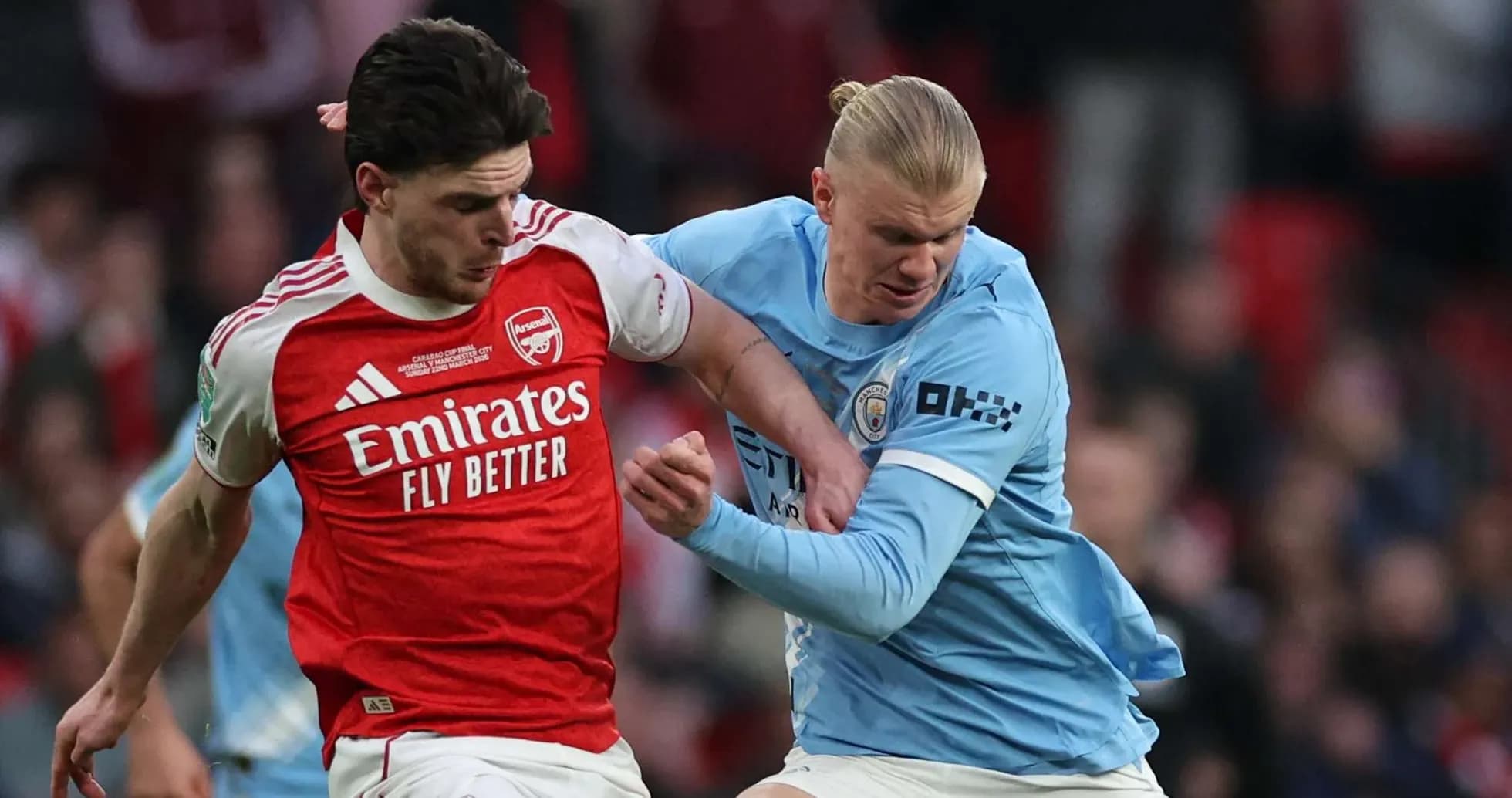
Etihad Stadium stages a potential title decider in April 2026 as second‑placed Manchester City host leaders Arsenal in the Premier League regular season, round 33. With Arsenal six points clear (70 vs 64) but having played a game more, this is as close to a nine‑point swing as the run‑in will offer. For City, it is a must‑win if they are to drag the race back under their control; for Arsenal, avoiding defeat would keep them firmly in the driving seat.
Form, stakes and momentum
In the league, both sides arrive in strong shape but with subtly different trajectories. City sit 2nd with 19 wins, 7 draws and 5 defeats from 31 matches, boasting the division’s best attack (63 goals) and a +35 goal difference. Their overall form line of WDDWW hints at a slight easing off from their longest winning streak of six, but they remain brutally efficient at the Etihad: 11 wins from 15 home games, just 1 defeat, 36 scored and only 11 conceded.
Arsenal top the table on 70 points from 32 games (21 wins, 7 draws, 4 defeats), with a marginally better goal difference (+38) and the league’s meanest defence (24 conceded). Their form of LWWWW shows they have responded to a setback with a surge, including that statement 5-1 home win over City in February 2025. Away from home they have been excellent: 9 wins, 5 draws, just 2 defeats, with 26 scored and 13 conceded.
The stakes are obvious: a City victory trims the gap to three points with a game in hand; an Arsenal win would push them nine clear and put one hand on the trophy. Even a draw would feel like a small victory for Mikel Arteta, preserving the cushion and burning one of City’s last direct chances to close ground.
Tactical landscape: structures and patterns
Across all phases this season, City have been tactically flexible but primarily rooted in possession‑heavy 4-1-4-1 and 4-3-3 shapes. They have used 4-1-4-1 in 12 league matches and 4-3-3 in 6, with occasional shifts to 4-3-2-1 and 4-1-3-2. The numbers underline their control: an average of 2.0 goals for per game, with a particularly explosive spell just before half‑time (31-45 minutes: 19 goals, 31.67% of their tally). They like to build pressure and break games open before the interval.
Arsenal, by contrast, have been more stable structurally, using 4-3-3 in 21 league matches and 4-2-3-1 in 11. They average 1.9 goals for per game and are more balanced across phases, with strong output both before and after half‑time. Their most productive windows are 31-45 and 46-60 (13 goals each), but crucially they are devastating late on: 14 goals between 76-90 minutes (23.73% of their total), suggesting a team that can finish strongly and punish tiring opponents.
Defensively, City concede 0.9 goals per game across all phases; Arsenal are slightly better at 0.8. Both sides are very adept at keeping games under control: City have 13 clean sheets, Arsenal 15. Notably, both teams’ goals‑against under/over 2.5 metrics are heavily skewed towards low‑scoring matches: City have seen only 1 game over 2.5 goals conceded; Arsenal also just 1. That underpins how rarely either side gets opened up.
Key players and attacking threats
Erling Haaland is again the headline figure. City’s No 9 leads the Premier League scoring charts with 22 goals and 7 assists in 30 appearances, averaging a 7.31 rating. He has taken 87 shots (50 on target) and remains City’s reference point for all their penalty‑box play. From the spot, he has scored 3 penalties but missed 1 this season, so while he remains a major threat, his record is not flawless.
Haaland’s presence shapes the entire tactical picture: City’s wide players and advanced midfielders will look to feed early crosses and cut‑backs, particularly in those key 31-45 and 61-75 minute bands where City have historically found goals (19 and 11 respectively). Arsenal’s centre‑backs will need to win a high volume of duels – Haaland has contested 213 this season, winning 116 – and deny him space to turn in the box.
For Arsenal, Viktor Gyökeres has become a vital focal point. With 12 league goals in 30 appearances, he offers a different profile: strong back‑to‑goal play, aerial threat and a willingness to run channels. He has 35 shots (18 on target) and is also perfect from the spot this season (3 penalties scored, 0 missed), giving Arsenal a reliable penalty taker if the occasion arises.
Arsenal’s late‑game scoring pattern, combined with Gyökeres’ physicality, makes them especially dangerous if the match is still live in the final quarter. City’s goals‑against distribution shows a vulnerability after the break: 61-75 minutes (9 conceded, 29.03% of their total) and 76-90 (6 conceded). That overlaps precisely with Arsenal’s late surge zones.
Injuries, absences and selection puzzles
The team news adds a significant twist, particularly for City. Pep Guardiola will be without three senior defenders:
- Rúben Dias – Muscle injury (Missing Fixture)
- Joško Gvardiol – Broken leg (Missing Fixture)
- John Stones – Calf injury (Missing Fixture)
Losing that much experience and aerial dominance at centre‑back is a major structural blow, especially against an Arsenal side that can attack crosses and set‑pieces through Gyökeres. It may force City to reshuffle, perhaps leaning on a makeshift pairing and increasing the emphasis on controlling territory to protect a vulnerable back line.
Arsenal have one confirmed absentee:
- Mikel Merino – Foot injury (Missing Fixture)
He has been an important midfield presence, so his absence slightly reduces Arsenal’s depth and physicality in the centre.
More concerning for Arteta is a long list of doubtful players:
- Riccardo Calafiori – Knock (Questionable)
- Noni Madueke – Injury (Questionable)
- Martin Ødegaard – Muscle injury (Questionable)
- Bukayo Saka – Injury (Questionable)
- Jurrien Timber – Ankle injury (Questionable)
If even two or three of Ødegaard, Saka and Calafiori are passed fit, Arsenal’s starting XI remains close to full strength. If they all miss out, Arsenal lose their primary creator (Ødegaard), their most consistent wide threat (Saka) and a flexible defender in Calafiori, which would significantly alter their attacking ceiling and pressing intensity. Given the data only marks them as questionable, any prediction must factor in both scenarios, but the sheer number of doubts is a clear downside for the visitors.
Head‑to‑head: recent competitive history
The last five competitive meetings (Premier League and domestic cups only) underline how finely balanced this rivalry has become:
- March 2026, League Cup final at Wembley: Arsenal 0-2 Manchester City
- September 2025, Premier League at Emirates: Arsenal 1-1 Manchester City
- February 2025, Premier League at Emirates: Arsenal 5-1 Manchester City
- September 2024, Premier League at Etihad: Manchester City 2-2 Arsenal
- March 2024, Premier League at Etihad: Manchester City 0-0 Arsenal
Across these five, Arsenal have 1 win, City have 1 win, and there have been 3 draws. The goal difference is 8-6 in Arsenal’s favour, skewed heavily by that 5-1 home demolition in February 2025, but in Manchester the league meetings have been extremely tight: 0-0 and 2-2 in the last two at the Etihad.
This suggests that while Arsenal have proved they can blow City away at home, matches in Manchester tend to be cagey, control‑heavy affairs where both sides are wary of overcommitting.
Statistical undercurrents: tempo and total goals
Across all phases this season, both teams are more often involved in lower‑scoring matches than their attacking reputations might suggest:
- City’s games: at the 2.5‑goal threshold, they have 12 overs and 19 unders.
- Arsenal’s games: at the 2.5‑goal threshold, they have 8 overs and 24 unders.
That means the majority of their league fixtures finish with 0-2 total goals. Combined with the recent Etihad head‑to‑heads (0-0 and 2-2), the data points towards a match where the first goal, if it comes, will be decisive in shaping the risk appetite of both managers.
Both sides are also extremely hard to break down: City have failed to score in only 4 of 31 league matches; Arsenal in just 3 of 32. Clean sheets are common, but so is at least one goal at the other end.
The verdict
City’s home strength, Haaland’s firepower and the urgency of their title‑chasing situation all lean towards a big performance from Guardiola’s side. However, the defensive absences of Dias, Gvardiol and Stones are a serious structural concern, particularly against an Arsenal team that has already put five past them this season and scores heavily in late phases.
Arsenal’s league‑leading defence, strong away record and recent psychological edge from that 5-1 win and the League Cup final run give them genuine belief. Yet their long list of questionable attacking players tempers expectations; if Ødegaard and Saka are not fully fit, their capacity to exploit City’s weakened back line diminishes.
Balancing the data, the likely tactical caution, and the recent pattern of tight games at the Etihad, this fixture shapes up as a high‑quality, high‑stakes contest more likely to be decided by fine margins than by another Emirates‑style rout. A narrow City win or a draw fits the numbers best; in either case, the title race is set to remain alive deep into the spring.