Manchester City Edges Arsenal 2-1 in Premier League Showdown
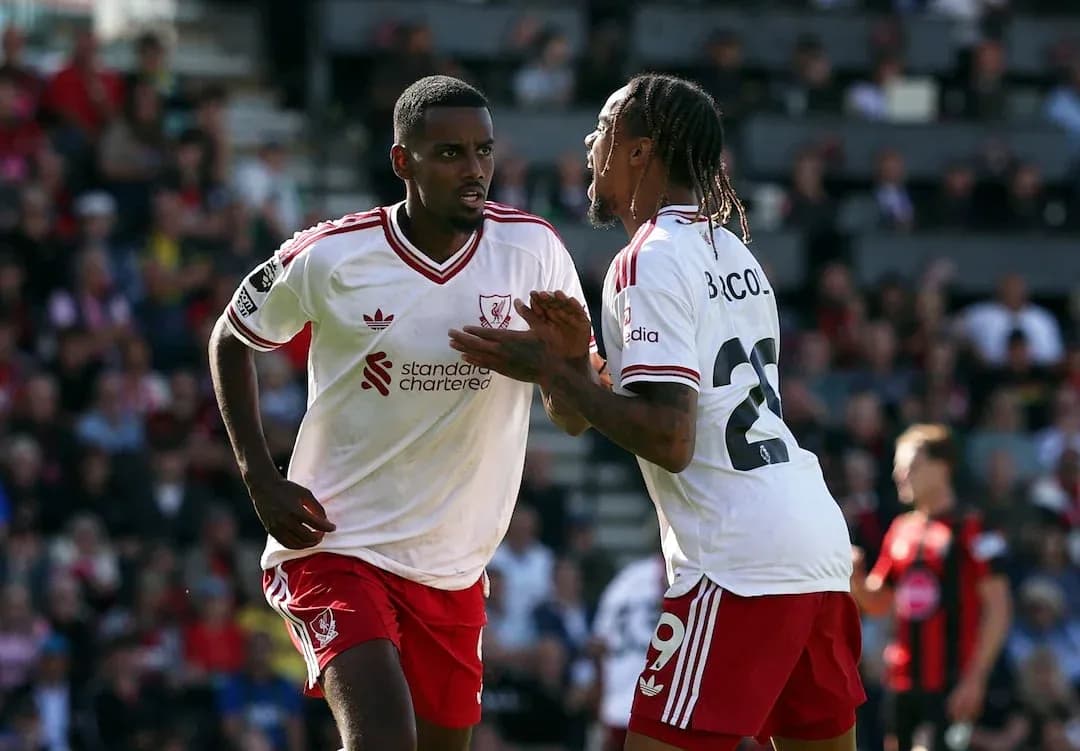
Etihad Stadium had the feel of a title battleground rather than just “Regular Season - 33” as Manchester City edged Arsenal 2-1, a result that tightens, rather than settles, the Premier League race. Following this result, the league’s two most complete sides looked exactly that: detailed, drilled, but also defined by their absences and their stars.
City arrived as the hunters, second in the table on 67 points with a formidable overall goal difference of +36 (65 scored, 29 conceded). At home this campaign they have been ruthless: 12 wins from 16, scoring 38 and conceding only 12. Arsenal, leaders on 70 points with an overall goal difference of +37 (63 scored, 26 conceded), came in with the league’s most balanced profile, especially away: 9 wins from 17, 27 goals scored and just 15 conceded on their travels.
Pep Guardiola’s solution to a defensive injury crisis was bold. With R. Dias and J. Gvardiol both missing through muscle injury and a broken leg respectively, he built his back four around Matheus Nunes at right-back, A. Khusanov and M. Guehi centrally, and N. O’Reilly on the left. It pushed City further towards a possession-and-press structure, trusting Rodri as the lone stabiliser in front of a makeshift line. Arsenal had their own voids: R. Calafiori, M. Merino, B. Saka and J. Timber were all absent, stripping Mikel Arteta of a natural right-sided outlet and one of his key build-up defenders. The response was a clean 4-3-3 with P. Hincapie at left-back, C. Mosquera on the right, and a front three of N. Madueke, K. Havertz and E. Eze.
First Half
The opening half reflected those structural compromises. City’s 4-2-3-1 on the teamsheet often morphed into a 2-3-5 in possession, with Bernardo Silva stepping inside from midfield and J. Doku holding width to the left. R. Cherki floated between lines as a classic No.10, constantly turning between D. Rice and M. Zubimendi. Arsenal, by contrast, leaned heavily on Rice’s positional sense to protect the spaces behind their full-backs. With no Saka to stretch the right, Madueke’s role became doubly important: carry the ball into City’s improvised channels and pin O’Reilly back.
City’s season-long defensive record at home — only 12 goals conceded in 16 games, an average of 0.8 per match — underpinned their confidence to commit bodies forward. Arsenal’s away defensive numbers (15 conceded in 17, an average of 0.9) suggested they would not be easily broken either. The 1-1 half-time scoreline mirrored that: both sides found a way through, but neither lost its structure.
Discipline and Tactical Duel
Discipline was always going to be a sub-plot. City’s yellow card distribution this season shows a clear spike between 46-60 minutes (22.03%) and another late-game surge at 76-90 minutes (20.34%), a reflection of how their pressing intensity can tip into risk after the break. Arsenal’s own bookings peak at 76-90 minutes with 20.93%, underlining how their aggressive mid-block becomes stretched when chasing transitions late on. At the Etihad, that pattern reappeared: as the second half wore on, both midfields played on the edge, with tactical fouls and delayed presses becoming necessary tools rather than accidents.
The game’s decisive tactical duel was the “Hunter vs Shield”: E. Haaland against Arsenal’s league-best defensive unit. Overall this season, Haaland has 23 league goals and 7 assists, with 91 shots and 51 on target. He is not just City’s finisher but also a gravity well; his 219 duels (120 won) tell the story of a striker who fights for every direct ball. Arsenal’s answer was the Saliba–Gabriel axis, screened by Rice. Away from home, Arsenal concede only 0.9 goals per game, and that resilience was visible in how often they forced Haaland to receive with his back to goal, rather than on the run.
But City’s attacking ecosystem is broader than one No.9. Cherki, with 10 assists and 47 key passes this season, was the creative lodestar between lines. His ability to combine with Doku and Haaland forced Arsenal’s midfield three to narrow, opening small but crucial lanes for B. Silva to drift into the right half-space. Bernardo’s campaign has been defined by relentless work — 32 appearances, 1772 passes at 90% accuracy and 38 tackles — but also an edge: 9 yellow cards make him one of the league’s leading offenders. His pressing from the front, and his willingness to foul when counter-pressed, helped City reset their structure whenever Arsenal tried to break through Eze or Havertz.
Arsenal's Engine Room
On the other side, Arsenal’s “Engine Room” hinged on Rice and M. Odegaard. Rice has been one of the league’s most complete midfielders: 4 goals, 5 assists, 1881 passes at 87% accuracy, 63 tackles, 11 blocks and 31 interceptions. He is both metronome and shield, the player who decides whether Arsenal sit or squeeze. Odegaard’s positioning between Rodri and City’s centre-backs was meant to drag City’s pivot out of his comfort zone, opening vertical lanes for Havertz to drop or Madueke to dart inside. Without Saka, though, Arsenal’s right side lacked its usual automatic patterns; Madueke’s threat was more individual than systemic.
From the bench, both managers had options to tilt the narrative. Guardiola could call on P. Foden and Savinho to inject directness or O. Marmoush to stretch the last line, while Arsenal’s artillery included V. Gyökeres — 12 league goals and 3 penalties scored — and L. Trossard, whose 5 goals and 5 assists, plus 32 key passes, make him one of the league’s most efficient impact forwards. Their presence alone shaped how high the starting defences dared to hold their lines.
Statistical Overview
Statistically, this was a meeting of near equals. Heading into this game, City averaged 2.0 goals per match overall (2.4 at home) and conceded 0.9 (0.8 at home). Arsenal averaged 1.9 goals overall (1.6 away) and conceded 0.8 (0.9 away). In xG terms, that profile points to a contest where small margins — pressing triggers, set-piece details, one mis-timed duel — would decide the outcome more than any structural flaw.
Following this result, the 2-1 scoreline feels like a logical extension of those numbers: City’s marginally more explosive home attack just edging Arsenal’s elite away defence. Haaland’s season includes one missed penalty, a reminder that even the most reliable weapons carry a degree of volatility, but across 90 minutes City’s layered chance creation — Cherki between lines, Doku wide, Bernardo and Rodri orchestrating — generated enough volume to justify a narrow win.
Tactical Prognosis
The tactical prognosis looking forward is clear. City’s ability to maintain a high attacking average while fielding a patched-up back line suggests their xG will remain strong, but their reliance on control phases makes those late yellow-card surges a recurring risk. Arsenal, despite defeat, leave with their identity intact: an away side that concedes little, builds through Rice and Odegaard, and will only become more dangerous once their missing pieces return. In a title race defined by details, this was a night where City’s details were just sharper.