Manchester City vs Real Madrid: 1/8 Final Match Analysis
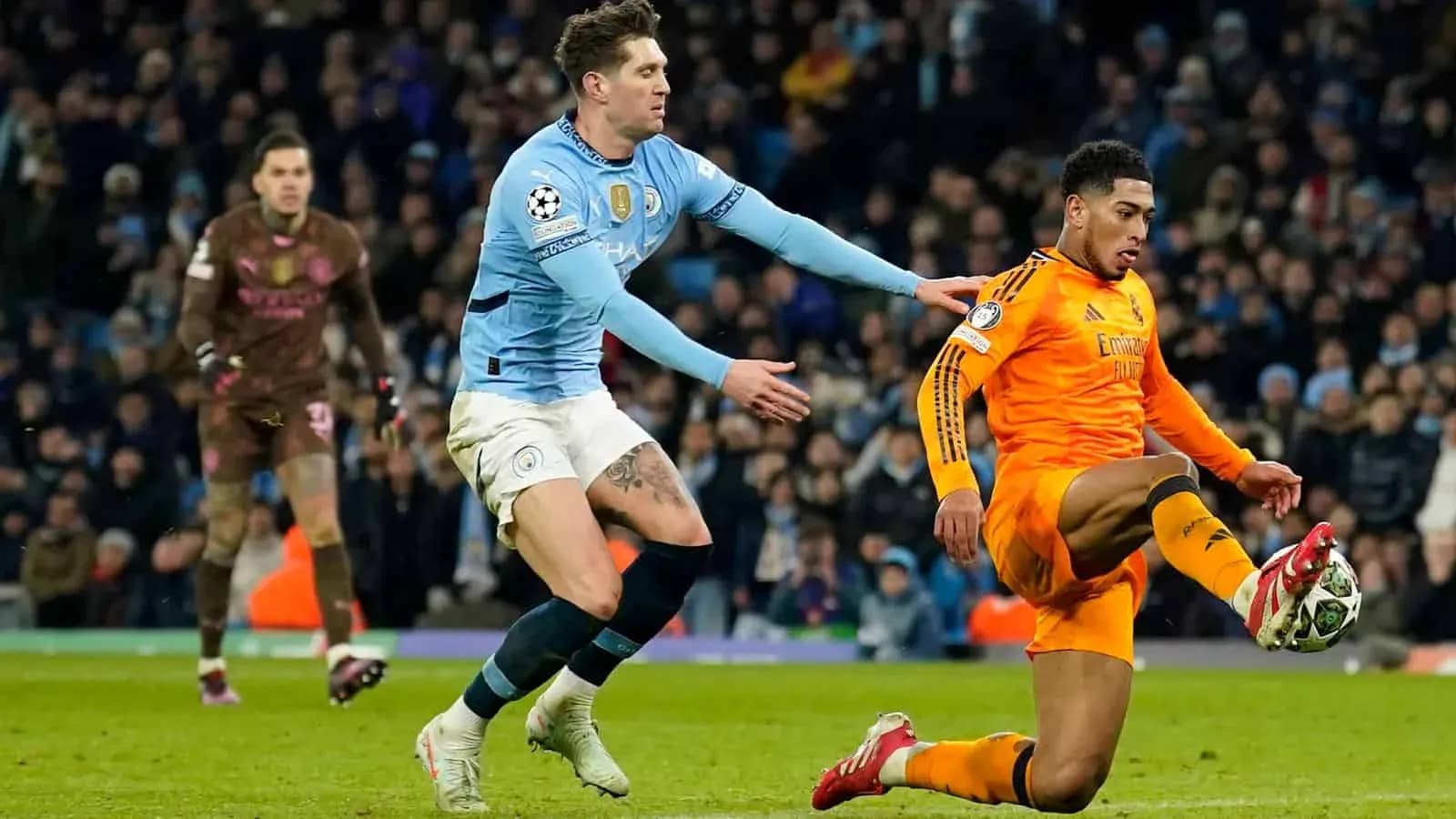
Etihad Stadium, 1/8 final, post‑match squad analysis. Manchester City came into this UEFA Champions League tie ranked 8th with 16 points, Real Madrid 9th with 15 points. The match finished 1–2 in regular time, with the score 1–1 at the break.
Overall season context
Manchester City – overall this season (Champions League 2025)
- Matches: 10 (5 wins, 1 draw, 4 losses)
- Goals: 16 scored, 14 conceded (1.6 scored and 1.4 conceded per match)
- Home record: 5 played, 3 wins, 0 draws, 2 losses, 9–5 goals
- Clean sheets: 3; failed to score: 2
- Best wins: 4–1 at home, 0–2 away
- Heaviest defeats: 0–2 at home, 3–0 away
- Discipline:
- Yellow cards concentrated late: 38.89% between 76–90 minutes
- Red cards: 2 overall, mainly between 16–30 and 61–75 minutes
- Penalties: 1 taken, 1 successful penalty (100% conversion, no misses)
Defensively, 14 goals against in 10 games is solid but not elite; they have been more secure at home (5 conceded in 5) than away (9 in 5). Offensively, 16 goals is respectable, but not at the level of the competition’s most explosive attacks.
Real Madrid – overall this season (Champions League 2025)
- Matches: 12 (9 wins, 0 draws, 3 losses)
- Goals: 29 scored, 14 conceded (2.4 scored and 1.2 conceded per match)
- Home record: 6 played, 5 wins, 0 draws, 1 loss, 15–5 goals
- Away record: 6 played, 4 wins, 0 draws, 2 losses, 14–9 goals
- Clean sheets: 4; failed to score: only 1 match
- Best wins: 6–1 at home, 0–5 away
- Heaviest defeats: 1–2 at home, 4–2 away
- Discipline:
- Yellow cards: 25.93% between 46–60 minutes, 22.22% between 91–105
- Red cards: 3 overall, heavily clustered late (especially 91–105)
- Penalties: 4 taken, 4 successful penalties (no misses)
Real Madrid combine a prolific attack (29 goals, best in this matchup) with a comparable defensive record to City (both on 14 goals conceded overall), but across more matches – a sign of slightly better defensive efficiency.
Lineups and structural choices
Manchester City (4‑2‑3‑1)
Starters
- Goalkeeper: Gianluigi Donnarumma (25)
- Defence:
- Right-back: Matheus Nunes (27)
- Centre-backs: Abdukodir Khusanov (45), Rúben Dias (3)
- Left-back: Rayan Aït‑Nouri (21)
- Double pivot:
- Rodri (16)
- Bernardo Silva (20)
- Attacking line of three:
- Right: Rayan Cherki (10)
- Central: Tijjani Reijnders (4)
- Left: Jérémy Doku (11)
- Striker: Erling Haaland (9)
The 4‑2‑3‑1 fits City’s seasonal pattern: they have used this shape twice in the competition, alongside 4‑1‑4‑1 and 4‑3‑3. Here, Bernardo Silva dropped into the double pivot, giving extra control in build‑up but slightly reducing his freedom as a pure No.10.
Bench options
- Nathan Aké, Marc Guéhi and John Stones provided centre‑back and full‑back coverage, while Rico Lewis was listed but also flagged as “Questionable” pre‑match with an ankle injury.
- In midfield, Nico González, Mateo Kovačić and Nico O’Reilly offered control and verticality.
- In attack, Phil Foden, Savinho, Omar Marmoush and Antoine Semenyo were the main impact options.
Real Madrid (4‑4‑2)
Starters
- Goalkeeper: Thibaut Courtois (1)
- Defence:
- Right-back: Trent Alexander‑Arnold (12)
- Centre-backs: Antonio Rüdiger (22), Dean Huijsen (24)
- Left-back: Fran García (20)
- Midfield four:
- Right: Federico Valverde (8)
- Central: Thiago Pitarch (45), Aurélien Tchouaméni (14)
- Left: Arda Güler (15)
- Attack:
- Brahim Díaz (21)
- Vinícius Júnior (7)
Real Madrid leaned into a 4‑4‑2 that they have used most often this season (5 times), pairing Vinícius with Brahim up front and using Valverde’s two‑way qualities on the right. Tchouaméni anchored centrally, with Güler as the more creative left‑sided midfielder.
Bench options
- Andriy Lunin covered in goal. Defensive depth came from Dani Carvajal, David Alaba, Diego Aguado and Álvaro Carreras.
- In midfield, Eduardo Camavinga, Manuel Ángel Morán, Jorge Cestero and César Palacios were available.
- The attack was significantly boosted by Kylian Mbappé, Gonzalo García and Franco Mastantuono.
Absentees and “Battle 3 – The Void”
Manchester City absentees
- J. Gvardiol – Broken leg (Missing Fixture)
- S. Nypan – Inactive (Missing Fixture)
- R. Lewis – Questionable (ankle injury), but named on the bench
Gvardiol’s absence weakened City’s left‑sided build‑up and aerial presence. Across the season, City’s defence has conceded 14 goals in 10 matches; without a first‑choice ball‑playing left‑sided centre‑back, more responsibility fell on Rúben Dias and Khusanov to defend the box and start attacks. The replacement structure (Aït‑Nouri at left‑back, Khusanov left centre‑back) is more aggressive in 1v1s but less dominant in the air and in set‑pieces.
Rico Lewis, even as a questionable option, would normally offer inverted full‑back solutions and extra control in midfield zones. Instead, Matheus Nunes at right‑back tilted the balance more towards carrying and dribbling from deep rather than classic inverted movements.
Real Madrid absentees
- R. Asencio – Muscle injury (Missing Fixture)
- Dani Ceballos – Muscle injury (Missing Fixture)
- Éder Militão – Hamstring injury (Missing Fixture)
- Ferland Mendy – Hamstring injury (Missing Fixture)
- Rodrygo – Knee injury (Missing Fixture)
The biggest structural void is Éder Militão and Ferland Mendy in the back line. Despite that, Madrid have still conceded only 14 goals in 12 matches overall this season, which underlines the depth of their defensive unit. Dean Huijsen and Fran García stepped into those roles; the back four stayed functional but with different profiles:
- Huijsen brings progressive passing and front‑foot defending but less top‑end recovery speed than Militão.
- Fran García is a more aggressive overlapping full‑back compared to Mendy’s conservative, defensively dominant style.
Rodrygo’s absence removes one of Madrid’s most direct 1v1 and depth‑running forwards. The response has been to lean more heavily on Vinícius Júnior and especially Kylian Mbappé as the primary goal threats.
Battle 3 – The Void verdict
City’s void (Gvardiol) hit their defensive structure and build‑up, while Madrid’s void (Militão, Mendy, Rodrygo) forced a re‑profiled back line and attack. However, Madrid’s overall defensive output (14 goals conceded in 12) versus City’s (14 in 10) suggests they have absorbed their absences slightly better across the season.
Key individuals and matchups
Battle 1 – Top scorer vs opponent defence
Kylian Mbappé (Real Madrid) – competition top scorer
- 13 goals, 1 assist in 9 appearances
- 35 shots, 24 on target
- 3 successful penalties, 0 missed
- Passing: 284 completed, 26 key passes, 85% accuracy
- Dribbles: 40 attempts, 17 successful
- Duels: 65 contested, 27 won
- Discipline: 2 yellow cards, no reds
Mbappé is the clear “Top Scorer” of the competition and the primary reference in this battle. He faces a Manchester City defence that has conceded 14 goals in 10 matches overall this season – a good but not impenetrable back line. City’s best home win (4–1) shows they can dominate, but their heaviest home loss (0–2) underlines that they can be exposed by elite counter‑attacking sides.
Erling Haaland (Manchester City) – City’s main finisher
- 8 goals in 10 appearances
- 33 shots, 20 on target
- 1 successful penalty, 0 missed
- Passing: 86 completed, 4 key passes, 62% accuracy
- Duels: 29 contested, 17 won
- Discipline: no yellow or red cards
Haaland faces a Real Madrid defence that has also conceded 14 goals, but across 12 matches – a slightly tighter unit on a per‑game basis. Madrid’s biggest away win (0–5) and only 5 home goals conceded show that, structurally, they defend well, even if their away goals against (9 in 6) reveal more vulnerability on the road.
Battle 1 verdict
- Mbappé vs City defence: elite scorer vs a defence conceding 1.4 goals per match overall.
- Haaland vs Madrid defence: top‑tier striker vs a defence conceding 1.2 goals per match overall.
Statistically, Mbappé holds the edge as an individual (13 vs 8 goals), but Real Madrid’s slightly better defensive efficiency gives them a small structural advantage in containing Haaland compared to City’s task against Mbappé.
Battle 2 – Playmaker vs Enforcer
The top assist providers in this competition are all from Real Madrid:
- Vinícius Júnior: 5 goals, 4 assists; 20 key passes; 80% pass accuracy
- Federico Valverde: 3 goals, 4 assists; 19 key passes; 89% pass accuracy
- Arda Güler: 4 assists; 30 key passes; 88% pass accuracy
On the disciplinary side, the standout “enforcers” in this data set are:
- Bernardo Silva (Manchester City): 3 yellow cards, 1 red across 8 appearances
- Dani Carvajal (Real Madrid): 1 red card in 5 appearances
- Álvaro Carreras (Real Madrid): 4 yellow cards in 8 appearances
Real Madrid’s playmaking core
- Vinícius Júnior combines 5 goals with 4 assists, 34 shots (17 on target) and 43 dribble attempts (22 successful). He is both a scorer and a creator.
- Valverde adds 4 assists with high volume and precision passing (600 total passes, 89% accuracy), plus strong defensive output (17 tackles, 12 interceptions).
- Güler leads Madrid in key passes (30) with 4 assists and 88% pass accuracy, operating as a high‑volume chance creator from midfield.
Manchester City’s main enforcer
- Bernardo Silva’s seasonal profile in this competition:
- 1 goal, 0 assists
- 377 passes at 92% accuracy, 8 key passes
- 13 tackles, 1 block, 4 interceptions
- 3 yellow cards and 1 red card
He is City’s top red‑carded player in this Champions League campaign, which underlines his aggressive defensive contribution in midfield. City as a team also show a late‑game yellow‑card spike (38.89% between 76–90 minutes), suggesting that their intensity and risk‑taking increase as matches become stretched.
Disciplinary balance
- Manchester City:
- Yellow cards spread across all periods, with a clear late spike.
- Red cards appearing in the 16–30 and 61–75 minute ranges.
- Real Madrid:
- Yellow cards peak between 46–60 and 91–105 minutes.
- Red cards concentrated between 61–75 and 91–105 minutes.
Both sides have shown a tendency towards late‑game disciplinary issues, but City’s most prominent individual enforcer is Bernardo Silva, while Madrid’s card‑heavy profiles are more distributed (Álvaro Carreras, Dani Carvajal, plus late‑period reds).
Battle 2 verdict
Real Madrid’s playmaking trio (Vinícius, Valverde, Güler) clearly outstrip any single City creator in raw assist and key‑pass output. Bernardo Silva provides control and pressing intensity but, with 0 assists and a red card this season, his impact is more about tempo and defensive work than final‑third productivity. Statistically, the creative edge lies firmly with Real Madrid.
Squad dynamics and tactical implications
Manchester City
- Attack: 16 goals overall this season, driven primarily by Haaland’s 8 goals. The supporting cast (Doku, Cherki, Reijnders) offers dribbling and half‑space occupation but has not matched Real Madrid’s output in goals or assists.
- Defence: 14 goals conceded in 10 matches; stronger at home (1.0 per game) than away. Clean sheets in 3 matches suggest they can shut games down when they control rhythm.
- Structure: Frequent use of 4‑1‑4‑1 and 4‑3‑3 means the 4‑2‑3‑1 here is a hybrid solution, with Rodri as the main anchor and Bernardo balancing between build‑up and pressing.
- Discipline: Two red cards across the campaign and a clear late‑card pattern point to risk in tight knockout matches, especially when chasing the game.
Real Madrid
- Attack: 29 goals overall this season – almost double City’s tally – with Mbappé (13) and Vinícius (5) leading the line and significant support from midfield (Valverde 3 goals).
- Defence: 14 goals conceded in 12 matches; away record (9 conceded in 6) is looser than at home but still competitive. Four clean sheets underline their ability to manage game states.
- Structure: 4‑4‑2 is their most used system, with flexibility to shift into 4‑2‑3‑1 or 4‑3‑3 depending on substitutions (especially when Mbappé enters or when they want an extra midfielder).
- Discipline: Three red cards and a high number of late yellows indicate a team that defends aggressively and sometimes walks the disciplinary tightrope, particularly in high‑stress knockout moments.
Match context and season overlay
- This 1/8 final at Etihad Stadium ended 1–2 to Real Madrid after 90 minutes, with a 1–1 scoreline at half‑time.
- In the standings context, City came in with 16 points and a +6 goal difference (15–9) from 8 matches, while Madrid had 15 points and a +9 goal difference (21–12) from 8 matches.
- When aligned with the broader season stats (16–14 for City, 29–14 for Madrid), the picture is consistent: Real Madrid bring the more explosive attack, City a more controlled but less prolific approach.
Verdict – Statistical edge
- Offensive edge: Clearly Real Madrid – 29 goals vs City’s 16 overall this season, plus the competition’s top scorer (Mbappé) and top assist providers (Vinícius, Valverde, Güler).
- Defensive comparison: Very close – both have conceded 14 goals, but Madrid have done so in 12 matches (1.2 per game) compared to City’s 10 (1.4 per game). Slight edge to Real Madrid.
- Discipline: Both sides carry red‑card risk, but City’s key midfielder Bernardo Silva already has 1 red, while Madrid’s reds are more spread across the squad.
- Squad depth: Madrid’s bench (Mbappé, Camavinga, Carvajal, Alaba) offers more proven high‑impact options, especially in attack, whereas City’s depth is strong but less decisive in pure goal output.
From a pure squad and season‑long statistical perspective, Real Madrid hold the overall edge in this tie: a more potent attack, marginally tighter defence on a per‑game basis, and a broader spread of match‑winners across the pitch. Manchester City remain highly competitive, particularly at home and through Haaland’s finishing, but they are statistically playing uphill against the most efficient attacking unit in this Champions League campaign.