Manchester United's Left-Back Dilemma: What Now?
As the clock nudged past 23:00 BST on 1 September and the window finally slammed shut, the same question hung in the air for Manchester United fans: what about a left-back?
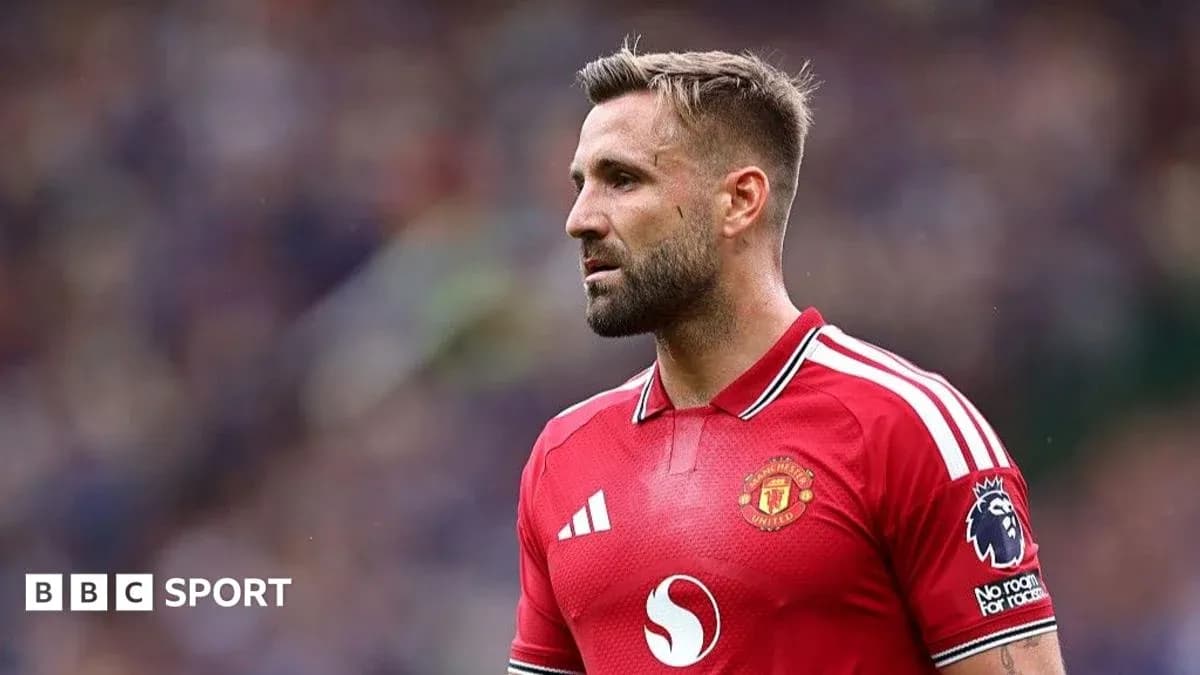
All summer, as arguments raged over Michael Carrick’s first full rebuild and where the money should go, one issue seemed almost too obvious. Luke Shaw, brilliant and durable last season, is also 31 and has a long injury history. Tyrell Malacia had gone at the end of June. A campaign that could stretch beyond 60 games was looming. A reinforcement on that flank felt less like a luxury and more like basic planning.
United didn’t see it that simply.
A gap, a list, and a refusal
The recruitment team had drawn up options. Lewis Hall at Newcastle. Alejandro Balde at Barcelona. Jorge Salinas at Racing Santander. The shortlist was clear, the need even clearer.
In the end, the final push came for Rayan Ait-Nouri, an audacious attempt to prise him across the Manchester divide on loan. City’s answer was blunt: no. The only way it might have moved was with an obligation to buy, a long-term commitment United were not prepared to make on those terms.
So the club stepped back. They chose to wait for what they see as first-choice targets rather than compromise at the last minute. The deadline passed. The gamble became real.
Until January, this is it.
Hall, the one they really wanted
Inside Old Trafford, there is no ambiguity over Lewis Hall. They really like him. Had Newcastle opened the door at a reasonable price, United would have walked straight through it.
But Newcastle, already stripped of key players by domestic rivals this summer, made it clear in talks that any deal for the 22-year-old would come at a huge cost. United’s budget was not bottomless. It never is, no matter the perception.
Faced with that reality, they chose to protect their main priority: midfield. Carlos Baleba was the chosen man, and £70m went to Brighton to get him. The Hall decision followed from that. United decided he was a player worth waiting for, even if that wait stretches to next summer.
On the other names, the pattern was similar. United would have taken Balde on loan; Barcelona only wanted a sale. Salinas had a modest release clause, but Atletico Madrid were always ahead in that race. By the time the focus shifted to Nicolas Tagliafico, who they missed out on anyway, United had already started to look elsewhere.
The late move for Ait-Nouri, triggered by an agent’s approach, betrayed a lingering doubt. If they were completely convinced by their internal solution, they would never have gone back to the market at all.
The plan: Shaw, improvisation and a teenager in limbo
Strip it back and the left-back plan is simple enough on paper.
Shaw remains first choice. Behind him, Carrick will lean on Noussair Mazraoui, who plays the role for Morocco, and Diogo Dalot, who has switched flanks before. Then there is Harry Amass, the academy left-back who spent last season on loan at Sheffield Wednesday, only to get injured straight after moving to Norwich in the winter window.
Amass, now 19, impressed many during pre-season. He shadowed Shaw, looked comfortable, and did little to weaken his case. Yet his situation remains one of the more curious subplots at the club.
This is not a new story. In the summer of 2024, Erik ten Hag left Amass out of his Community Shield squad, just a week after the teenager had held his own against Mo Salah in a pre-season game in the United States. Ten Hag’s view then was blunt: physically, Amass was not at the required level.
Two years on, the defender should be bigger, stronger, more ready. Interest in him has never been in short supply. As this window ticked down, his absence from the Premier League 2 fixture against Leicester on Monday only fuelled the belief he was heading out, probably on loan.
He stayed. No move, no clear explanation, no obvious role. He is in the building, but nobody quite knows what that means for the first team.
Yoro’s switch and the knock-on effect
The willingness to treat Mazraoui as a genuine left-back option has been shaped by what happened on the opposite side of the pitch this summer.
Leny Yoro, signed from Lille for £52m in 2024 as a central defender, spent most of pre-season at right-back. Against Ipswich on Sunday, he again came on in that role, replacing Dalot, at the same time as Mazraoui stepped in for Shaw on the left.
Yoro is only 20. He is learning the full-back craft on the job. But he has pace, strength and composure on the ball. The template is not hard to find. United fans have watched Josko Gvardiol adapt impressively to a similar shift at Manchester City after arriving as a centre-back. When it works, the positional switch can transform a back line.
That is the kind of upside United are betting on. A flexible defensive unit. Fewer signings. More trust in what they already have.
Scar tissue from past mistakes
There is another layer to this, one that goes beyond tactics and depth charts.
United have spent the summer holding their line on transfer fees, refusing to be dragged into auctions or pay what they consider inflated prices. That stance is not just about this window. It is a reaction to years of signings that never quite met the standard.
Names like Alex Telles, Matteo Darmian and Sergio Reguilon sit in the recent past as warnings. All arrived as solutions at full-back. None became long-term answers. United are determined not to repeat that cycle for the sake of short-term comfort.
So they walk away. They say no. They accept risk.
On a spreadsheet, it makes sense. On a whiteboard in a recruitment meeting, it is probably the right call.
But matches are not played on whiteboards.
A gamble only results can judge
This is where the calculation meets the chaos. Shaw’s fitness. Mazraoui’s adaptability. Dalot’s versatility. Yoro’s education. Amass’s status. All of it now feeds into a single question: did United get this one right?
The club has chosen control over panic, structure over a late scramble. The logic is sound. The risk is obvious.
Soon enough, the emotion of a tight game, a key injury, or a run of bad results will test that logic. When that moment comes, no one at Old Trafford will be talking about budgets and long-term planning.
They will be looking at the left flank and asking whether this was prudence — or a corner cut too fine.