Manchester United's Managerial Crisis: Carrick Faces the Same Fate
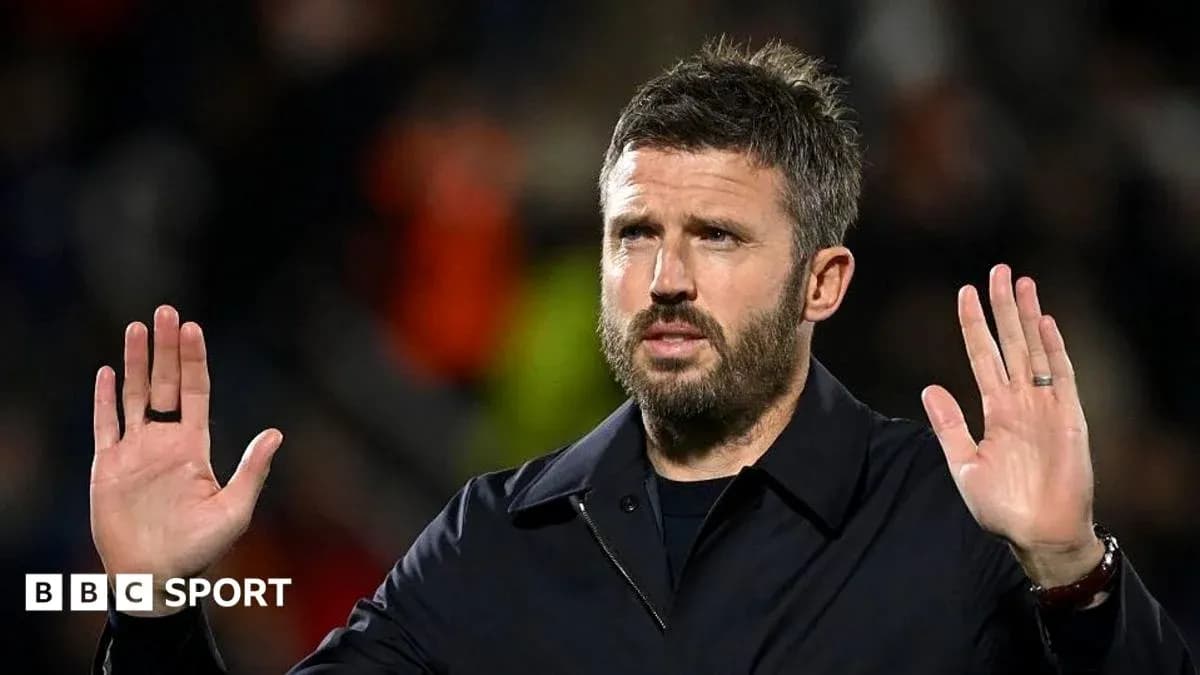
The image was painfully familiar. Arms raised, palms out, a lonely figure apologising to a furious away end after another 4-1 humiliation.
Three years ago it was Ole Gunnar Solskjaer at Watford. Now it is Michael Carrick at Como, swallowed by the same Manchester United machine that has chewed up and spat out every manager since Sir Alex Ferguson walked away.
Different face. Same script.
Another man on the touchline, same story in the boardroom
Carrick is the seventh full-time manager to inherit Ferguson’s empire and discover it is built on sand. David Moyes, Louis van Gaal, Jose Mourinho, Solskjaer, Erik ten Hag, Ruben Amorim, now Carrick. All of them arrived with a plan. All of them left with a pay-off and a reputation singed by the chaos.
There have been trophies, but they feel like crumbs. Van Gaal’s FA Cup in 2016. Mourinho’s League Cup and Europa League double in 2017. Ten Hag’s FA Cup win over Manchester City in 2024, a rare day when United looked like United again.
Slim pickings for a club that once measured success in eras, not afternoons.
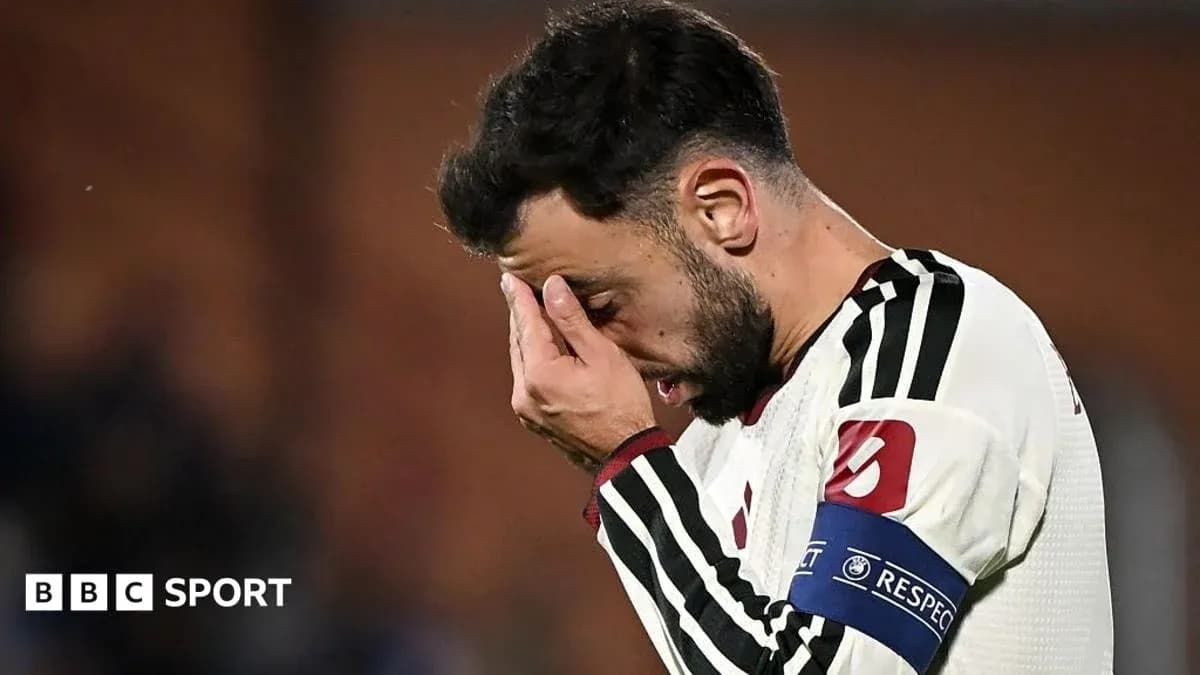
Carrick’s problem is not just results, though those are dreadful. It is the smell around the place. The Champions League defeat at Atletico Madrid sparked open revolt: Lisandro Martinez aiming a shot at director of football Jason Wilcox, Bruno Fernandes publicly questioning the tactical plan in Como. That is not just a bad night. That is a dressing room that no longer believes.
When players turn and point upstairs, the questions have to follow.
Is it really always the manager? Or has United, through a decade of decay and botched decisions, turned itself into the unmanageable club?
The managers were not all the same – the ending was
United’s hierarchy have tried almost every archetype in the modern coaching catalogue.
Moyes, hand-picked by Ferguson, came from Everton and discovered the job was too big, too fast. Van Gaal and Mourinho arrived with bulging CVs and Champions League rings. Solskjaer was the romantic choice, the anti-Mourinho, given the job full-time after an emotional caretaker run despite a modest managerial record that included a sacking at Cardiff City.
Ten Hag came on the back of that vibrant Ajax side which reached the Champions League semi-finals. Amorim was the coming man in European coaching, prised from Sporting in Lisbon as the next big thing.
Every one of them was eventually swallowed by the same unwieldy beast.
United’s decline did not begin with Carrick, or Amorim, or Ten Hag. It began the moment the succession to Ferguson was mishandled so badly that Old Trafford went from the natural home of the game’s elite to a job they could turn down.
Carlo Ancelotti, Pep Guardiola, Jurgen Klopp – all working within 35 miles of Old Trafford in December 2019. None of them at United. Ancelotti at Everton. Guardiola at Manchester City. Klopp at Liverpool. United had Solskjaer, appointed as much for nostalgia as for evidence.
He lasted just under three years. The symbolism still stings.
Carrick as Solskjaer Mark II
The parallels are uncomfortable. Carrick, like Solskjaer, is a former fan favourite who steadied the ship in temporary charge. Like Solskjaer, his only permanent job before this ended in the Championship with a sacking – Carrick at Middlesbrough, Solskjaer at Cardiff City.
United reached for the comfort blanket again. A familiar face, a man who “gets the club”, someone who could reconnect with supporters after Amorim’s abrasive final months.
Now the blanket has been ripped away by results, and Carrick stands exposed as the front man for a wider failure.
Because the real culprits do not stand in front of the away end. They sit in the directors’ box.
Ratcliffe, the Glazers and a decade of drift
Since 2005, United fans have raged against the Glazer family, their leveraged takeover and the debt it loaded on to the club. The protests never stopped. The Glazers never flinched.
Then came Sir Jim Ratcliffe, hailed by some as a saviour, quickly recast as an accomplice. His move into part-ownership alongside the Glazers tied his name to the most unpopular regime in modern United history.
Ratcliffe knows how to run global businesses. Football, though, has exposed him. He has insisted the big calls are made by football people – Wilcox as director of football, Omar Berrada as chief executive – yet instability and poor judgement have followed him into Old Trafford.
The Ten Hag saga underlined it. United were ready to sack him before the FA Cup final against City. He won, stayed, received a new contract and £200m to spend. Six months later he was gone, his dismissal costing more than £10m in pay-offs to him and his staff.
Financially reckless. Football-wise, incoherent.
Then came the Dan Ashworth episode. United fought to bring in one of the most respected sporting directors in the game, waited through his gardening leave from Newcastle United, finally installed him in July – and lost him five months later after a behind-the-scenes disagreement.
Ashworth spent as long waiting to start as he did actually doing the job.
Whispers said he was blamed for keeping Ten Hag. Others claimed he wanted to pivot towards English managers such as Graham Potter or Gareth Southgate instead of Amorim. Whatever the truth, the outcome was the same: another key figure out of the door, another layer of confusion.
Amorim, systems and another broken plan
United went for Amorim anyway, despite Liverpool already deciding his rigid 3-4-3 made Arne Slot a better fit for life after Klopp. At Old Trafford, that tactical obsession became the rock on which his reign foundered.
Fourteen months, then gone. Not quietly, either. Amorim left with a parting blast at the hierarchy and a hostile exchange with Wilcox. Another scorched-earth exit. Another manager whose frustrations were aimed upwards.
By the time Carrick walked in, morale at the club was already low. Ratcliffe’s “efficiencies” had meant harsh cost-cutting, long-serving staff leaving, and a feeling that the club’s soul was being trimmed alongside its wage bill.
Then came the ticket-touting investigation in the summer, a move that pushed an already angry fanbase towards open fury. United admitted they had underestimated how many fans shared accounts and softened some of the language around season-ticket confiscation, but they stood by the investigation itself.
The message was clear: mistrust runs both ways.
Money spent, identity lost
On the balance sheet, there are green shoots. United announced record revenue of £678m and a £23m operating profit despite missing European football for the first time in a decade, a dramatic swing from the £113m loss in 2023-24.
Yet the overall debt still stands at £1bn. Ratcliffe’s pruning has not cut deep enough to change that.
There is also the grand project: £64m spent on land for a new stadium, a proposed 100,000-seat arena with an estimated cost north of £2bn. Ratcliffe wants it to be his legacy, the concrete proof of his ambition.
But steel and glass do not win football matches. Nor do they fix a culture where every big football decision seems to lead to another dead end.
On the pitch, United remain a team built by multiple managers for multiple ideas, with no clear through-line. Off it, they are a club whose decision-makers have lurched from one vision to another without committing to any long enough to see it bear fruit.
And into this storm walks Carrick, asked to deliver miracles with a squad that would challenge any elite coach, let alone one still learning at this level.
The shrinking allure of Old Trafford
United will always be able to find a manager. The badge still carries weight. The stadium still dazzles. The history still seduces.
But the job no longer sells itself. Not to the very best. Not when the pattern is so stark: arrive to fanfare, wrestle with a lopsided squad, clash with a muddled hierarchy, leave with a payoff and a dented reputation.
Any manager with a high-class track record would demand time, power and heavy investment. None of those are guaranteed. Not now. Not here.
So Carrick stands on the touchline, the latest man to front up for a mess he did not create, knowing that the cycle rarely breaks in the dugout.
United’s rivals are not just pulling away. Some are disappearing over the horizon. The question is no longer who can fix Manchester United.
It is whether anyone, under this ownership and this structure, truly believes they can.