Manchester United's Rashford Dilemma: Balancing Finances and Talent
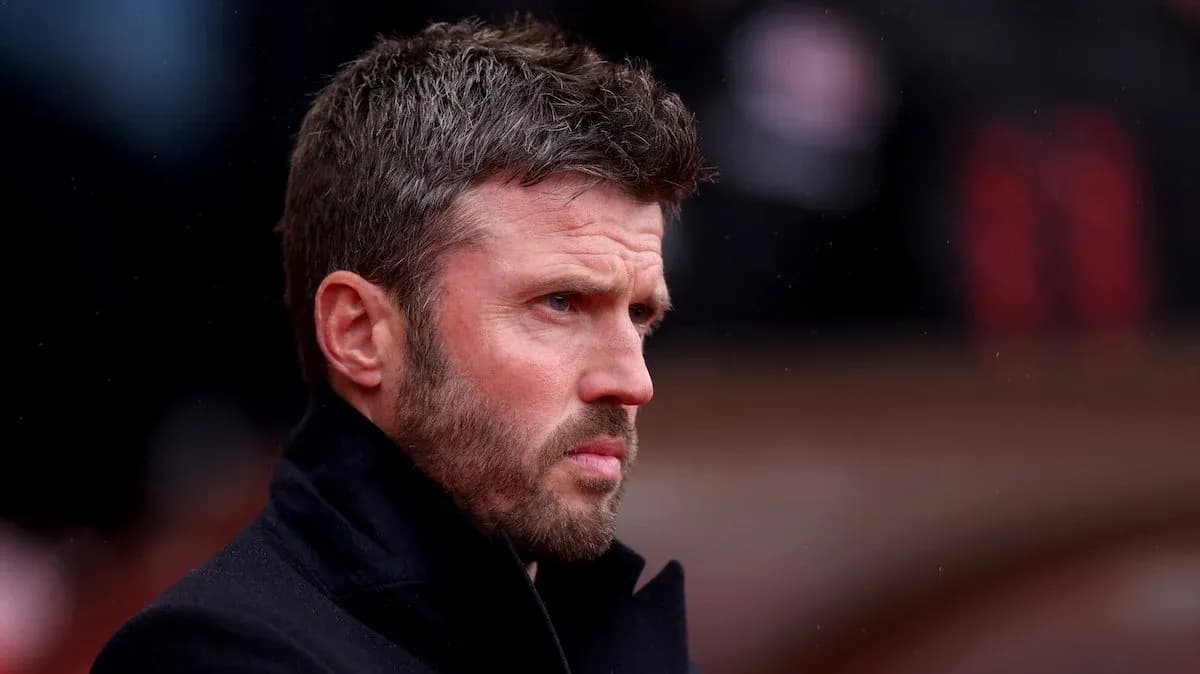
Manchester United are still trying to move Marcus Rashford on this summer. Michael Carrick wants to work with him. The club have missed out on their top targets on the left.
Yet the plan at board level has not shifted: sell Rashford and start again.
Why?
The Numbers Game INEOS Won’t Ignore
Rashford’s exile under Ruben Amorim in December 2025 was dressed up as a disciplinary issue. The truth behind INEOS’s backing of their head coach runs deeper than lateness or attitude. It lives in the wage column.
Rashford earns £325,000 a week at Old Trafford once his Champions League bonus kicks in. His deal runs until 2028. Across the next two years, United are committed to paying him close to £34 million.
For INEOS, that is the crux. One of the club’s highest-paid players underperformed for 18 months before his clash with Amorim. In any other business, a misfiring, premium asset would be stripped from the books without sentiment. Football, under Sir Jim Ratcliffe, is being treated the same way.
Cutting the wage bill has been a clear priority since Ratcliffe became co-owner in 2024. The refusal to bow to the “One More Year!” clamour around Casemiro, which would have meant around £350,000 a week for a fading midfielder, told its own story.
Rashford falls under the same logic. Amorim wanted him gone. Now Carrick is open to reintegrating him at Carrington, yet the hierarchy are still steering towards the exit.
This is not about a toxic dressing-room influence. It is not even primarily about form. Erik ten Hag once called Rashford “unstoppable” a week after dropping him for turning up late. Managers can live with flawed stars. Spreadsheets cannot.
In M16, the calculation is cold. Rashford is a homegrown player, so any transfer fee counts as pure profit under the Premier League’s Profitability and Sustainability Rules (PSR). That is gold dust for a club trying to reset its finances.
United even agreed a £26 million buy option with Barcelona in last summer’s loan deal. It looked light for a player of Rashford’s profile, but from a PSR standpoint it would still have been a huge windfall. Barça walked away from that clause, yet the principle remains: any fee United bank for Rashford is a clean, untainted gain.
Sell him, free up the wages, and use the money on a younger, cheaper wide player. That is the model. That is the plan.
Cheaper, Not Better
The obvious pushback is footballing: if you’re going to lose Rashford, you had better replace him with someone better. Or at least someone capable of matching his ceiling.
That is not what is happening.
United’s recruitment team have turned their attention to Crysencio Summerville. The West Ham United winger is understood to be the club’s “No.1 target” on the left this summer, a move driven in part by West Ham’s relegation in May and the hope of a bargain.
Only there is no bargain. The Hammers are holding firm at £50 million. Summerville’s excellent World Cup campaign with the Netherlands has only strengthened their stance.
Even so, the numbers still make sense to INEOS. A £50 million transfer fee spread over a five-year contract hits the PSR books at £10 million a year. Summerville is thought to earn about £50,000 a week in East London and wants that doubled to £100,000.
Run that forward. Over the first season, United would be paying roughly £10 million in amortised transfer costs and £5.2 million in wages. Just over £15 million in total.
Keeping Rashford for 2026/27 alone? That would cost around £16.9 million in salary. No fee, no resale value, and in two years he walks out as a free agent, close to his 31st birthday. Summerville, by contrast, would still be short of his peak and, in theory, could be sold at a profit.
On a balance sheet, the decision is obvious.
On a pitch, it is anything but.
Summerville has 10 goals and eight assists in 84 Premier League appearances across four seasons. Rashford, in his debut La Liga campaign with Barcelona, registered more assists alone, largely as a substitute. The Dutchman is a lively, modern winger with upside. He is not, at this stage, a better footballer than the Carrington graduate he would replace.
That is the tension. United are not chasing an upgrade. They are chasing a cheaper line item.
The Barcelona Question
Barcelona’s stance underlines the contradiction at Old Trafford.
The Catalan club decided against paying the £26 million option to make Rashford’s loan permanent. They did, however, want him back on another temporary deal. For them, the equation was simple: Rashford is worth his wages, just not the transfer fee.
A Champions League heavyweight, operating under brutal financial constraints, still believed he could justify a top salary in their squad. They simply could not marry that with a lump-sum outlay.
So if Barça are comfortable with Rashford on big wages without a fee, why are United so desperate to offload him under the same basic conditions they themselves would face?
The question becomes even sharper when you consider United are not favourites for Summerville. AS Roma, according to The Athletic, are in advanced talks with West Ham and already have the player’s approval for a move to the Italian capital.
United could yet miss out on their cheaper alternative while still pushing to sell the player who, on talent alone, would walk into Carrick’s team.
Football vs Finance
This was not the original plan. Heading into the summer, United’s preferred options on the left were RB Leipzig’s Yan Diomande and Aston Villa’s Morgan Rogers. Those were the dream targets, both seen internally as clear upgrades on Rashford and aligned with INEOS’s desire for younger, high-ceiling signings.
Reality bit. The fees required for Diomande or Rogers were simply too steep once United committed to a major midfield overhaul. The club pivoted. Summerville became the live option, not because he was the best footballer on the list, but because he was the one who fit inside the financial lines.
Which brings the whole debate back to Rashford.
Is his wage packet a price worth paying if the alternative is a downgrade? Is the rush to bank “pure profit” from a local academy star worth the hit to the squad’s attacking quality?
Carrick, by all accounts, thinks he can still get a tune out of Rashford. He has seen enough to believe there is a player there, one who can still decide games and carry a flank at Old Trafford. His bosses are looking at a different set of numbers and drawing a different conclusion.
Both sides can point to logic. Both can claim to be acting in United’s best interests.
But only one of them is thinking about what happens when the whistle blows on a Saturday, and the club’s most expensive decisions can no longer be hidden in the accounts.