Manchester United's Summer Transfer Strategy: A Shift in Plans
Manchester United’s summer was never supposed to look like this.
The plan, drawn up months in advance, had a clear headline act in midfield: Elliot Anderson at the top of the list, Mateus Fernandes close behind, Éderson lined up as a smart-value addition. Instead, Anderson is at Manchester City for £116 million, Fernandes has gone to Tottenham for £85m, and a £35m deal for Éderson collapsed late on medical grounds.
United haven’t torn everything up. But they’ve had to rewrite more than a few pages.
A window built on flexibility, not panic
Before the market opened, CEO Omar Berrada warned that United would need to be “flexible.” It sounded like a cliché at the time. It now reads like a mission statement.
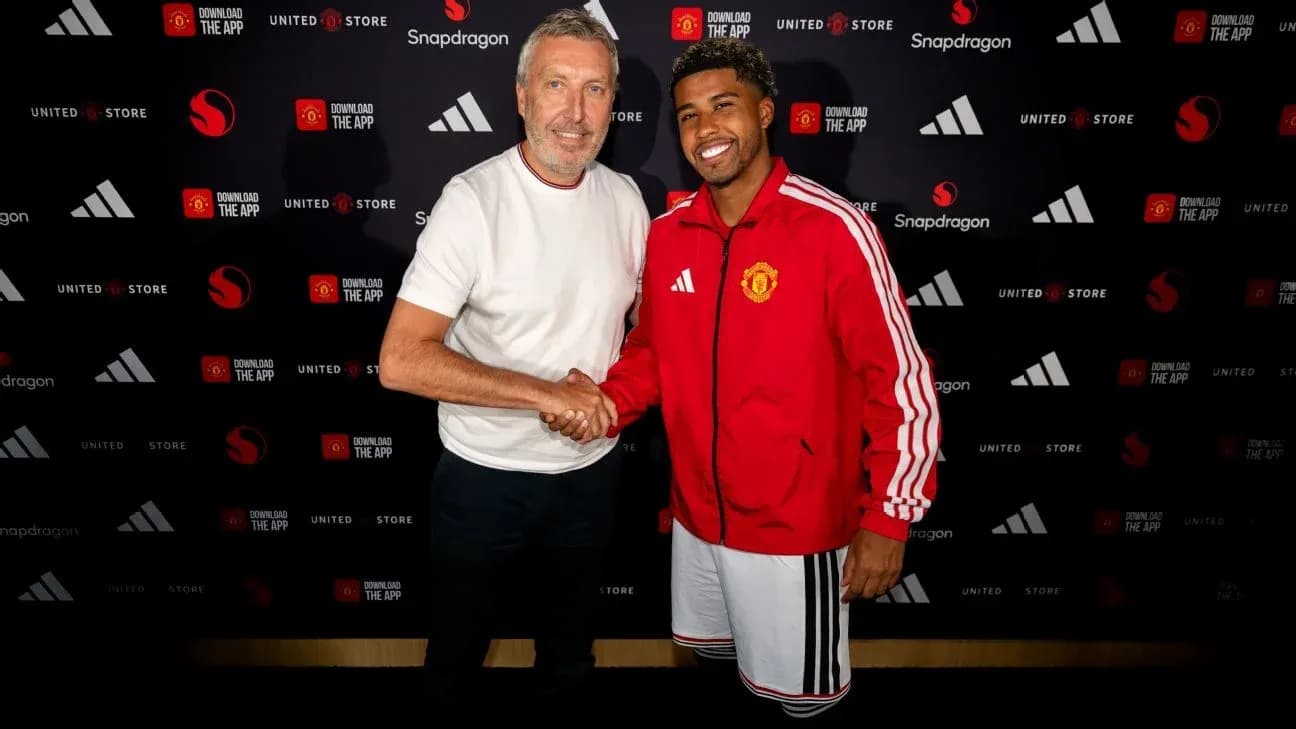
With Anderson and Fernandes gone, the midfield rebuild has been re-routed around Andrey Santos, signed from Chelsea for £48m, and Youri Tielemans, brought in from Aston Villa for £35m. Not the original script, but not a scramble either.
Inside the club, the message from Berrada and director of football Jason Wilcox has been consistent: stay calm. United have a history of lurching from target to target when the market turns against them, often paying the price in fees, wages or fit. This time, according to sources, as much weight has been placed on avoiding the wrong deals as landing the right names.
They learned early that Anderson was drifting out of reach. Once City’s interest hardened and Nottingham Forest pushed for an initial fee close to £120m, United saw the familiar shape of a bidding war they didn’t want.
There was a warning sign in January. United believed they were well placed for Bournemouth winger Antoine Semenyo after encouraging talks with his camp. Then City stepped in. After Semenyo’s first meeting at the Etihad, wage expectations rose sharply. United walked away. City paid £64m.
The lesson was clear: matching a fee is one thing; matching a financial ecosystem is another. United decided not to repeat the dance with Anderson and cooled their pursuit before it became a public saga.
Fernandes, commitment and the Tielemans pivot
Fernandes was supposed to be the other pillar of the midfield rebuild. United had set aside £80m-£90m for a central midfielder and could have gone toe-to-toe with Tottenham’s offer. On paper, there was no financial barrier.
But the conversations didn’t feel right.
Sources say United never got a firm sense that Old Trafford was Fernandes’ preferred destination. When the moment came to decide whether to meet West Ham’s demands, doubts lingered about how badly the Brazilian wanted the move.
For Berrada and Wilcox, that jarred with last summer’s experience. Bryan Mbeumo and Matheus Cunha, both courted by clubs in the Champions League, made it clear they only wanted United. Inside Carrington, the recruitment staff believe that clarity of intent helped both players settle quickly and hit the ground running.
There are still people at the club who look at Jadon Sancho’s struggles and wonder if his hesitation about leaving Borussia Dortmund in 2021 played a part. Talent alone doesn’t close the gap.
Tielemans did not come with that question mark. The Belgium international brought years of Premier League experience and one simple message: he wanted to play for United. The £35m release clause in his Aston Villa contract did the rest.
The move for Tielemans accelerated once the Éderson deal stalled. An agreement worth around £35m with Atalanta had been in place before the World Cup, only for medical tests to highlight an issue serious enough for United to step back. Club sources have left the door ajar to revisit it later in the summer, but for now it is off the table.
Counting every pound in an inflated market
Champions League qualification has topped up the transfer budget, but not to the point where United can afford expensive mistakes. Inside the recruitment department, Fernandes had initially been placed in a bracket of players expected to move for £40m-£50m, especially if West Ham were relegated. Watching his price climb to almost double that set off alarm bells about where the rest of the market might go.
Santos at £48m, plus £2m in add-ons, looked like a more controlled play. Younger, cheaper, and without the risk of dragging United into a fee spiral.
Few at Old Trafford anticipated Tottenham detonating the early weeks of the window by spending a combined £185m on Fernandes and Sandro Tonali, another midfielder United had considered. Part of United’s planning involves modelling what rivals might do; Spurs’ aggressive start blew up a few of those projections.
The original hope was that outgoings would quietly fund the marquee midfield arrival. Sales of Rasmus Højlund to Napoli for £40m, and potentially Marcus Rashford, Manuel Ugarte, Joshua Zirkzee and Altay Bayindir, were expected to raise around £90m.
The reality has been harsher. Barcelona opted against turning Rashford’s loan into a permanent £25m deal. Ugarte then suffered a serious knee injury playing for Uruguay at the World Cup, ruling out a move and leaving United with a long-term absentee rather than a sale.
The budget, already tight, has become a moving target.
Release clauses, the “United tax” and what comes next
At Old Trafford, they talk about the “United tax” — the premium clubs try to add when United call. Berrada has made no secret of his preference for players with release clauses. There is no auction, no gradual creep in the asking price, no chance for selling clubs to leverage United’s name.
Tielemans, locked in at £35m, fit that strategy perfectly.
Even after landing Santos and Tielemans, United have not closed the door on a third midfield signing, especially with Ugarte sidelined for much of the year. The shortlist is long and varied.
Bournemouth’s Alex Scott and Tyler Adams are both admired. Fulham’s Sander Berge is on the radar. Crystal Palace’s Adam Wharton has been tracked closely, as have Wolves’ João Gomes, AS Roma’s Manu Koné and Lille’s 18-year-old Morocco international Ayyoub Bouaddi, one of the breakout stories of the World Cup.
Eduardo Camavinga has been offered to several Premier League clubs by intermediaries, while United know from last summer’s enquiry that Brighton would demand a Moisés Caicedo-level fee — close to £100m — for Carlos Baleba.
Those numbers explain why United’s gaze is spread wide rather than fixed on one superstar.
More than just the midfield
Midfield might dominate the headlines, but it is not the only area flagged for surgery. United want a left-sided player — either a full-back or a winger — and a second striker to ease the load up front.
In goal, 25-year-old Wales international Karl Darlow is expected to arrive from Leeds United as experienced cover for current No.1 Senne Lammens. It is not a glamorous signing, but it is the sort of depth United know they will need.
Champions League football changes the calendar and the strain. A third-place finish last season has to be a platform, not a peak. The starting XI needs more quality, the bench needs more trust. The physical demands next season will be unforgiving.
Inside the club, though, there is no sense of alarm about how the window has unfolded. Frustration from supporters over the lack of a single, statement midfield signing has been noted, but United’s stance is blunt: judge the work when the deadline passes, not while the scaffolding is still up.
There are six weeks until the Premier League kicks off on Aug. 22 and seven until the market closes on Sept. 1. Plans have shifted, targets have moved, and rivals have disrupted the script, but United are still moving — sometimes sideways, sometimes forward, never quite in a straight line.
The best-laid plans have gone, replaced by something more improvised, more reactive. The question now is simple: when the window finally slams shut, will this controlled flexibility look like prudence — or a missed chance to change the club’s trajectory?