Marcelo Bielsa's Dismissal of World Cup Portraits
Marcelo Bielsa has never cared much for the theatre that surrounds football. He cares about the work. The detail. The grind. Everything else is background noise.
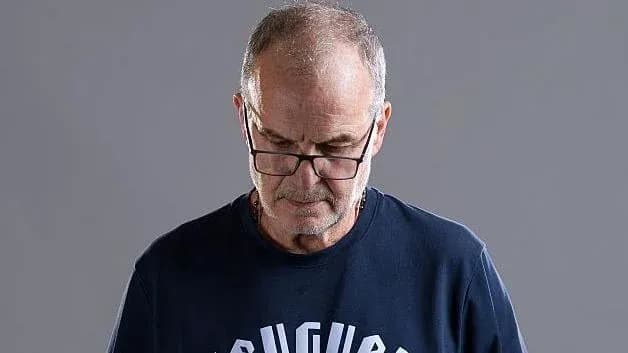
So when Fifa’s official World Cup portraits dropped and Uruguay’s 70-year-old coach appeared staring firmly downwards, refusing to meet the camera, it felt entirely on brand. No smile. No pose. No attempt to play to the gallery. Just Bielsa, looking like a man dragged away from a training session he’d rather still be running.
In an era when players and managers treat these shoots like a red carpet, Bielsa treated it like an inconvenience.
The reaction was instant. Social media spun up theories: Was it a protest? A message to Fifa? Another eccentric flourish from “El Loco”? After Uruguay’s opening 1-1 draw with Saudi Arabia in Miami on Monday, the questions followed him into the press room.
He was not amused.
“I don't have to give any explanation, the picture was taken the way it was taken,” he snapped, cutting off the line of inquiry with the same bluntness he reserves for a sloppy defensive line. “I'm not a model.”
That was that, as far as he was concerned. No hidden meaning. No grand statement. Just a photograph he had no interest in turning into a performance.
Fifa’s portrait sessions have become part of the spectacle around their showpiece tournaments over the last decade, a polished, highly shareable window into the personalities on display. Players grin, flex, point at badges. Coaches soften their image. It’s made for the digital age.
Bielsa, one of the most influential coaches of his generation, wanted no part of the pantomime.
The Argentine is at his third World Cup as a national-team manager, having previously led Argentina and Chile. He has built a career – and a mythology – on his own terms: the forensic video vault, the monastic lifestyle, the famous ice box he sits on during games, the litter-picking with Leeds fans to teach players about work and value. Every story reinforces the same truth: Bielsa lives for the game, not the circus around it.
So when another journalist moved on to a different topic, Bielsa circled back to the photo again, clearly still irritated by the idea that he owed anyone a deeper explanation.
“There is a limit in terms of what we need to explain,” he said. Then he reached for everyday examples to make his point. “If I'm wearing glasses, why am I wearing glasses?
“You look somebody in the eye, why do you do that?
“There is nothing wrong about wearing glasses or looking into somebody's eyes or looking down.”
To Bielsa, the obsession with a downward gaze in a staged photograph said more about modern football’s priorities than about him. Why dissect a portrait when there is a performance to analyse, a team to refine, a tournament to navigate?
Uruguay, held by Saudi Arabia in their opener, move on to their second pool game against surprise package Cape Verde on Sunday (23:00 BST). That is where Bielsa’s attention will be – in the film room, on the training pitch, in the fine details that have always consumed him.
The world can debate his picture. Bielsa will be busy trying to shape Uruguay’s.