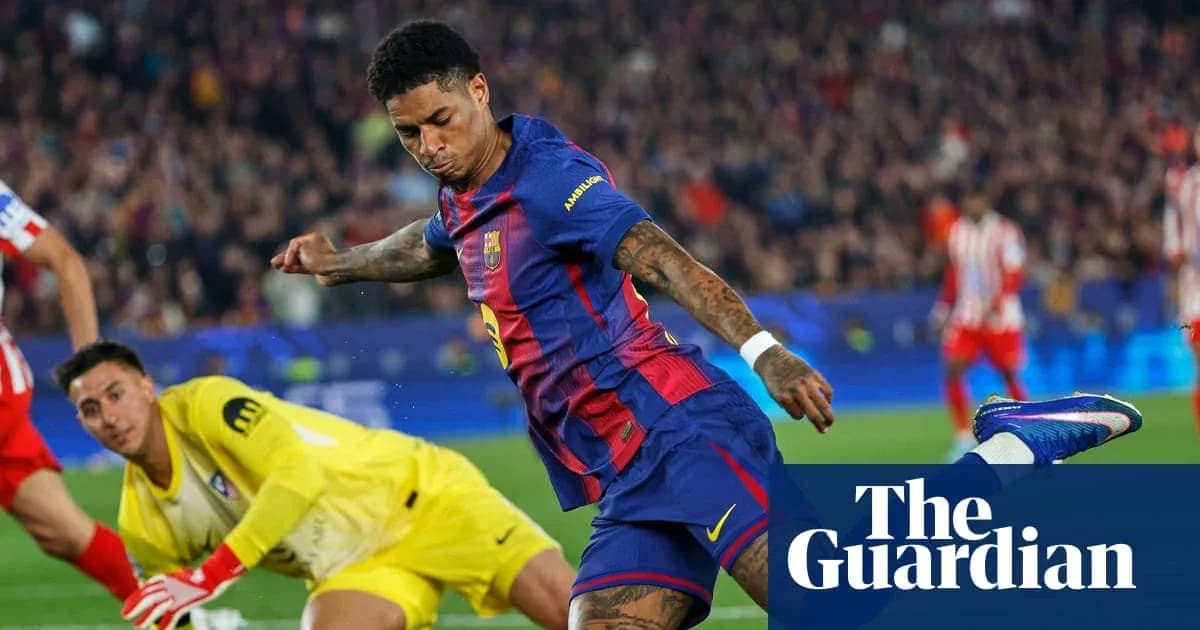
Marcus Rashford's Uncertain Future: A Summer of Decisions
Marcus Rashford’s future used to look like a straight line. Manchester United prodigy, England starter, Old Trafford talisman for a decade. Now it’s a maze.
This summer, it could also be a long wait.
The 28-year-old is expected to start England’s World Cup opener against Croatia on 17 June in Dallas, yet he goes into the tournament not knowing where he will be playing his club football next season. For a forward of his pedigree, that is an extraordinary limbo.
It is also the latest turn in a turbulent spell that began when Ruben Amorim, then United head coach, cut him from his first‑team plans in December 2024. That decision detonated Rashford’s status at his boyhood club. Loans to Aston Villa and Barcelona followed. The sense of permanence never did.
In Catalonia, though, he seemed to find something close to belonging. Rashford has spoken openly about wanting to put down roots at Barcelona and, for a moment earlier this month, it felt as if the story might write itself. His free-kick against Real Madrid in the clásico – a strike that swung the title race and helped Barça clinch La Liga – looked like the sort of moment that turns a loan into a legacy.
After scoring against Real on 10 May, he did not hide his preference. “I am not a magician but if I was, I would stay,” he said. “We will see.” It sounded like a plea wrapped in a joke.
Barcelona’s mixed signals
On paper, Rashford and Barça should fit. He delivered eight goals and nine assists in La Liga last season, numbers that do not scream superstardom but do whisper reliability in a title-winning campaign. He operated from the left, drove at defenders, and stepped up in big games. The clásico free-kick alone felt like a signature on a new chapter.
Yet the club’s intentions remain cloudy. Their move for Anthony Gordon from Newcastle, at £69m, has only thickened the fog. Gordon, like Rashford, is a left-sided attacker. His arrival suggests Barcelona are investing heavily in that flank – just not necessarily in the player who has already helped them retain the league.
Behind the scenes, the message is blunt. If Barcelona want Rashford again, it is likely to be on another temporary deal. Manchester United, by contrast, have drawn their own line: they will only entertain a permanent transfer and would demand around £26m for an academy graduate whose contract runs to May 2028.
That fee looks low for a forward in his peak years. The explanation sits on Rashford’s payslip.
He earns £17.5m a year. There is roughly £35m still to be paid on his current United deal. The club’s priority is not just a transfer fee; it is unloading a wage they no longer wish to carry. Any loan would require the buying club to shoulder most, if not all, of that cost. A permanent move would almost certainly involve a salary increase.
Right now, Barcelona do not seem inclined to take that plunge.
No way back at Old Trafford
If Barcelona hesitate, could Rashford simply return to United and start again under new management?
That door appears bolted.
Amorim may have gone, replaced permanently by Michael Carrick, but the power structure above the dugout has not softened. Sir Jim Ratcliffe, United’s minority owner and the man driving football policy, has little appetite for a Rashford reconciliation. Nor, it is understood, do Jason Wilcox, the director of football, or Omar Berrada, the chief executive.
Within that hierarchy, the lad from Wythenshawe has become persona non grata. Sentimentality about his academy roots does not enter the equation. United want a clean break and a clean wage bill.
So Rashford looks outward.
Premier League fault lines
When his Villa loan ended last summer, Rashford’s camp made one thing clear: he wanted a Champions League club, but not one based in London. That stance may now be softening, because the market at his level is small and the options are complicated.
If London is back on the table, Arsenal immediately come into view.
Mikel Arteta has built a ruthless Premier League-winning machine, but the left side of his attack is still a live conversation. Rashford would represent a different profile and, arguably, an upgrade on Leandro Trossard and Gabriel Martinelli as a left-sided forward. His ability to operate as a No 9 only adds to the intrigue, offering another option alongside Kai Havertz and Viktor Gyökeres. For a manager obsessed with tactical variety, that versatility carries weight.
Across the divide, Liverpool present a different kind of question. Cody Gakpo is currently their only senior left-sided specialist and his output last season was, at best, modest. From a footballing perspective, Rashford fits the need. From an emotional one, the move would cut deep.
Could a player so closely tied to United, a symbol of their academy and their community work, really cross the line to Anfield? Would his disaffection with United burn hot enough to override that tribal fault line?
Villa, by contrast, would be a far simpler sell. Rashford thrived under Unai Emery, especially under the Champions League lights, where his direct running and big-game temperament dovetailed with Villa’s high-tempo style. A return to the Midlands would offer familiarity, a clear role, and Champions League football without the political baggage of a move to a direct rival.
Europe watching, wallets twitching
Beyond England, admirers watch and wait.
Paris Saint-Germain have long kept an eye on Rashford, but their left flank belongs to Khvicha Kvaratskhelia, a world-class presence and a major investment. With that position locked, a move for another high-earning left-sided forward feels remote.
Bayern Munich have Luis Díaz in that role. Real Madrid have Vinícius Júnior, arguably the best left-sided forward in the world. Those doors are not just closed; they are bolted from the inside.
So the pool narrows. A handful of Premier League giants, a Barcelona hierarchy that likes him but hesitates, and a Villa side that already knows what he can bring. All of them, in different ways, circling the same problem: a £26m fee that looks like a bargain, tied to a salary that most clubs would need to rework.
The transfer window opens on 15 June. The picture should sharpen, but not quickly. Rashford’s case is a puzzle of competing agendas: United’s desire to cash in and cut costs, the player’s wish for stability at the highest level, and clubs trying to square ambition with financial reality.
United can block any move they do not like. Rashford can reject any destination that does not fit his ambitions. Between those two immovable forces lies a summer of negotiation and, potentially, stalemate.
The enigma at a crossroads
On the pitch, Rashford remains a riddle. Eight goals and nine assists in La Liga is a respectable, not spectacular, return. It explains some of Barcelona’s caution. Is he the man to build around, or the man you borrow for the big nights and then think twice about buying?
The World Cup may answer that.
If Rashford lights up England’s campaign in the United States, the equation changes. A £26m fee, even with a hefty wage, starts to look like a steal for a forward who can decide games on the biggest stage. Clubs that are currently hesitating might move quickly. Those quietly watching from the shadows might step into the light.
For now, he waits. Between Barcelona and England, between past and future, between the club that raised him and the clubs that might rescue him.
The next move will not just define his summer. It may decide whether Marcus Rashford is remembered as a talent that flickered in flashes, or one that finally found the stage – and the club – to match his best nights.