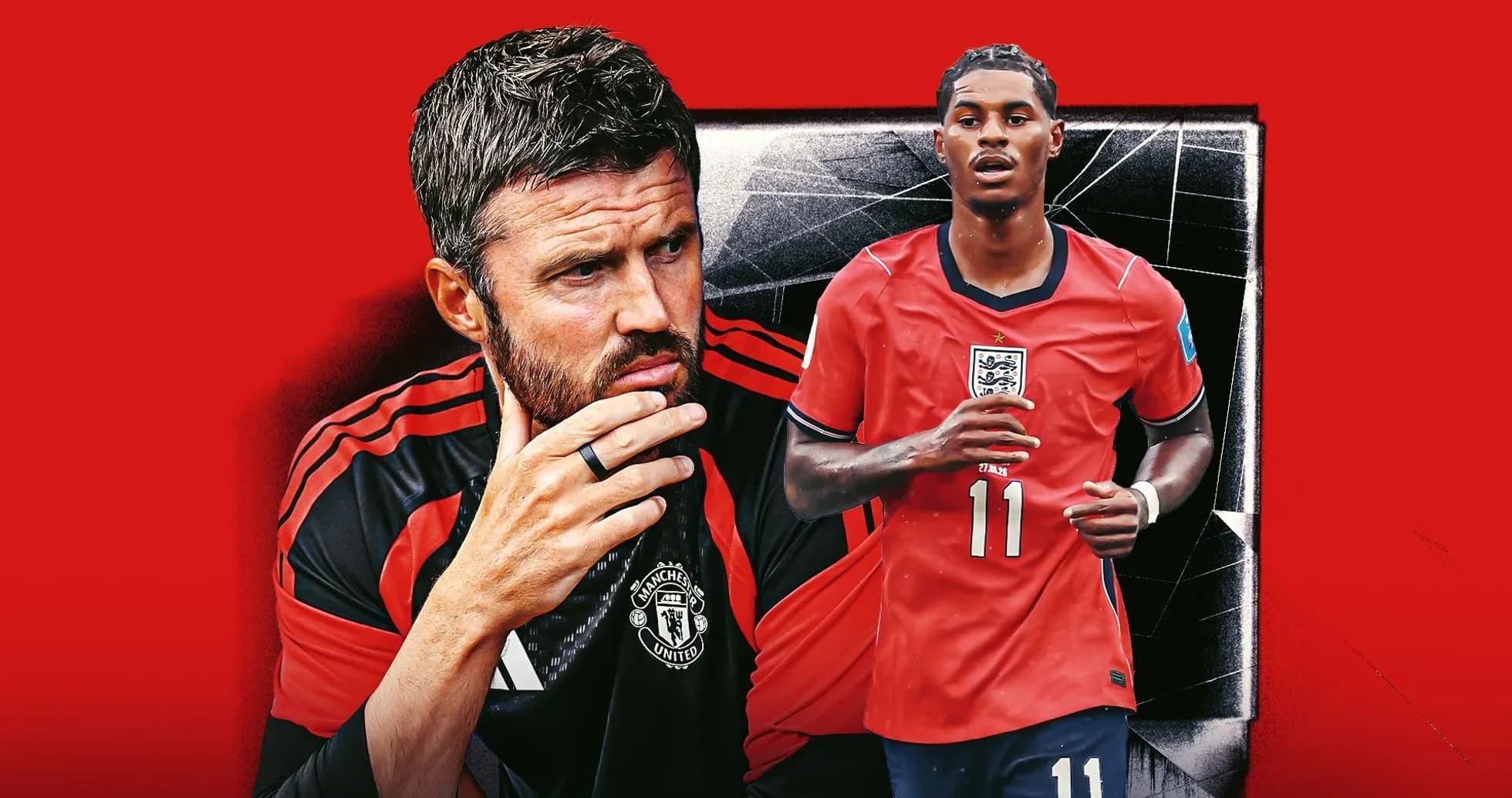
Marcus Rashford's World Cup Struggles and Future Uncertainty
Marcus Rashford went to the 2026 World Cup needing a shop window. He came back with the shutters half‑down.
England’s campaign in North America offered him a stage, but also a rival. Anthony Gordon, newly of Barcelona, lurked on the same left flank, chasing the same starting shirt. Rashford struck first – a composed finish to seal the opening win over Croatia – yet never turned that moment into a run. As Gordon spluttered through the early group games, Rashford had his chance to grab the tournament. He never did.
After flat, functional wins over Panama and DR Congo, Thomas Tuchel lost patience. The United forward was dropped, Gordon stepped in and never looked back, driving England’s attack through the knockouts. Rashford’s World Cup ended with just one goal and one assist, the latter arriving in a low‑key third‑place play-off against a France defence that barely bothered to turn up. The numbers matched the feeling: a tournament that drifted away from him.
Barca door closes, clauses expire
All this played out while the transfer market quietly turned against him.
Barcelona, where Rashford had spent the second half of last season on loan, had already nailed down Gordon from Newcastle for £69m before a ball was kicked at the World Cup. That single deal effectively killed any serious prospect of them activating the buy option in Rashford’s loan agreement with Manchester United. The clause was allowed to expire on June 15, four days into the tournament.
United, for their part, have refused to renegotiate that figure or entertain another loan to Camp Nou. The message from Old Trafford is blunt: the original price stands, or he comes back.
A second key date slipped by a month later. The £40m exit clause in Rashford’s contract – a relatively modest sum in the current market – also lapsed, just a day after England’s semi-final defeat to Argentina. Any move now requires hard negotiation. Barca’s previous £26m option is widely regarded as a more realistic valuation, but there is no indication anyone is rushing to meet it.
Any lingering hope of a late Barcelona U‑turn dimmed further when Karim Adeyemi completed his move to Borussia Dortmund, tightening up another lane in the forward market. Rashford has, according to reports, already turned down interest from Fenerbahce and Galatasaray as he waits for a leading Champions League club. The list of suitors is shrinking. His demands are not.
United’s own trap
This is not just a player stuck in limbo. United are wedged in there with him.
They had weighed up a move for West Ham winger Crysencio Summerville, only to watch the Netherlands international head towards Al-Hilal in a £60m deal. Their summer business has been cautious, limited by a lack of significant sales. On the left flank, they are hardly overflowing with options.
Yet the club have drawn a clear line inside the Premier League. According to The i Paper, United will not sell Rashford to another English top-flight side, even though Tottenham were prepared to trigger his now-expired £40m clause. The fear is stark and unashamed: they do not want to be “humiliated” by their academy graduate rediscovering his scoring touch for a domestic rival. Internally, it is seen as a potential “PR disaster”.
Arsenal and Xabi Alonso’s Chelsea have both monitored the situation, but neither is expected to move decisively, particularly after Chelsea spent £117m on Morgan Rogers from Aston Villa. The market is tight. The money is going elsewhere.
At the heart of the stalemate lies Rashford’s wage packet. On £325,000 per week, he sits among the highest earners at Old Trafford. That figure is choking the market. No realistic contender is prepared to go anywhere near it, even though he is understood to have rejected richer proposals from less glamorous destinations. If money alone dictated his choice, he would be long gone.
United’s hierarchy, led by Sir Jim Ratcliffe and INEOS, want that salary off the books as part of a broader cost-cutting drive. Former head coach Ruben Amorim pushed to move Rashford out in January 2025, and the board backed that stance. The arithmetic is stark: The Athletic reports that the final two years of Rashford’s contract will cost around £39m in wages alone, before bonuses. For a forward nearing 29 and no longer a guaranteed starter, that is a heavy burden.
Carrick opens the door
Yet the mood music at Carrington has shifted.
Michael Carrick, Amorim’s successor, is understood to be open to reintegrating Rashford. The forward is expected to join the squad in Dublin for the remainder of pre-season after a post-World Cup break, and there is no suggestion he bears a grudge over his treatment under Amorim, who had banished him to the so‑called “bomb squad”. With Champions League football returning to Old Trafford, depth suddenly matters again.
“Rashford is really looking forward to the opportunity to work with Carrick,” reported transfer specialist Fabrizio Romano on his YouTube channel. “Carrick is also looking forward to working with Rashford. I am told that Carrick is genuinely excited about the opportunity to help revive Rashford's career at Man United.
“Rashford and the club are prepared to give each other another chance. After that, they will decide whether to continue together or whether the player will leave during the summer transfer window.”
Carrick himself kept things open when asked about Rashford’s future in April. “There's decisions to be made in time on certain things, and obviously Marcus is in that situation,” he said. “But at this point in time, nothing's been decided. From my perspective, whoever's here, I want to work with, make the best out of and help them improve.”
A compromise, in theory, would be simple: a wage cut to bring Rashford back into line with his current status. In reality, those close to the situation consider that unlikely. The i Paper suggests the most probable outcome is that United hand him a genuine chance to resurrect his career at Old Trafford, partly because other options have evaporated and partly because the failed Summerville pursuit has underlined how thin they are in his position.
The lingering question is whether Ratcliffe and the INEOS leadership are as willing as Carrick to roll the dice again, given the financial implications. The old warning – you should never go back in football – will echo around the boardroom.
Fractured bond, fragile future
Rashford would not just be returning to a club. He would be walking back into a complicated relationship with his own supporters.
By the time he left on loan in January 2025, his bond with sections of the fanbase had frayed badly. He had become a lightning rod for anger: criticised for body language, work-rate, perceived attitude. Some of that was undoubtedly fuelled by United’s broader struggles under Amorim, with Rashford an easy scapegoat. The perception stuck all the same.
Winning that crowd back will not be about slogans or social media posts. It will require visible fight, relentless running, and early end product. A slow start could turn the atmosphere sour in an instant, especially if the team as a whole stutters out of the blocks. For all the sentiment about a local lad and a second chance, Old Trafford can be an unforgiving place when patience runs out.
United, then, find themselves in a mess of their own design: a high-earning forward they are desperate to move on, a market unconvinced by the fee and salary, and a player who has every right to refuse offers that do not match his ambitions. Their £26m valuation looks optimistic when every club can see how badly they want to sell.
The loan card
Which leaves one path that might suit everyone: another loan.
If United can replicate something close to the Barcelona arrangement, a new club would shoulder most or all of Rashford’s wages, perhaps in exchange for a reduced salary negotiated directly with the player, as the Blaugrana managed. Even that is no simple sell with £325,000 per week on the table at Old Trafford. A 40/60 split in wages – United paying the smaller portion – feels closer to reality.
The clock is United’s enemy and Rashford’s ally. The longer this drags on, the more potential suitors will fancy their chances of squeezing a better deal, especially if United spend on another winger and the need to offload grows urgent. The forward, meanwhile, can afford to be selective, waiting for a club that ticks his boxes competitively and financially.
What is clear is that this saga will not resolve quickly. The window has time left to twist, and Rashford sits at the centre of it, a high-profile talent in search of the right door.
The real question now is simple: will his next step be the fresh start he wants, or a reluctant return to a club still unsure what to do with him?