Marnus Labuschagne's Struggles in First-Class Cricket Return
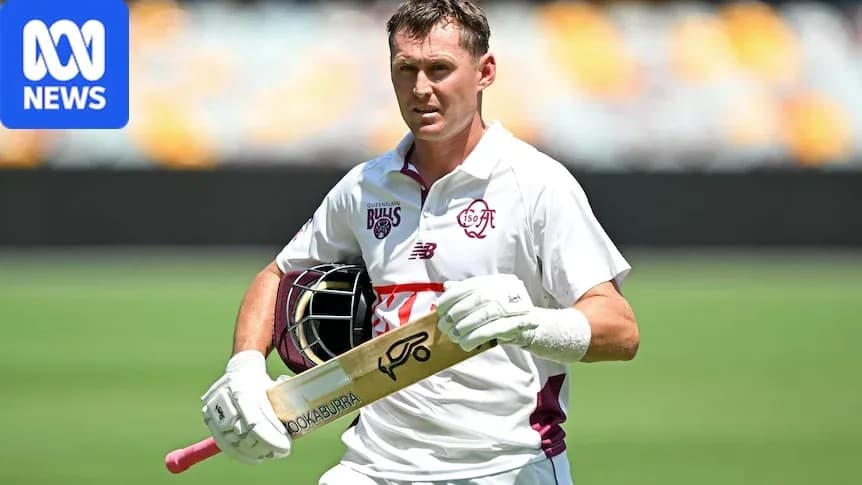
Marnus Labuschagne walked back into first-class cricket on Wednesday with a nation’s doubts trailing behind him. Thirty-six balls later, he walked out again, head bowed, the questions still unanswered.
This was supposed to be the quiet restart, the low-key rebuild. Sheffield Shield, midweek at the Gabba, a scattering of spectators and the familiar hum of domestic cricket. Instead, Labuschagne’s 12 from 36 against Tasmania felt like an echo of everything that has gone wrong in the baggy green over the past year.
He came in after Angus Lovell, who had fought hard for 18 from 60 on a lively surface, finally nicked Beau Webster to the slips and stormed off, furious at wasting the graft. For more than an hour, the small crowd of a hundred or so had waited, glancing at the dressing-room balcony, wondering when their fallen Test No. 3 would appear.
When he did, they let him know they were still with him. Warm applause rolled around the Gabba, briefly drowning out the relentless jackhammers from the redevelopment work outside. One voice cut through: “Come on Marnus.” It was hopeful, almost protective.
Labuschagne responded in kind, at least to start. First ball, from former Test teammate Webster, he leaned into a square drive and cracked it for four. It was the kind of shot that once made him the heartbeat of Australia’s middle order: decisive, crisp, authoritative.
But the veneer slipped quickly. A thick edge off Jackson Bird flew past third slip, a reminder that this comeback is not going to be a clean, linear rise. The technique that has frayed on the international stage looked no sturdier back home. The same hard hands. The same prods outside off stump. The same lack of movement that has turned the fourth-stump line into his personal minefield.
All the familiar quirks returned too. The hands waving, the exaggerated leaves, the bouts of shadow-batting between deliveries. They were as visible here as they were in Gqeberha, where he made 14 and 39 in Australia’s innings defeat and, eventually, pushed the selectors to act.
As Tasmanian quicks tightened their lines, Labuschagne’s leaves became more theatrical, almost defiant. He shaped away like a matador, the bat his cape, letting the ball whistle past off stump, daring it to clip the bails. It looked bold. It also looked like a man trying to convince himself he was still in control.
By lunch, he had crawled to eight. No flow, no command, just survival.
The end came soon after the interval. Another ball outside off that did not demand a shot. Another reach. Another edge. This time to Jake Doran off Riley Meredith, and the keeper did the rest.
Labuschagne lingered for a moment, staring down the pitch, as if replaying the decision in his mind. Then he trudged away, the applause gone, replaced by the dull thud of his spikes on concrete and the ever-present drilling outside.
For Queensland, this match carries little immediate consequence. For their captain, it is officially meaningless in the short term. He has already been discarded from a Test side that, after crushing England in last year’s Ashes, has stumbled to just two wins in its last five Tests against Bangladesh and South Africa and failed to claim a series. His place is gone. His status, for the first time in years, is fragile.
Yet people still came. They still clapped. They still wanted to believe that the player who once churned out runs for fun could flick a switch and find it again in the Shield.
He is not alone in misfiring. Across the country, it was a grim day for batters. New South Wales mustered only 204 against South Australia. Sam Konstas made 24. Kurtis Patterson fell for a duck. At the MCG, Marcus Harris scratched his way to 15 on a surface that looked far kinder to batting, at least judging by Peter Handscomb’s century for Victoria.
So this was not a day that singled Labuschagne out in the scorebook. The problem is that his numbers now sit inside a much larger, darker pattern.
He has only just returned from South Africa. No one can realistically overhaul a technique or silence the noise in their head in a fortnight. The flaws that cost him his Test spot will not vanish in one Shield innings, or two, or maybe even ten.
Outside the Gabba, the redevelopment drones on, steel and concrete slowly reshaping the ground for future summers. Inside, the work on Marnus Labuschagne is only just beginning. The question is simple, and brutal: can Australia afford to wait for the finished product?