Martin O’Neill Returns to Celtic After 26 Years
Martin O’Neill is set to return to Celtic’s dugout on a permanent basis, 26 years after he first transformed the club, with the 74-year-old having agreed a one-year deal to stay in Glasgow.
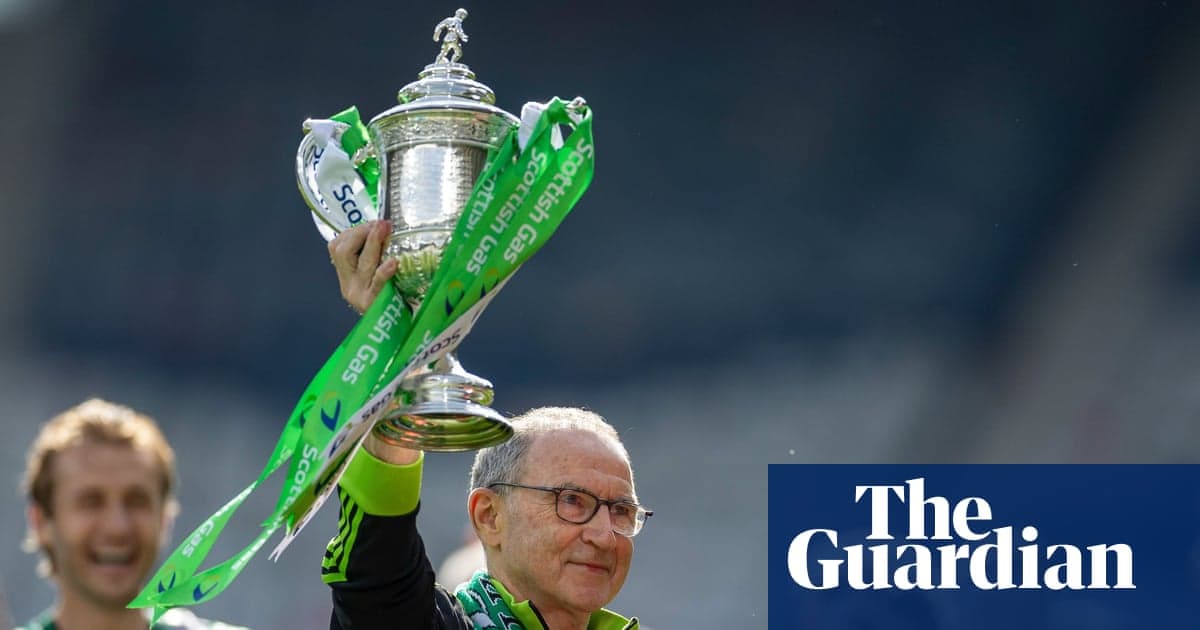
The contract, expected to be confirmed shortly, includes an option for a second season and comes on the back of a campaign in which O’Neill twice stepped in as interim manager and still delivered a domestic double. At an age when most of his contemporaries are long retired, he has walked back into the pressure cooker and walked away with trophies.
The Scottish Cup final win over Dunfermline offered him a natural exit point. O’Neill asked for time, stepped back from the noise and considered whether he wanted to commit again to the relentlessness of the job. The answer, as many inside Celtic suspected, was always likely to be yes.
The club’s hierarchy had explored a different route. Robbie Keane moved into serious contention and even held talks with Dermot Desmond, the principal shareholder, earlier in the week. On paper, it had a certain symmetry: a former Celtic hero returning to lead the team, a fresh managerial face after spells in charge of Maccabi Tel Aviv and Ferencvaros.
The reaction shattered that idea.
A section of the Celtic support reacted furiously to the prospect, objecting in particular to Keane’s time working in Israel. The backlash was swift and loud, cutting through any romantic notion of a Keane homecoming and leaving the club’s powerbrokers with a decision that suddenly felt far more combustible than they had anticipated.
So the story looped back to a familiar figure.
O’Neill, the Northern Irishman who first arrived from Leicester in 2000 after Desmond’s persuasion, now stands on the brink of a second full chapter. His first tenure altered Celtic’s modern history: three Scottish titles, three Scottish Cups, two Scottish League Cups and a run to the 2003 Uefa Cup final, where José Mourinho’s Porto denied them on a bruising night in Seville.
That era still shapes how many supporters view the club’s potential. High-tempo, aggressive, fearless in Europe. O’Neill built teams that believed they belonged on the biggest stages and often proved it.
This time, the landscape is different. The league is more finely balanced, the financial gap to Europe’s elite even wider, the scrutiny more intense. Yet Celtic have turned again to a manager who understands the club’s scale, its demands and its politics as well as anyone alive.
A one-year contract, with the possibility of a second, offers both security and tension: enough time to stabilise and build, not enough to drift. After the turbulence around the Keane talks and the emotional charge of a double under an interim, Celtic have chosen familiarity over experiment.
Now comes the real test: can O’Neill, a generation on from his first revolution, summon one more?