Martin O’Neill’s Celtic: A Crossroads of Reset or Rupture
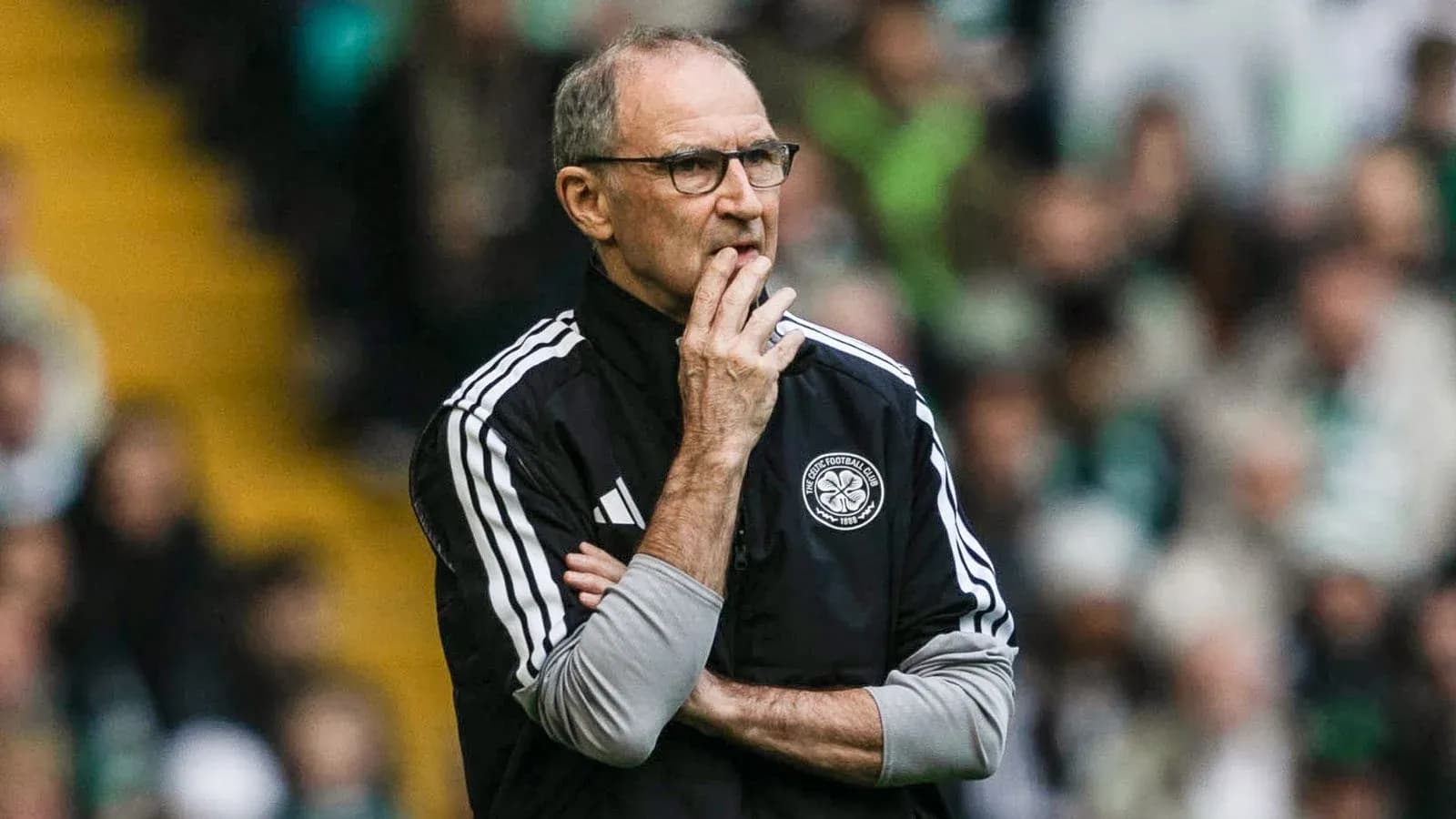
Martin O’Neill will always belong to Celtic’s folklore. That part is not up for debate. The question now is whether the man who once rebuilt the club needs to step aside before this season’s problems harden into something far uglier.
The 74-year-old has already admitted he will “stop and decide if it is time to wrap it up” after a bruising week that ended with a 1-0 defeat to Rangers at a restless Parkhead. That loss, Celtic’s second to their Old Firm rivals in seven days, came on the back of a 3-1 reverse to Ferencvaros in the Europa League.
For supporters, it was not just the scorelines. It was the manner of them.
From perfect start to painful questions
On paper, the league table still flatters Celtic. Six wins from six to open the defence of their Scottish Premiership title. Top of the pile going into a three-week international break.
But the story underneath those numbers is far less comfortable.
The first alarm bell rang in Europe. Celtic’s Champions League play-off against LASK should have been a procession. They led 4-0 on aggregate. They somehow contrived to go out 5-4. A collapse of that scale does not just sting; it lingers. It raised direct questions about O’Neill’s game management and the resilience of his players.
The domestic blows followed quickly. A heavy defeat to Rangers in the Scottish League Cup. A limp, worryingly flat performance against Ferencvaros. Then, in front of 60,000 at Parkhead, another Old Firm loss, this time 1-0, that left the stadium heavy with frustration rather than fury.
Celtic could have gone into the break eight points clear. Instead, the gap is only two. The margin for error has shrunk, and so has the patience.
It’s not just the manager
It would be easy to throw every failing at O’Neill. But Celtic’s issues run deeper than the dugout.
The boardroom has been under scrutiny for some time. Fan protests last season targeted the hierarchy, and the demand for change at the top has not disappeared. Many supporters look at this summer’s transfer window and see a scattergun strategy, not a coherent plan.
Record signing Kasper Hogh and Camilo Duran arrived before that Champions League exit. Then, as the deadline loomed, Celtic spent close to £20m on Mika Baur, Haissem Hassan and Joel van den Berg. Five more late signings followed. O’Neill is still trying to work out how to fit them into a functioning side.
Right now, it looks like guesswork.
He has chopped and changed his midfield combinations with no clear solution. Against Rangers on Sunday, he abandoned wingers altogether, went with five defenders and pushed Kieran Tierney further forward. The shape changed. The outcome did not.
This is not a club unfamiliar with transition. Celtic have won 14 of the last 15 league titles while routinely selling key players and trusting the structure to absorb the blows. That dominance, some fans believe, has bred complacency in the boardroom just as Rangers and Hearts have grown stronger and more ambitious.
The club has spent big this summer. The fear in the stands is that the money will not translate into medals – and that only a trophyless season will finally ram home the message that a bulging bank balance means little without the right players on the pitch.
A legend under strain
O’Neill knows how quickly the mood can change in Scottish football. He lived it last season. Twice he came back as interim manager, twice he steadied a listing ship, and somehow delivered a league and cup double that had looked improbable.
That late-season surge persuaded him he was not ready to return to retirement. He took the job permanently, 21 years after his first spell ended, determined to prove he still had one more act in him.
His first era at Parkhead defined a generation: seven major trophies, a UEFA Cup final in 2003, and a team that opponents dreaded facing. Those Celtic sides were hard, organised, relentless. The current version is the opposite: fragile, open, too easily picked apart on the biggest nights.
The affection for O’Neill has not gone. It runs deep. But even the most loyal voices now carry a tremor of doubt. How many more big calls can go wrong?
He rolled the dice after the loss at Ibrox last weekend, making bold changes for the Ferencvaros tie. They failed. He went again for the second Rangers game, altering shape and personnel. That failed too.
The danger is clear. If he cannot find answers quickly, he risks not just a barren season but the erosion of a legacy built over decades.
Still top, still time
Amid the gloom, one fact keeps resurfacing: Celtic remain top of the Scottish Premiership. The season is not even a quarter gone. Seven league games played out of 38. Seven Europa League fixtures still to come.
O’Neill, speaking to Sky Sports after the latest Old Firm defeat, tried to drag the conversation back towards perspective. He insisted “there’s very much between the teams” and leaned on the club’s history as proof that Celtic “will fight back” from a week of turmoil.
“It’s concerning. Is it a disaster? I don’t think so. We have to rethink and reset,” he said.
He is right about one thing: nothing is decided in September.
The run that could define everything
What happens next will be shaped by a brutal run of fixtures once the international break ends.
- Motherwell away on October 11, live on Sky Sports.
- A trip to Benfica in the Europa League on October 15.
- Hearts at home on October 18.
- Celta Vigo at Parkhead on October 22.
- Hibernian away, again live on Sky Sports, on October 25.
- Dundee United visit Celtic Park on October 28.
Six games. Three competitions. A season’s direction hanging in the balance.
By the end of that spell, Celtic will either look like a side that has reset and rediscovered its edge – or a giant drifting towards the kind of crisis that forces decisions nobody at Parkhead really wants to make.