Mauricio Pochettino's New Role with US Men's National Team
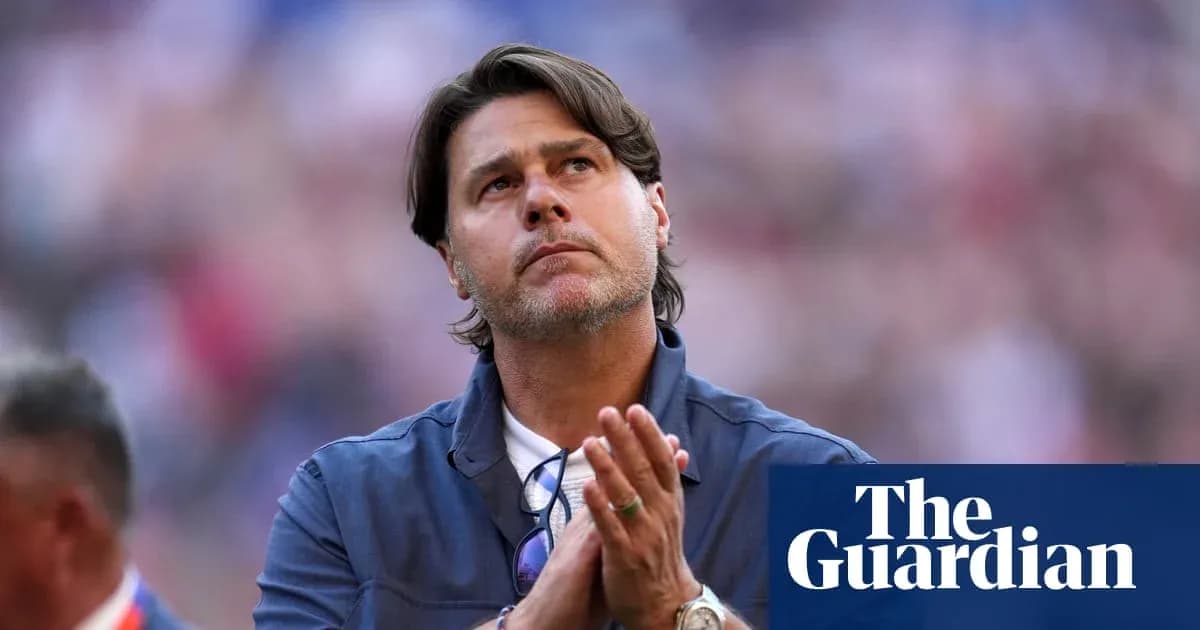
Mauricio Pochettino is back on the training pitch, but his job with the US men’s national team now stretches far beyond the next kickoff.
Two months after the World Cup exit that cut short American hopes on home soil, the Argentine coach has settled into a new, extended mandate. What began as a short-term hire for a home World Cup in 2026 has turned into a long-haul project, formalized with a contract extension agreed in August. The remit: win, yes — but also reshape the sport’s landscape in the United States.
From short-term fix to architect
When Pochettino arrived in 2024, he was widely viewed as a specialist brought in for one tournament cycle, a big-name coach to squeeze the most out of a talented generation on familiar turf. Somewhere along the way, the conversation changed.
US Soccer’s announcement of his renewal came with a twist. Pochettino would no longer be just the man on the touchline. The federation made it clear he will now play a “more prominent role” in steering youth development, coaching education and collaboration with the professional game. In essence, the head coach has been handed a voice in how the entire pyramid should look.
That kind of influence isn’t unusual in some footballing nations, but for the US it marks a break with tradition. No previous USMNT coach has been given this much say in the direction of the program as a whole.
The timing is no accident. US Soccer is in the middle of a major restructuring, building out two new director positions to oversee the men’s and women’s senior and youth programs. Pochettino, speaking to a small group of reporters on Monday, said he has already offered to be part of that process — but not to dominate it.
“He’s made it clear he’s happy to help,” one line of his made plain, though he joked that it “can’t [just] be my guy,” drawing a laugh in the room.
The bigger vision, though, was deadly serious.
“This is the future of the USA,” Pochettino said. “We want to try to perform in the World Cup and to create something special with the fans. And now it’s about being a part of the legacy that the federation wants to create – becoming one of the most powerful countries in soccer. That is a dream, no? It’s amazing. If we can be part of that, we are so excited and so happy.”
The next World Cup cycle is only part of that picture. The US will appear at the Los Angeles Olympics in 2028, and it has been widely reported they may also play in the Copa América that same summer. Pochettino’s job description now runs through all of it: qualification for the 2030 World Cup, Olympic preparation, and a say in how the next wave of talent is raised.
For now, the immediate focus is four friendlies in late September and early October against Peru, Chile, Mexico and Canada. On paper, it’s just a run of tune-up games. For Pochettino, it’s the first testing ground of this expanded role.
Balogun’s stalled move and a manager’s support
The summer transfer window barely rippled around the USMNT squad. Gio Reyna’s move to Strasbourg, Sebastian Berhalter’s switch to Middlesbrough and teenager Zavier Gozo’s jump from MLS to Crystal Palace stood out, but most of the core group stayed put.
Folarin Balogun was supposed to be different. After a breakout World Cup, the Monaco forward looked set for a big-money move to the Premier League. Everton pushed late, talks advanced, and then the whole thing collapsed on deadline day.
Everton cited a potential fitness concern. Monaco disputed it. So did Balogun. The forward remains in Ligue 1, his future unresolved and his frustration obvious.
Pochettino has seen this kind of drama before. On Monday, he made it clear the 25-year-old will not be left to stew on his own.
“Yes, it’s difficult because you cannot influence that decision,” Pochettino said of the failed move. “You need to support what they are doing with the people making the decisions. In some special cases, like Flo’s, I will call in the next few days. I wanted to give him a little bit of space after that situation in Everton. I want to know from him what happened. But we are always offering our support, and that’s it.”
Then came the key line from a national team perspective.
“I think he’s an important player for us, he was an important player in the World Cup and I hope that he can find being in Monaco, or in another place, his best place to perform in the best way.”
The message was simple: club chaos or not, Balogun remains central to Pochettino’s plans.
The delicate dance with dual nationals
If Balogun’s situation is about reassurance, the next challenge is persuasion.
Pochettino kept his cards close to his chest regarding the 26-man roster he’ll name for this month’s camp. One name can be ruled out already, though: Augsburg center-back Noahkai Banks.
The 19-year-old, who holds both German and American ties, has yet to decide his international future and will not feature for the US in this window. He has publicly said he wants to make a decision by “the next international break, or at the latest by the international break after next.” In Germany, reports say newly appointed national team coach Jürgen Klopp has already scouted him in person.
The tug-of-war is real. Pochettino did not try to disguise it, but he framed the battle less as a sales pitch and more as a relationship.
“We are in contact with all the potential dual nationals,” he said. “I think it’s important for us, of course, because that is the human connection that is so important.”
He referenced Banks directly — “Noki,” as he called him — to underline the point.
“Even if they, like in that case, Noki, didn’t change his mind and is waiting still, no decision, and of course we cannot consider him for the next camp … But the organization is working with all the dual nationals and players with the possibility to make a decision. That human connection is important because if one day they feel that they can defend and they want to fight and to be part of our national team … Of course, if they deserve it, and we consider that they deserve to be involved, of course we are going to call [them up].”
In other words: no ultimatums, no begging. Just steady contact, and a clear pathway if and when the answer is yes.
A long road, and a wider canvas
The calendar says the next step is four friendlies. The reality is that Pochettino’s job now stretches from the locker room to the boardroom, from the current core to teenagers still choosing their flag.
He will be judged on results — that never changes. But with a home Olympics in Los Angeles in 2028, a possible Copa América that same summer and a 2030 World Cup to reach, the stakes for how the US builds its identity have rarely been higher.
Pochettino asked one question himself, almost in passing: becoming “one of the most powerful countries in soccer” — is that a dream?
The next few years will reveal whether it stays a dream, or becomes the standard he is remembered for setting.