Kylian Mbappe Leads France to Victory Over Morocco in World Cup Quarterfinal
Boston, United States – By the final whistle, a curious scene played out on the concourses. Morocco shirts, scarves and flags everywhere, but the name on many lips belonged to the man who had just ended their World Cup dream. Kylian Mbappe had knocked them out, and yet more than a few Moroccan fans were ready to sign up to his fan club on the spot.
He had earned it. One devastating strike, one perfectly weighted assist, six minutes of ruthless clarity that turned a tense quarterfinal into a 2-0 French procession and pushed Les Bleus closer to another World Cup crown. For some Morocco supporters, there was no point fighting it.
“France are an unstoppable force,” admitted Yaseen Maroufi, his voice flat, his shoulders heavy as he shuffled away from the stadium. “They start with 11 very good players on the pitch, but they also boast one of the best bench strengths in the tournament. France are the team to beat, and it’s very hard to beat them at the moment.”
Yet the afternoon had not begun as a coronation for the 2018 champions. It began with a score to settle.
A grudge rekindled
The first quarterfinal of the 2026 World Cup carried the weight of 2022. Morocco’s semifinal defeat to France in Qatar still stung, the memory of that loss lodged deep in the minds of players and fans alike. This was the shot at revenge, on a scorching East Coast day, in a city far from Casablanca or Paris but emotionally split between them.
Cautious optimism floated around the Moroccan end before kick-off. Faith in a young, fearless team. Trust in a new coach. A collective wish whispered again and again: let Mbappe have an off day.
For half an hour, it looked like those prayers might be heard.
When France won a penalty in the 29th minute, the script seemed set. Mbappe, the face of this French generation, placed the ball on the spot. Then everything slowed. Players jostled on the edge of the box. The ball was moved, reset. The wait dragged on. Mbappe hesitated in his run-up and struck tamely.
Yassine Bounou, Morocco’s hero of 2022, guessed right and smothered the effort with ease.
The save electrified the Moroccan end. It also summed up a first half where neither side truly trusted itself. Both teams probed without conviction, wary of leaving space, wary of being exposed. The game tightened, then tightened again. Attacks fizzled out before they could stretch into full-blooded chances.
France, for all their talent, looked strangely muted. Morocco, for all their ambition, rarely broke free of their own caution.
Morocco push, France punish
The mood changed after the break. Morocco emerged from the tunnel with more bite, stepping higher, daring to push into French territory. Their first and only shot on target forced a save and sent a ripple of belief through the red wall in the stands.
The risk came with a cost.
As the Atlas Lions committed bodies forward, small pockets of space began to appear behind them. Against most teams, you might get away with that for a while. Against France, those gaps feel like an invitation.
The warning signs flickered on the left flank. Mbappe started to glide rather than run, drifting into half-spaces, turning defenders with that familiar, cruel ease. The Moroccan back line, so disciplined early on, suddenly looked as if it had to solve three problems at once.
On the hour, the dam broke.
Mbappe drove at the defence, wriggled through on the left, and the move unfolded with the inevitability of a storm rolling in from nowhere. One sharp exchange, one clean finish, and France were in front. It was Mbappe’s eighth goal of the 2026 tournament, another number to add to a ledger that already looks historic.
Six minutes later, he twisted the knife.
Now the provider, Mbappe slipped into creator mode and set up Ousmane Dembele. The winger made no mistake, claiming his fifth goal of this World Cup and etching a little piece of history: France became the first team ever to have two players score five or more goals in the same edition of the tournament.
The scoreline read 2-0 again. Same margin as 2022. Same victim. Same executioner.
Silence on one side, songs on the other
Mbappe kept spinning, drifting, tormenting defenders, but the damage was done. The dizzying patterns he traced around the Moroccan back line no longer needed an end product; they simply drained what was left of Morocco’s resistance.
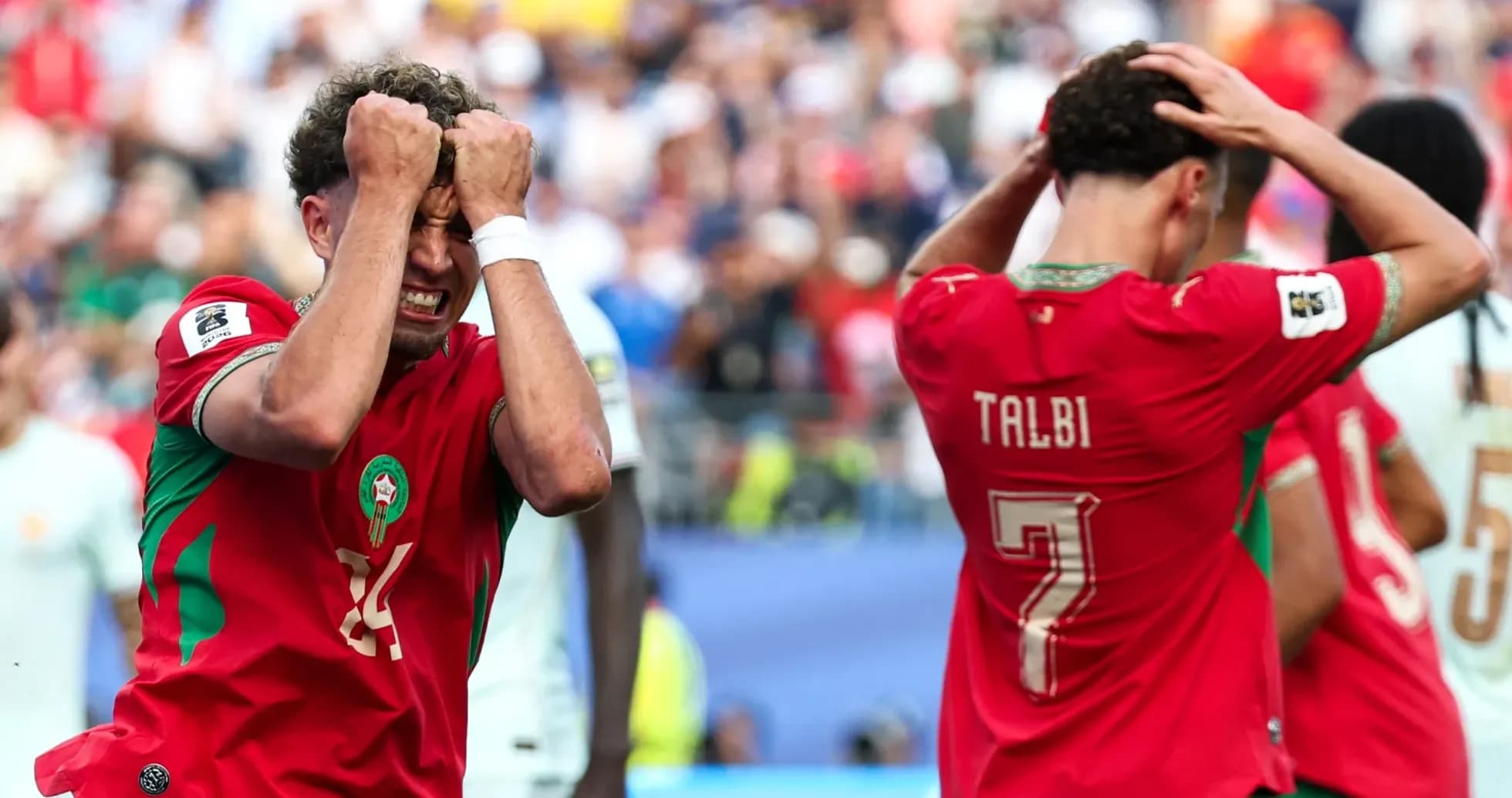
The first half had promised a contest. The second half turned into a slow, painful acceptance.
“Dima Maghreb,” the chant that had thundered around the stands, began to fade. The red end of the stadium, so loud, so relentless early on, fell quiet. Heads dropped. Flags lowered.
Only then did the blue songs swell.
“Allez les Bleus” rang out, clear and confident, as French supporters sensed what this young side might yet become. Another deep run. Another trophy. Perhaps the start of a new era, not just an extension of the last.
“It was wonderful to watch all this French talent,” said French American fan Claude Beyanoun, standing alongside his son Zach, both wrapped in blue. For them, this was not just a win; it was a glimpse of a future built around Mbappe and his supporting cast.
Same scoreline, new hope
For Morocco, the symmetry hurt. Same opponent. Same two-goal defeat. Another World Cup campaign ended by France, this time one step earlier, in the quarterfinals instead of the last four.
The fans filed out slowly, their faces marked by the familiar ache of a dream cut short. The wind had gone from their sails, but not their belief.
“We didn’t win this one, but we’ll win the next World Cup at home,” said Hamza, a Morocco supporter who offered only his first name, already looking toward 2030, when Morocco will cohost the tournament.
There was resignation in his tone, but also something harder, more durable.
“We must carry on after the loss. This is football. This is life.”
On this hot Boston afternoon, life belonged to Mbappe and France. The question now is whether anyone, anywhere, can stop this “unstoppable force” before 2030 rolls around and Morocco get their chance again, this time on their own soil.