Mexico's Tactical Triumph Over South Africa in World Cup 2026
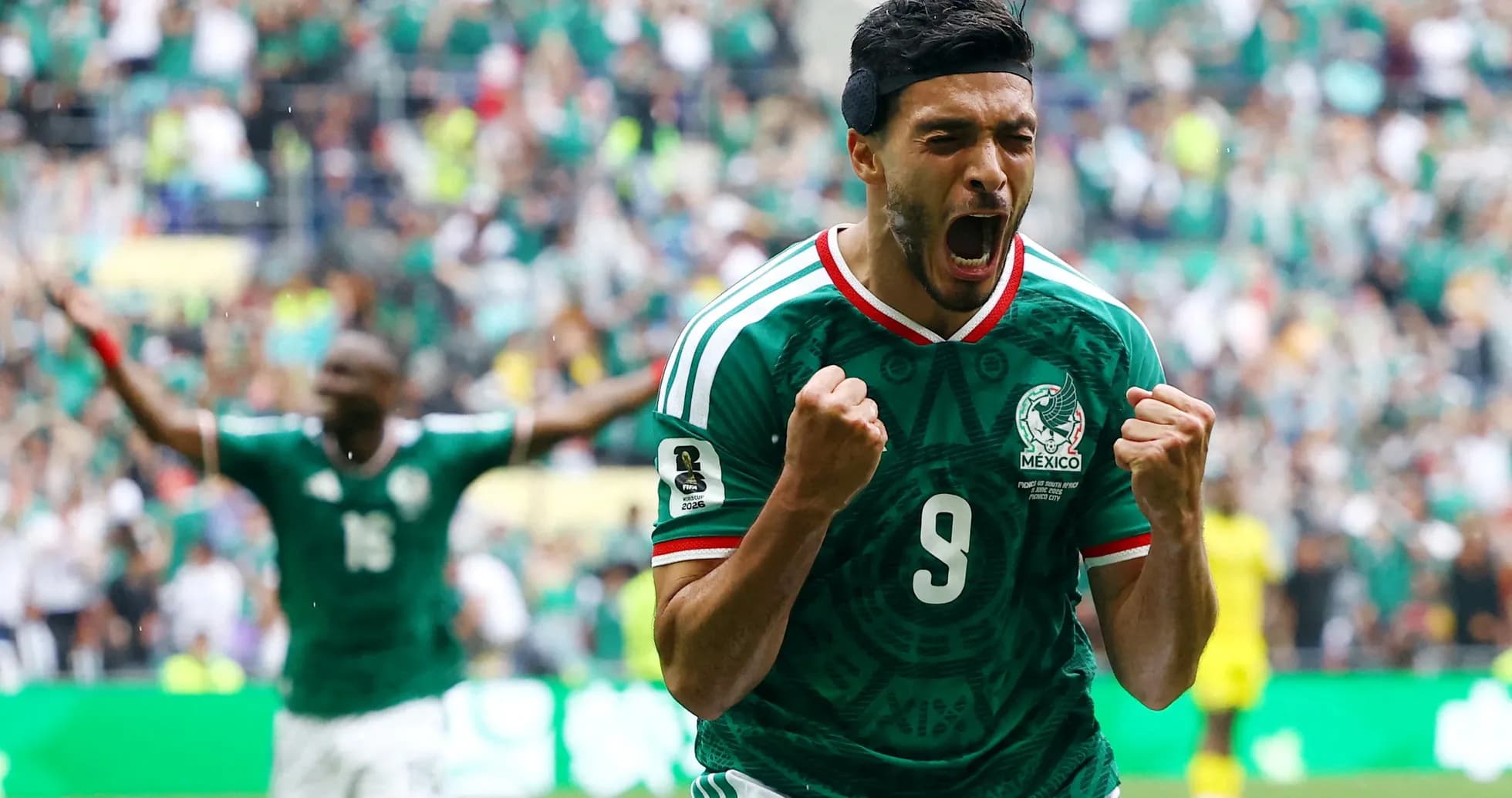
Under the thin evening air of Mexico City, the Estadio Azteca became the stage for a statement win. Mexico opened their World Cup 2026 campaign with a 2–0 victory over South Africa, a result that not only delivers three points in Group A but also sketches out clear tactical identities for both sides heading into the rest of the group stage.
I. The Big Picture – Structure and Intent
Following this result, Mexico sit 1st in Group A with 3 points and a goal difference of 2, having scored 2 and conceded 0 in total this campaign. The numbers mirror the scoreboard: a controlled, largely assured performance built on Javier Aguirre’s 4-1-4-1.
That shape was more than a formation graphic. With R. Rangel in goal, a back four of I. Reyes, C. Montes, J. Vasquez and J. Gallardo, and É. Lira anchoring in front of them, Mexico created a clear spine. Ahead of Lira, the four of R. Alvarado, B. Gutiérrez, A. Fidalgo and J. Quiñones worked between the lines, funnelling service into lone striker R. Jiménez.
South Africa, by contrast, arrived in a 5-3-2 that was as much about survival as ambition. R. Williams was shielded by a back five of K. Mudau, N. Sibisi, I. Okon, M. Mbokazi and A. Modiba. In midfield, T. Mokoena, Y. Sithole and J. Adams were tasked with compressing central spaces, while I. Rayners and L. Foster tried to stretch Mexico on the break.
The structural contrast defined the night: Mexico’s single pivot and four advanced midfielders against South Africa’s deep, often flat back five and hard-working central trio.
II. Tactical Voids – Discipline, Risk and Rotation
The disciplinary story is already shaping the narrative for South Africa’s campaign. In total this season, they have collected yellow cards in the 16–30 and 61–75 minute windows (each accounting for 50.00% of their cautions), but more telling are the reds: one between 46–60 and another between 76–90, a pattern of late, pressure-induced collapses.
That pattern played out in personnel. T. Zwane’s cameo – 23 minutes, 1 foul committed and a straight red – underlined how fragile South Africa become once they chase the game. S. Sithole, who blocked 2 shots and made 1 interception, also saw red after 49 minutes of action. This double dismissal in the broader disciplinary profile leaves Hugo Broos with a tactical void in the engine room for upcoming fixtures: two midfielders, both with ball-winning responsibility, now carry the weight of suspension and reputation.
Mexico are not untouched by disciplinary drama. C. Montes, a central pillar of the back line, has already been sent off once in total this campaign, even as he completed 65 passes at 92% accuracy and won 3 of 6 duels. B. Gutiérrez, booked once, is walking the fine line between aggression and risk; his 2 fouls committed and 3 key passes in 66 minutes show a midfielder who lives in the tightest spaces of the game.
Yet the broader team data suggests Mexico are managing that edge better. In total this campaign, their yellow cards have come exclusively in the 16–30 minute window (100.00%), while their single red is in the 91–105 band – a sign of occasional late volatility but not sustained chaos.
III. Key Matchups – Hunter vs Shield, Engine vs Enforcer
Hunter vs Shield
The clearest attacking axis is Mexico’s front trio of influence: J. Quiñones, R. Jiménez and R. Alvarado.
Quiñones has been electric. In total this campaign he has 1 goal from 4 shots (2 on target), 33 passes at 84% accuracy, 2 key passes and 6 dribbles attempted with 5 completed. Operating nominally from the left of the 4-1-4-1, he constantly attacked the channel between A. Modiba and M. Mbokazi, forcing South Africa’s back five to tilt and opening lanes centrally for Jiménez.
Jiménez, Mexico’s reference point, combined penalty-box presence with link play: 1 goal, 3 shots (2 on target), 19 passes at 78% accuracy and 2 key passes in 76 minutes. He dragged N. Sibisi and I. Okon into uncomfortable zones, turning a nominal back three into a scrambling unit.
R. Alvarado, meanwhile, stitched it all together. With 35 passes at 91% accuracy, 2 key passes, 2 successful dribbles from 2 attempts and 4 tackles, he was both creator and counter-press trigger. His work without the ball – 13 duels, 8 won – pinned South Africa deep whenever they tried to step out.
Against this, South Africa’s shield has already shown cracks. On their travels so far, they have conceded 2 goals with an average of 2.0 goals against per away game and have yet to keep a clean sheet. N. Sibisi’s 50 passes at 82% and 1 interception hint at composure, but with only 1 duel contested, he was reactive rather than dominant. The wing-backs, Mudau and Modiba, were often locked into the back line, limiting South Africa’s ability to contest wide overloads.
Engine Room – Playmaker vs Enforcer
At the heart of Mexico’s control stands É. Lira. In total this campaign he has 45 passes at 93% accuracy, 1 key pass, 1 assist, 1 tackle and 1 interception, winning all 4 of his duels. His role as the single pivot was crucial: screening transitions, recycling possession and occasionally stepping forward to break lines.
Opposite him, T. Mokoena was South Africa’s most composed midfielder. With 42 passes at 92% accuracy, 1 key pass, 2 interceptions and 7 duels (4 won), he tried to anchor a side frequently under siege. But once Sithole’s aggression – 3 fouls committed, 2 blocked shots and 1 interception – boiled over into a red card, Mokoena was left isolated, forced to cover both half-spaces and the pivot zone.
This is where Mexico’s depth sharpened the contrast. Off the bench, L. Chávez (28 passes at 100% accuracy, 1 tackle), G. Mora (14 passes at 100%, 1 interception) and E. Álvarez (15 passes at 93%, 1 tackle, 2 duels won) allowed Aguirre to refresh the engine without sacrificing control. South Africa’s changes – E. Makgopa and O. Appollis – added willing runners, but with only 5 and 6 passes respectively and no shots recorded, they were chasing shadows more than changing the game.
IV. Statistical Prognosis – What This Win Tells Us
Following this result, Mexico’s statistical profile is clean and sharp: in total this campaign they have 2 goals scored, 0 conceded, an average of 2.0 goals for and 0.0 against, plus 1 clean sheet and no failures to score. South Africa mirror them inversely: 0 goals scored, 2 conceded, an average of 0.0 goals for and 2.0 against, no clean sheets and 1 failure to score.
Even without explicit xG numbers, the patterns are clear. Mexico’s shot volume through Jiménez and Quiñones, the creative weight of Alvarado and Gutiérrez, and the high passing accuracy of their midfield suggest they consistently generated higher-quality chances. South Africa’s lack of shots for their forwards, their reliance on deep blocks and their disciplinary collapse point to a side living on the edge of their own penalty area.
Looking ahead in the group, the prognosis tilts strongly towards Mexico. Their 4-1-4-1 has a clear internal logic, supported by depth off the bench and a defensive record of 0 goals against in total. South Africa, with two central midfielders already associated with red cards and an away defensive average of 2.0 goals conceded, must recalibrate quickly.
At Estadio Azteca, this was more than a 2–0. It was a tactical blueprint: Mexico as proactive controllers with multiple match-winners, South Africa as resilient but brittle under sustained pressure. If the underlying trends hold, Mexico’s campaign is poised to extend well beyond the group stage, while South Africa’s margin for error has already narrowed to the width of a single mistimed tackle.