Michael Carrick's Fury Over Controversial Refereeing Decisions
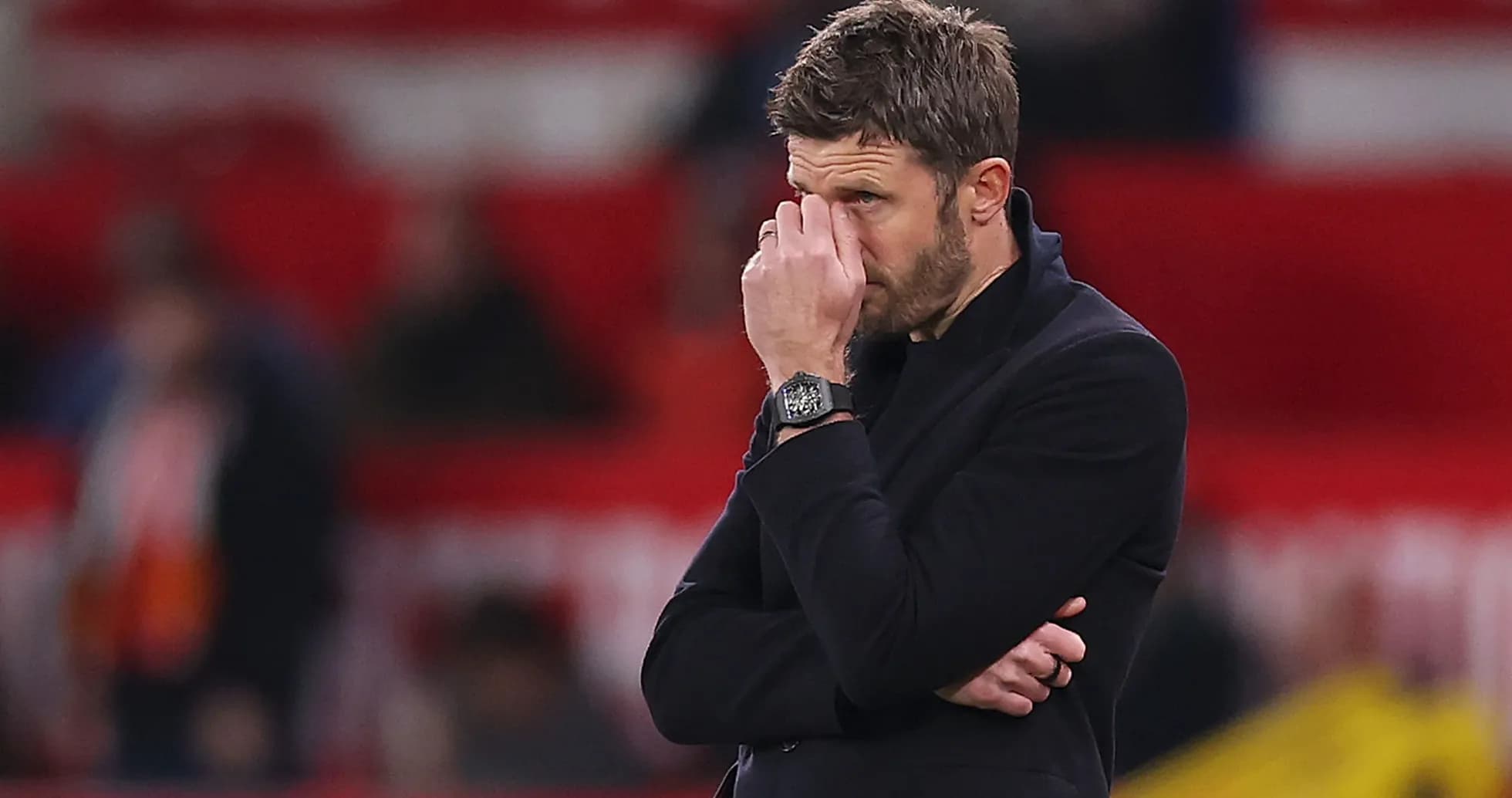
Michael Carrick left the touchline with his jaw clenched and his patience shredded, his post-match debrief dominated not by tactics or missed chances, but by two refereeing calls he believes turned the night against his side.
At the heart of his anger were two flashpoints: the forearm challenge on Leny Yoro in the build-up to Leeds’ opener, and the red card shown to Lisandro Martinez after a VAR review for a hair pull on Dominic Calvert-Lewin.
Carrick did not bother to disguise his fury.
“We didn't start the game particularly well,” he told Sky Sports, acknowledging his team’s sluggish opening. They were already under pressure when Yoro went down under what he described as a “forearm smash in the back of the head” before Leeds struck the first blow. The incident was checked but not overturned, and that, for Carrick, changed everything.
“They didn't decide to overturn that decision. That was a big moment in the game,” he said. His team never quite settled in that first half. The rhythm was off, the passing loose, the attacking patterns only flickering rather than flowing. “We didn't quite have the rhythm, we didn't click, we had some moments but it wasn't quite there for large parts of the first half.”
The contest, though, truly erupted after the break.
Martinez, making his return after two months out injured, became the centre of a storm. A tangle with Calvert-Lewin, a hand brushing the Everton striker’s hair, and suddenly VAR was involved. The referee went to the monitor. Red card.
Carrick’s reaction was instant and uncompromising.
“Second half, I thought the boys, the way they went about it, stayed positive and fought to get something out of it after another shocking, shocking decision to send [Lisandro Martinez] off,” he said. “Two games in a row we've had decisions like that go against us but that one was one of the worst I've seen.”
For a player just back from a lengthy lay-off, it was a brutal way to mark his return. Carrick insisted there was no malice, no force, barely even control of his own body in the incident.
He broke down the sequence with a manager’s forensic eye and a simmering sense of injustice.
“You can elbow Leny Yoro for the first goal, leaning arm obviously, you can throw your arm in Martinez's face and then as he's off balance because of that, he's half grappling, he half touches the back of his hair which pulls the bobble to come out,” he said, painting a picture of chaos rather than calculated foul play.
“I don't even know what it looks like. It's not a pull, it's not a tug, it's not aggressive. He touches it and he gets sent off. Worse of all, he gets sent to overturn it, a clear and obvious error. Shocking.”
The words hung in the air: “one of the worst I've seen”, “clear and obvious error”, “shocking”. This was not the measured irritation of a manager deflecting from a poor performance. It was the sound of a coach who feels the margins of his season are being decided in the VAR booth.
His team, down to ten and stripped of their returning defender, were left to chase a game shaped as much by interpretation as by invention. The sense of grievance will not fade quickly, not with Carrick convinced that, in back-to-back matches, the big calls have gone the other way.
The fixtures keep coming. So, it seems, will the arguments about what exactly constitutes justice in the modern game.