Michael Carrick's Struggles as Manchester United Manager
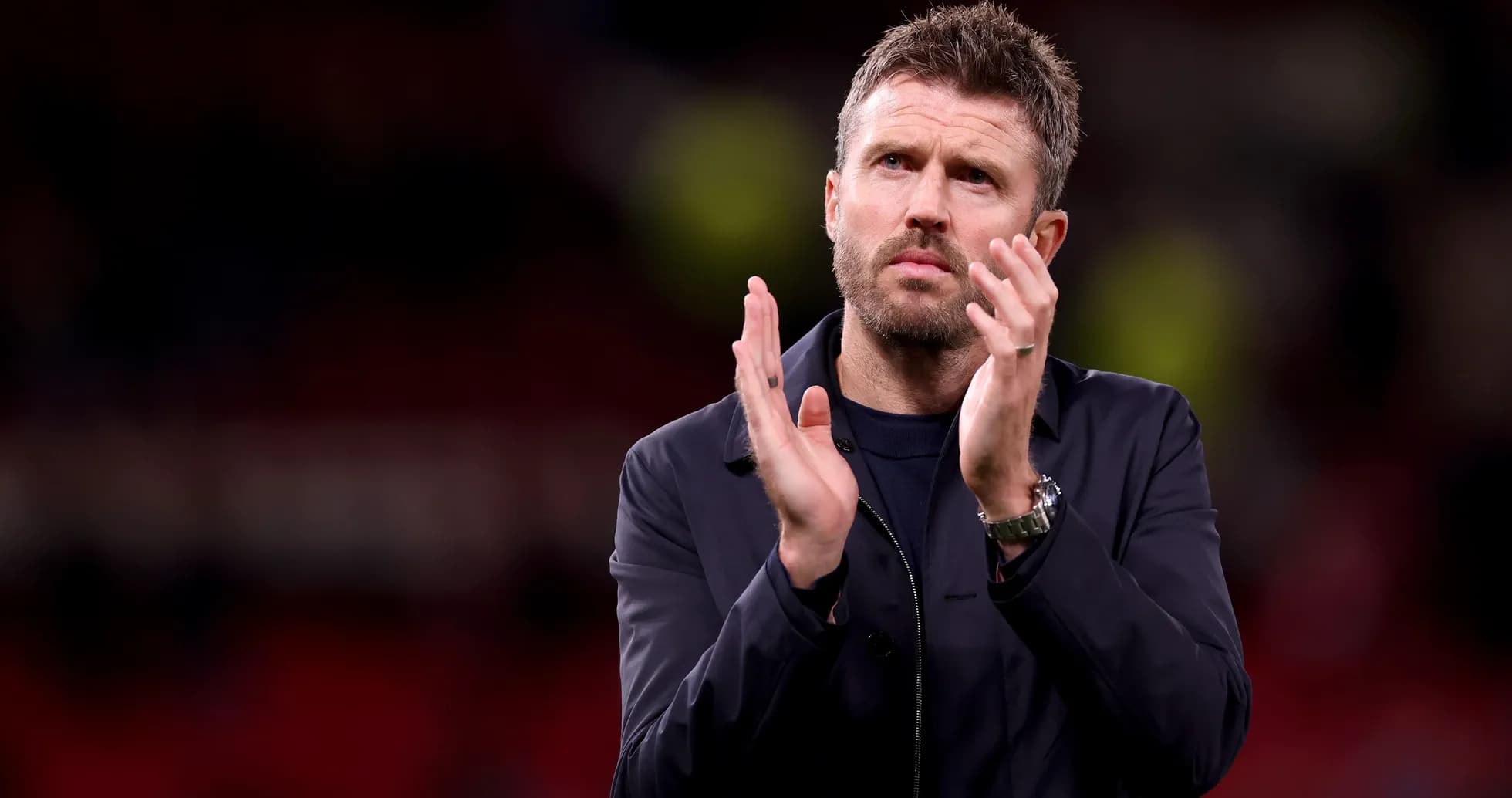
Michael Carrick is barely into his first full season as Manchester United’s permanent manager, and already the scrutiny is ferocious.
He earned the job on merit, or so the club argued: 11 wins from 16 games after stepping in when Ruben Amorim was dismissed last season, a stabilising presence in a chaotic year, and a two-year contract as his reward. Inside Old Trafford, there is a sense of continuity, a belief that a club figure steeped in United’s recent history can guide the rebuild.
Outside, the mood is very different.
Carragher’s blunt verdict
Writing in his column for The Telegraph, Jamie Carragher stripped away the romance and went straight for the doubts surrounding Carrick’s appointment.
“My sense is that while United fans generally understand and agree with the decision to stick with Carrick, they hope he is the long-term answer to get the club back to winning the Premier League or Champions League, while the rest of the world doubts it,” he wrote.
To Carragher, Carrick looks like an interim in everything but job title – a caretaker with upgraded stationery. “To most, it feels like Carrick remains an interim solution in all but name, entrusted with the keys to Old Trafford until a super coach can move in during the summer of 2027. Carrick will not see it that way, of course, but there are certain perceptions which will be tough to shake off.”
The comparison with Ole Gunnar Solskjaer was inevitable, and Carragher didn’t dodge it. He drew a straight line between the two former teammates: both club legends, both handed the reins after successful caretaker spells, both elevated by emotional logic as much as hard-nosed football judgement.
“He is viewed beyond Old Trafford in the same way as Ole Gunnar Solskjaer when he was handed the job full time,” Carragher continued. “Their credential for getting the caretaker role in the first place was their status as club greats. Once they performed well it was a sensible and emotional choice to give them the chance to make it work long term.”
Then came the sting. Carragher argued that sentiment, not CV, had carried both men into one of the biggest jobs in world football.
“That cannot change the fact that based on their coaching CVs alone, they would never have been approached by another elite club in England or Europe, nor would others have had any sentimental attachment to consider when determining the merits of offering a permanent deal.”
Backed in the market, judged on the pitch
United have not treated Carrick like a stopgap in the transfer market. They spent around £140 million in the summer, reshaping the midfield with Youri Tielemans, Carlos Baleba and Andrey Santos among the headline arrivals. The message from the boardroom was clear: here is your squad, now deliver.
The start to the campaign has not matched that investment.
A 2-0 defeat to newly-promoted Hull City on the opening day stunned the fanbase and handed critics instant ammunition. It wasn’t just the scoreline; it was the lack of control, the flatness, the sense of a team unsure of itself despite a heavy summer outlay. One game into the league season, and the pressure gauge on Carrick’s tenure had already jumped.
United did respond. A hard-fought win over Ipswich Town steadied the mood, at least temporarily. A draw with Everton followed, frustrating and disjointed, the kind of performance that keeps talk-radio lines buzzing and columnists circling. Each result has felt like a small argument in the wider debate over whether Carrick truly belongs in this role.
The inconsistency has not helped him. It has fed the narrative Carragher has put in print: that Carrick is working under a long shadow, constantly measured against an imagined “super coach” who may or may not arrive in 2027.
European promise, derby reckoning
Europe briefly eased the tension. United opened their Champions League campaign with a convincing win over Azerbaijani debutants Sabah FK, a night that showcased the quality in this squad and hinted at what Carrick’s ideas might look like when they click. The ball moved quicker, the midfield looked balanced, and the result never felt in doubt.
But one comfortable European outing will not silence doubts about a manager at Manchester United. Not when a derby looms.
The Manchester derby this weekend will be the first major stress test of Carrick’s permanent reign. This is where tactical plans are exposed, where in-game decisions are magnified, where the touchline presence of a coach is judged in real time by millions. A victory would not erase Carragher’s arguments, but it would give Carrick something far more valuable than sympathy: proof.
A defeat, though, especially a heavy or timid one, would pour fuel on the idea that he sits a tier below the elite coaches United are so often linked with. Every misstep will be interpreted through the prism Carragher has drawn – that Carrick is simply keeping the seat warm until 2027.
The contract says he has two years. The reality at Old Trafford is harsher. With every league game, every Champions League night, every derby, Carrick is being asked the same question: is he the man to shape United’s future, or just the bridge to whoever comes next?