Mikel Arteta's Challenge at Anfield: Overcoming the Past
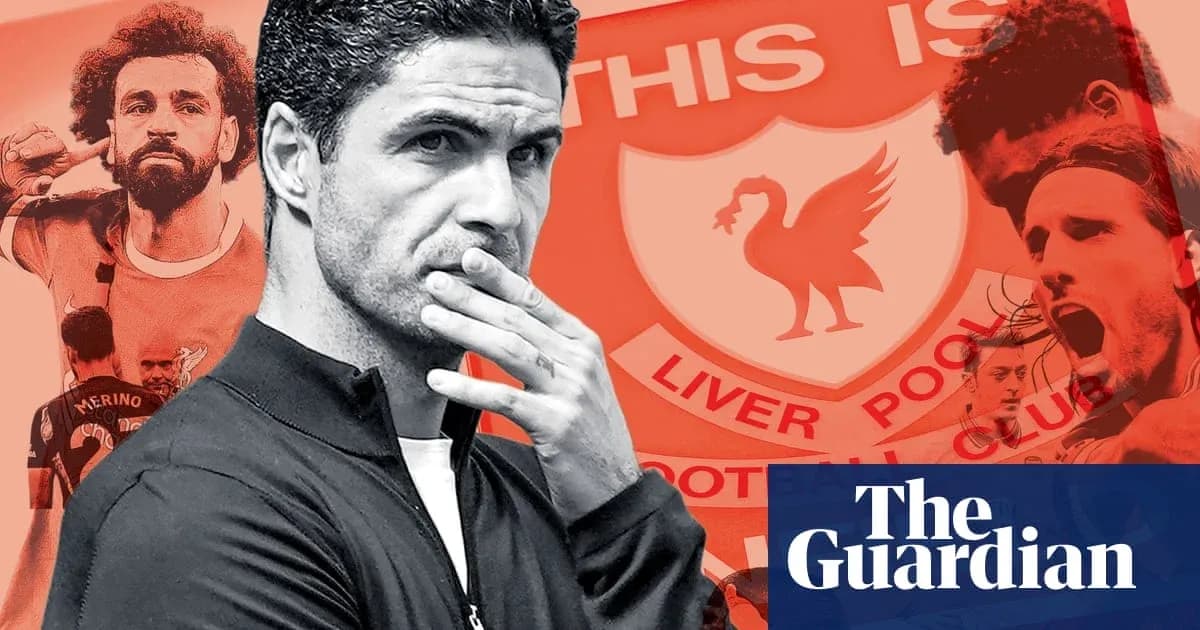
Mikel Arteta has a word for what Anfield can do to a footballer: bajar.
“It’s when a cyclist is going up and looks amazing, then in one kilometre he goes ‘boom’ and he’s struggling again,” he once said. The memory is seared into him: the ball flying past, red shirts everywhere, the game running away and no way to grab it back. “I only had that feeling in my career once, and it was at Anfield.”
On Sunday, he goes back there again, this time as the Premier League‑winning manager trying to steady Arsenal after the humiliation of Fleetwood and facing a close friend in Andoni Iraola. The stadium that once made him feel helpless now stands as the place where he has to reassert control.
A ground that never forgets
Anfield has never been gentle with Arteta. As an Everton player, he kept running into a red wall in the Merseyside derby. Five league trips, no wins. When he finally did leave the ground with a victory, it was in an Arsenal shirt in September 2012 – and he spent the night in hospital, concussed after colliding with Jordan Henderson in what he has called “the biggest fear of my life.”
Six months later, he was part of the Arsenal side that went there and won again, Lukas Podolski and Santi Cazorla announcing themselves with the goals. That was 2013. It remains Arsenal’s last Premier League victory at Anfield.
Since then, 13 league games, no wins. It equals the club’s longest barren run there. The only success in the interim came on penalties in the League Cup in 2020, on Arteta’s second visit as manager – a technicality of a win, not the kind that changes the psychology of a fixture.
He has tried to confront the aura head‑on. In November 2021 he filled the training ground with “You’ll Never Walk Alone” in an attempt to harden his players to the noise. Liverpool responded with a 4-0 reminder that Anfield’s power cannot be replicated by speakers.
Last August, when Dominik Szoboszlai’s late free-kick finally broke a run of three Arsenal draws there, Arteta was accused of going too safe. Mikel Merino started as a No 10, the handbrake never fully released, and Gary Neville delivered the familiar verdict: this Arsenal, he said, lacked “the mentality to go and win big matches at big away grounds.”
That line will have stung. Not least because it rings true in one uncomfortable detail: Arsenal have not beaten Manchester City at the Etihad in the league since 2015, back in Arsène Wenger’s time.
Wounds from Fleetwood, worries everywhere
Arteta arrives on Merseyside this time with the taste of Fleetwood still sour in his mouth. Arsenal went out of the Carabao Cup to a club 84 places below them in the pyramid, in a ground that holds fewer than 6,000 people. It was not just a defeat; it was a jolt to the system of a team that has prided itself on control.
He had tried to juggle his resources. Kai Havertz and Viktor Gyökeres started together up front, the kind of bold pairing that looked designed to ease the creative burden on Martin Ødegaard. Neither striker convinced. Both looked badly out of rhythm.
The injury list tightens the screw. Bukayo Saka is out with a thigh problem. There are doubts over Noni Madueke’s ankle. Arsenal’s failed appeal against Max Dowman’s red card means the teenager now misses three games. For a squad stretched by deep runs in the Carabao Cup over the past two seasons – semi-finals, then a final – the early exit might, on paper, offer some respite. Arteta will not see it that way. Not after a night like that.
What he can control is the plan for Liverpool. And the evidence of his title-winning season is clear: when in doubt, he trusts caution, structure, and the ruthless value of a clean sheet.
Echoes of 1989
Arteta does not need to look far into Arsenal’s past to find a template. Thirty-seven years ago, George Graham took his team to Anfield needing a 2-0 win to rip the title away from Liverpool on the final night of the 1988-89 season. They got it, with Michael Thomas scoring in stoppage time, but the foundation was laid long before that famous run and finish.
“I told my players to keep things tight in the first half – it was imperative we did not concede,” Graham recalled on the 20th anniversary of that game. “The papers were saying we’d have to attack from the off, but I was adamant that was wrong. If Liverpool had scored an early goal it would have been over. But they did very little attacking and played into our hands.”
It was a night steeped in emotion. Before kick-off, Arsenal’s players ran to all four corners of Anfield, handing flowers to Liverpool supporters in a gesture of sympathy after the Hillsborough disaster a month earlier. The idea came from Ken Friar, the club’s long-serving director, who died this month. The image of Arsenal players circling Anfield, bouquets in hand, remains one of the club’s most dignified moments.
Graham was 44 when he won that first league title. Arteta was the same age when he delivered his. Both former midfielders. Both obsessed with defensive discipline. Both comfortable with the idea that “1-0 to the Arsenal” can be a compliment, not an insult.
Under Graham, that scoreline became a kind of chant of inevitability. Under Arteta, it has quietly returned. Since he took over in December 2019, Arsenal have won 1-0 in the league 32 times, a tally bettered only by Everton. It is not romantic. It is reliable.
Arteta has spoken openly about the importance of that side of the game. “Collectively, we acknowledge the importance of defending,” he said last year when asked about comparisons with Graham’s teams. “We know that if we excel in that part of the game, the chances and the probabilities to win more matches is going to be very, very high.”
The numbers back him up. So does the memory of that night in 1989, when Arsenal’s patience, shape and nerve suffocated Liverpool for long enough to create their moment.
Set pieces, small margins, and Iraola’s rise
Liverpool under Iraola have started to find their stride in recent weeks, but they still show vulnerability in one key area: set pieces. Arsenal, for once, arrive with something to build on there. Their first set-piece goal of the season came in a controlled 2-0 win over Everton last Saturday, a reminder that they can still squeeze games to death even when the open play rhythm is not perfect.
For Arteta, that may be the route through Anfield’s noise. Keep it tight. Lean on rehearsed routines. Punish any lapse. Deny Liverpool space in transition, then nick something from a corner or a free-kick. It is not the romantic image of a champion going toe-to-toe in a classic. It is something more pragmatic: a champion protecting his crown in hostile territory.
Arsenal flew back from Fleetwood with the sting of a penalty shootout still fresh, the parallels with May’s Champions League final defeat by Paris Saint-Germain impossible to ignore. Another big night, another shootout, another long walk back to the centre circle with heads bowed.
Those scars do not fade quickly. But they can be repurposed.
Arteta cannot erase bajar from his memory. He cannot change the record of 13 winless league trips to Anfield, or the criticism about big away days, or the sight of his players crumbling on a lower-league ground in the Carabao Cup.
What he can do, on Sunday, is walk into the same stadium that once overwhelmed him and try to do what Graham did: keep it tight, shut out the noise, and leave Anfield with a result that says more about where Arsenal are going than where they have been.