Milan Triumphs in Derby della Madonnina: Tactical Analysis
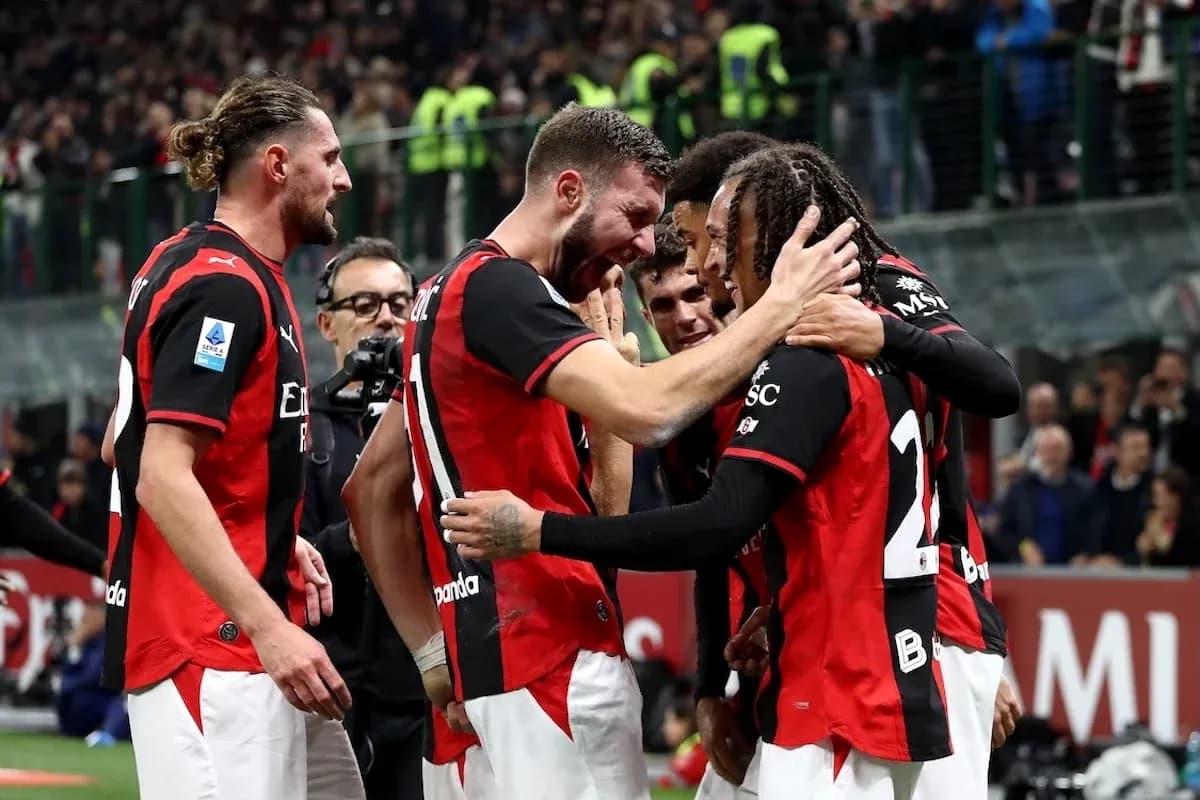
Under the San Siro floodlights, this Derby della Madonnina closed with the scoreboard frozen at half-time numbers: AC Milan 3, Inter 1. Following this result in Serie A’s Regular Season - 10, the narrative of both seasons subtly shifts. Milan, already 5th with 21 points and a goal difference of 9 (21 scored, 12 conceded), reinforce their status as Europa League contenders. Inter, 2nd with 25 points and a goal difference of 13 (26 scored, 13 conceded), absorb a rare blow to what had been a near-relentless march.
Both sides mirrored each other structurally in a 3-4-2-1, but the systems expressed very different personalities. Ruben Amorim’s Milan leaned into vertical aggression and second-half dominance, in line with a campaign in which they have scored 21 league goals in total, at an overall rate of 2.1 per match. Inter, under Cristian Chivu, arrived as the division’s most explosive attack with 26 goals in total and an overall average of 2.6, but were outmanoeuvred in the decisive zones.
Tactical Voids and the Cost of Absences
The team sheets were already shaped by absences. Milan were without S. Chukwueze, M. Gabbia, R. Loftus-Cheek, A. Saelemaekers and F. Tomori, all officially ruled out. The missing Tomori and Gabbia forced Amorim to trust the back three of K. De Winter, S. Pavlović and Mario Gila in front of M. Maignan. That trio has quietly become the defensive spine of a side that, overall, concedes 1.2 goals per game, with 1.4 at home and 1.0 on their travels.
Inter’s list was equally heavy: C. Jones, Luis Henrique, L. Martinez, B. Pavard and J. Stones all missed out. The absence of Lautaro Martínez in particular altered Inter’s attacking chemistry, placing even more responsibility on M. Thuram as the central reference of the 3-4-2-1. Without Pavard and Stones, the back line of Y. Bisseck, M. Akanji and A. Bastoni lacked some of its usual depth and rotation options.
From a disciplinary angle, the season-long profiles of these squads framed the derby’s edge. Milan’s yellow cards are clustered between 46-60 minutes (29.41%) and 76-90 minutes (23.53%), reflecting a side that defends aggressively in the most intense phases. Inter, meanwhile, pick up 35.71% of their yellows between 46-60 minutes. Both teams walk a tightrope right after half-time, where tactical tweaks meet emotional surge.
Shapes, Roles and the On-Pitch Story
Milan’s 3-4-2-1 was anchored by Maignan, with De Winter central in the back three, flanked by Pavlović and Mario Gila. Ahead of them, the four-man band of S. Bocoum, Y. Musah, L. Modrić and Diego Moreira formed a fluid screen. Modrić, nominally in central midfield, acted as the tempo-setter, while Musah provided the carrying power to break Inter’s first press. Bocoum balanced the left lane, and Moreira — already with 4 league goals and 3 assists — offered incision and width.
In the half-spaces, A. Rabiot and C. Pulišić operated as dual playmakers behind Gonçalo Ramos. Rabiot’s season numbers underline his influence: 5 goals and 3 assists in 8 appearances, with 356 completed passes at 87% accuracy and 8 key passes. He is Milan’s statistical heartbeat, combining late runs with defensive work (10 tackles, 2 blocks, 2 interceptions). Pulišić’s role was to knit transitions and attack the channels left by Inter’s wing-backs.
Inter’s mirror 3-4-2-1 had Josep Martínez in goal, protected by Bisseck, Akanji and Bastoni. The wing lanes were entrusted to D. Spence and Carlos Augusto, with N. Barella and H. Çalhanoğlu in the engine room. Çalhanoğlu’s deeper positioning sought to dictate play and feed the advanced pair A. Diouf and P. Sučić behind Thuram.
Diouf’s season profile (4 assists, 18 key passes, 90% pass accuracy) shows why Chivu trusts him as the connector between midfield and attack. His duel volume (71, with 37 won) underlines a two-way role: progress the ball, then immediately counter-press. Yet in this derby, Milan’s compact central box — De Winter stepping in, Modrić and Musah screening, Rabiot collapsing back — often cut off his preferred passing lanes.
Hunter vs Shield: Where the Game Tilted
This derby’s “Hunter vs Shield” duel was written in the half-spaces. For Milan, the “hunter” was a collective: Rabiot and Diego Moreira driving into the gaps, supported by Ramos’ penalty-box movement. Milan’s offensive timing this season is revealing: 47.62% of their league goals arrive between 61-75 minutes, with another 23.81% in the opening 15. Even though the scoreboard here was settled by the break, that pattern speaks to a side that starts fast and then surges again after the interval.
Inter’s shield has generally been robust, conceding 13 goals in total at an overall rate of 1.3 per game (1.4 at home, 1.2 on their travels). But their defensive minute distribution exposes a vulnerability where Milan are strongest. Inter concede 33.33% of their goals between 0-15 minutes and 29.17% between 76-90 minutes. Milan’s early aggression directly targets that first window, while their usual late surge would, in other games, test Inter’s legs in the closing stretch.
On the other side, Inter’s own “hunter” was M. Thuram, who has 5 league goals and 2 assists, with 27 shots (13 on target) and 10 key passes. His duels (85, with 48 won) show a forward who thrives in physical contests. Yet he was often outnumbered by Milan’s back three, with De Winter and Pavlović stepping tight and Mario Gila providing cover.
De Winter and Pavlović, both among the league’s most carded defenders for Milan, walked that line with discipline here. Across the season, De Winter has 3 yellows, 16 tackles, 4 blocked shots and 13 interceptions; Pavlović has 3 yellows, 24 tackles, 2 blocked shots and 8 interceptions. Their ability to step out without over-committing was central to blunting Thuram.
The Engine Room: Modrić, Rabiot vs Barella, Çalhanoğlu, Diouf
The derby’s true battleground was the “engine room”. For Milan, Modrić, Musah and Rabiot formed a triangle that balanced control and thrust. Modrić set rhythm, Musah broke lines, Rabiot arrived late into the box and tracked runners. Rabiot’s 44 duels (24 won) and 7 fouls both drawn and committed speak to his two-way intensity.
Inter countered with Barella, Çalhanoğlu and Diouf. Çalhanoğlu’s role as deep playmaker was to escape Milan’s first wave and find Diouf or Sučić between the lines. Diouf, with 4 assists and 14 successful dribbles from 24 attempts, is built to exploit exactly the kind of spaces Milan sometimes leave when their wing-backs push. But Milan’s 3-4-2-1, a formation they have used 7 times in the league, is now drilled enough to compress those pockets and then spring forward.
Statistical Prognosis and Narrative Arc
Following this result, the numbers reinforce the eye test. Milan’s total attacking output (21 goals in 10 matches, with 13 at home and 8 on their travels) is backed by a side that rarely fails to create: they have not failed to score once this league season, either at home or away. Their defensive profile is more volatile: 41.67% of their goals conceded arrive between 76-90 minutes, a late-game fragility that did not cost them here but remains a structural concern.
Inter, despite the defeat, remain a high-ceiling machine: 17 home goals and 9 on their travels, with 3.4 scored per home game and 1.8 away. Their penalty record is perfect so far, with 2 scored from 2 and no misses, underlining efficiency in key moments. Milan, by contrast, have taken 2 penalties in total and scored only 1, missing 1 — a detail that could have loomed larger in a tighter derby.
In tactical terms, this match will be remembered as the night Amorim’s 3-4-2-1 out-thought Chivu’s. Milan’s structure maximised the form of Rabiot and Diego Moreira, while the back three and Maignan contained Thuram and neutralised Inter’s usual vertical punch. Inter’s absences, especially Lautaro Martínez and Pavard, stripped them of alternative attacking and defensive profiles when Plan A faltered.
The broader arc is clear. Milan, with their early bursts and devastating 61-75 minute surges, have the tools to trouble any defence in Italy, even one as statistically strong as Inter’s. Inter, for all their firepower, have a structural vulnerability in the opening and closing quarters of matches that top sides like Milan are now exploiting.
On this night at San Siro, the derby became a referendum on structure and adaptability. Milan’s balance between hunter and shield held firm; Inter’s did not.