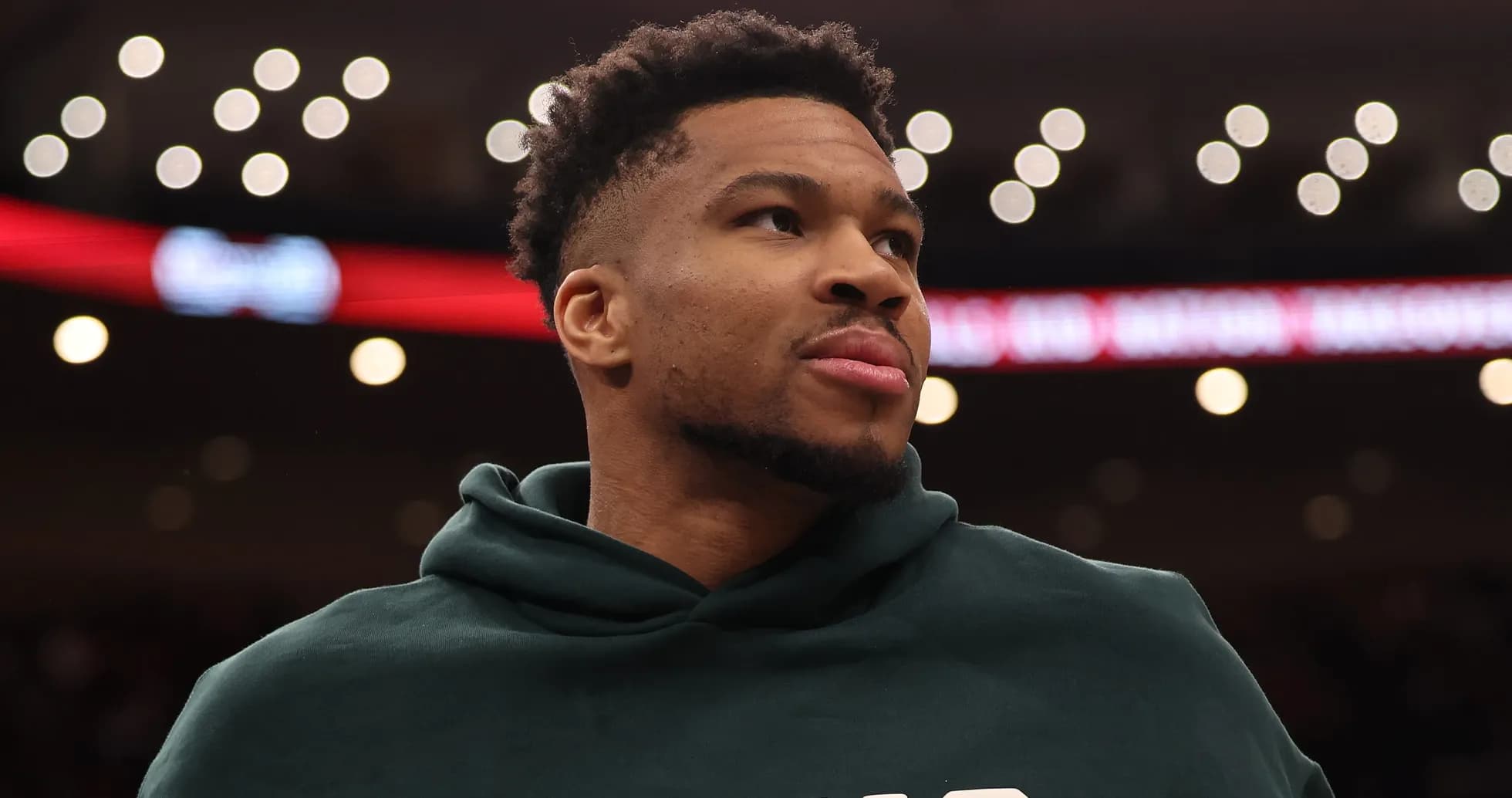
Milwaukee Bucks Face Power Struggle with Giannis Antetokounmpo
The Milwaukee Bucks didn’t just miss the playoffs this season. They walked straight into a power struggle with the face of their franchise.
Giannis Antetokounmpo hasn’t played since March 15, sidelined by a hyperextended left knee and a bone bruise. On paper, it reads like a routine late-season injury. In reality, it has spiraled into a full-blown conflict over trust, power, and money between a two-time MVP and the organization he helped turn into a champion.
“Like a slap in my face”
The tension burst into public view on April 3.
“For somebody to come and tell me to not play or not to compete, it’s like a slap in my face,” Antetokounmpo said. “I’m available to play… So, I don’t know where the relationship goes from there.”
That line landed with the weight of a warning. This wasn’t a star grumbling about minutes or shot attempts. This was a franchise cornerstone openly questioning where things go “from there” with the only NBA team he’s ever known.
The Bucks’ medical staff never cleared him to return. Antetokounmpo kept insisting he was ready.
He pushed to play as early as March 17 against the Utah Jazz, sources told ESPN, then circled games on a Western Conference road trip — Phoenix, Los Angeles, Portland — as potential return dates. Each time, the answer from the team was the same: no.
A decision that cost millions
The standoff didn’t just cost the Bucks wins. It cost Antetokounmpo money.
According to Shams Charania, multiple sources said the Bucks’ decision to sit him cost him a significant bonus in his Nike endorsement contract, a trigger that kicked in only if he played at least 41 games.
He finished with 36.
Five games short. Five games that, in his mind, he could have played — and wanted to play — but never got the chance.
For a player already earning at the top of the market, this isn’t about financial survival. It’s about control. About who gets to decide when a superstar steps back on the floor, and whether organizational caution crossed the line into something that feels, to him, like disrespect.
Two versions of the same story
Inside league offices, the disagreement turned into an official matter.
The Bucks told the NBA that their internal evaluation showed Antetokounmpo wasn’t ready. As part of his return-to-play protocol, the team scheduled three-on-three scrimmages. According to what Milwaukee relayed to investigators, Antetokounmpo declined to take part.
He offered a different version.
He told people inside the organization — and league investigators — that he felt healthy enough to play and wanted to finish the season on the court. From his perspective, the team’s decision, not his body, kept him out.
The National Basketball Players Association stepped in on March 24, issuing a statement that suggested Milwaukee’s handling of the situation could affect the integrity of the league. That language doesn’t get used lightly. The NBA responded with a formal review, interviewing Antetokounmpo, team officials, and medical staff.
A routine late-season injury had become a case file.
Cracks in the foundation
The fallout hasn’t stayed confined to the training room.
According to team sources cited by ESPN, friction between Antetokounmpo and the front office — including general manager Jon Horst — has been simmering since the trade deadline. The injury saga poured fuel on it.
Head coach Doc Rivers, brought in to steady a contender, found himself walking a tightrope. Late in the season, he told veteran players that ownership did not want guys sitting out with what they viewed as non-legitimate injuries. That message was clear. The application of it was not.
That stance did not extend to Antetokounmpo’s case, a glaring exception that only sharpened the sense of inconsistency inside the locker room. One set of expectations for the roster. Another set of decisions for the star. And a widening gap between what players were told and what they watched play out.
On the floor, the picture matched the noise. Milwaukee never found rhythm, never looked like a team capable of matching its own ambitions. Injuries piled up, performances dipped, and by the time the regular season closed, the Bucks were on the outside of the postseason looking in.
When Antetokounmpo did play, he still produced like a headliner — 27.6 points per game, dragging a flawed team forward as best he could. But he missed 42 games, one of the lightest workloads of his career, and the way those absences were handled now sits at the center of the storm.
A toxic label and an uncertain map
Off the court, the missed Nike bonus turned a basketball argument into something bigger. The Bucks’ decision not only affected lineups and standings; it directly undercut a contractual incentive tied to his personal brand.
For a franchise that has spent years convincing Antetokounmpo it could match his competitiveness and ambition, that’s a dangerous message to send.
“This is as toxic of a team situation as any in the league,” one source close to the team told ESPN.
That’s the kind of assessment that lingers. It colors every offseason conversation, every internal meeting, every call from another front office testing the waters.
Milwaukee now stares at a summer packed with high-stakes decisions. Leadership will be evaluated, including Rivers’ future on the sideline. The roster, already showing signs of strain and age, could face significant change. Every move will be viewed through one unforgiving lens: does this repair the relationship with Antetokounmpo, or strain it further?
For Giannis, the months ahead could bring extension talks, trade whispers, or something even more complicated — a quiet, internal decision about how much he still believes in the people making choices around him.
The Bucks once built a title around that belief. The question now is whether they’ve pushed it too far.