The Mysterious Disappearance of a $300,000 Diamond in Monaco
On a sun‑splashed Sunday in Monaco, 23 May 2004, a $300,000 diamond vanished in plain sight.
It was there on the grid. It was there as the lights went out. It was still there as the field snaked uphill from Sainte Dévote.
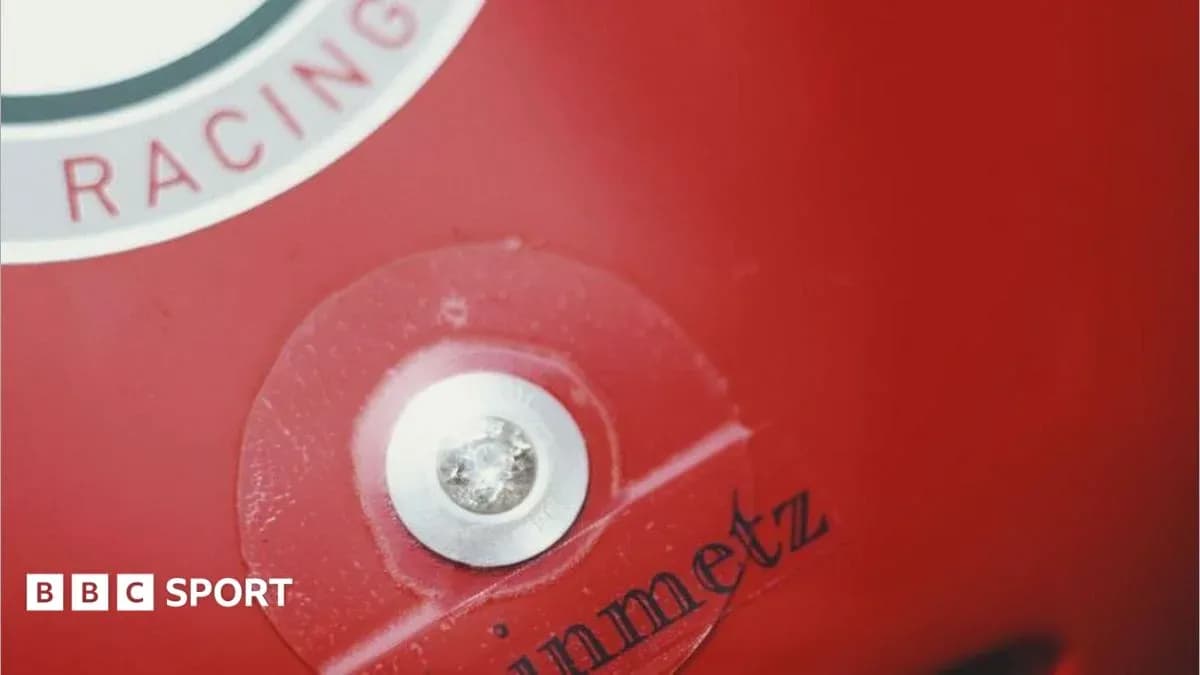
By the end of the first lap, it was gone – along with Jaguar Racing’s front wing and any trace of common sense that had led to gluing a 1.4 carat stone to the most fragile part of a 200mph racing car.
Two decades on, Formula 1 still has no idea where it went.
A team in trouble, a movie in town, and a wild idea
Jaguar were not chasing glory that weekend. They were chasing relevance.
Since Ford had rebadged the Stewart Grand Prix outfit as Jaguar in 2000, the results had been underwhelming. By 2004, the verdict from Detroit was brutal: the team would be sold, or shut down.
"My job flipped from primarily running the team to primarily selling the team and finding a new owner or they would shut it down," former team principal Tony Purnell recalls. "It was probably the worst year of my life."
The pressure wasn’t just sporting. Purnell was sworn to secrecy for months while trying to offload a struggling F1 team in a paddock obsessed with results.
So Jaguar went hunting for noise. If they couldn’t win races, they could at least win the headlines.
The previous year, they had pulled off a slick promotional tie‑in with *Terminator 3* at Silverstone. It worked. The paddock talked. The media followed. So director of communications Nav Sidhu went looking for a sequel.
He found one on the Riviera.
"I'd heard on the grapevine, around about the winter of 2003, that they were making *Ocean's Twelve* and we discovered that they were shooting some of the scenes in Monte Carlo," Sidhu says.
The setting was perfect. Monaco. Hollywood. A heist movie. One thing led to another, and suddenly Jaguar had a deal with Jerry Weintraub, the legendary producer, and the star power of George Clooney, Brad Pitt and Matt Damon attached to their cars and garages for the weekend.
The film’s plot revolved around the theft of a diamond‑encrusted Fabergé egg. Sidhu wanted real sparkle on track too. So he turned to Steinmetz, a diamond company willing to lend some serious stones to the project.
The agreement: both Jaguar cars would run with genuine diamonds mounted in their nosecones. In today’s money, the stones would be worth about $1m in total.
It was bold. It was extravagant. It was also asking for trouble.
One lap, one crash, one missing stone
Monaco does not tolerate lapses. The barriers sit close enough to punish even minor misjudgements. Overtaking is rare; contact is common.
Christian Klien learned that the hard way.
On lap one, in the chaos of the midfield, the Austrian rookie tangled with a Jordan as he exited Mirabeau. The touch damaged the front of his Jaguar – the very area where the diamond sat – and sent him skating into the barriers at the tight Loews hairpin.
The car crumpled. The diamond’s fate, in that instant, became a mystery.
Klien climbed out unhurt. Marshals craned the car away and parked it behind the barriers. The race rolled on. The stone, if it was still attached, disappeared from view.
Back in the garage, Sidhu’s phone rang. Steinmetz wanted to know one thing: would they be getting their diamond back?
"I can't remember what I answered, but it certainly wasn't 'yes'," Sidhu admits.
He couldn’t even go and look. With 76 laps still to run, access to the crash site was impossible. The damaged Jaguar sat marooned behind the barriers, out of reach, while the most expensive piece of PR jewellery in motorsport history potentially lay somewhere on the tarmac.
"I was consumed with getting to that spot as quickly as I possibly could," Sidhu says. "That hour and a half waiting for the race to finish felt like a day and a half, every single lap was just like pulling teeth."
When the chequered flag finally fell, the car came back. The nose was inspected. The trackside area was checked.
No diamond. No fragments. Nothing.
Just a story that refused to die.
Was it even real?
The first theory came quickly: it was all a stunt with a fake stone.
Sidhu dismisses that outright.
"I've learned that any diamond company is not going to go out there, particularly in the public domain, and use fake diamonds because clearly there's a high risk of being caught," he says.
The reputational risk for Steinmetz, Jaguar and even Formula 1 would have been enormous. A fake diamond, exposed, would have turned a clever PR play into a global embarrassment.
"Had we used a fake diamond in that car and what took place took place, then clearly the embarrassment and the disrepute it would bring Jaguar, and Formula 1 for that matter, was too high risk."
Purnell backs him up with a very old‑school test.
He recalls a conversation with the team’s managing director, David Pitchforth. "David said, 'Tony, it was definitely real because when they came to the office with it, I picked the diamond up, went to the window and scratched the window' because that's how to tell."
For Purnell, that settled it. "Hearing that from Dave, I'm in no doubt it was the real thing that was put on the car. I don't know if one of our mechanics was switched on enough to make a fake, but I don't think so."
So if it was real, and it was gone, what happened?
The simplest answer: someone picked it up
The most believable explanation is also the most mundane.
"I think somebody probably just picked it up, put it in their pocket and... they're probably smiling and thinking, 'it's in my drawer'," Purnell says.
He also suspects the impact might have shattered the stone. A diamond may be hard, but it is not indestructible, especially when it meets a barrier at racing speed.
"I do think also that a fairly large diamond zooming through at 100 miles an hour probably shattered. Somebody's got a little bit, somebody else has got another [little bit]. Maybe, sadly, just some guy was sweeping up the road or one of those trucks with the brushes and it all went down the sewer."
By the time the race ended, Monaco had reverted to being a city again. Barriers opened. Spectators poured onto streets that, minutes earlier, had been a live racetrack. Marshals, mechanics, VIPs, media, locals – hundreds, probably thousands, of people moved through the area where Klien had crashed.
Sidhu has little doubt: "Someone's picked it up."
He knows how fans behave. "What people tend to do is, believe it or not, pick up bits of tyre rubber, you know, claim that as Michael Schumacher's front tyre rubber or whatever they can find. Somebody may have picked it up not having any idea it came off a car."
And in Monaco, a diamond does not scream “lost race‑car jewel” at first glance.
"There's a lot of diamonds in Monte Carlo. There's a lot of people walking around Monte Carlo with a lot of jewellery and a lot of stones. Somebody dropped a diamond in Monte Carlo. Well, they're not going to miss that, are they? Probably not."
Somewhere, perhaps in a drawer, perhaps in a safety deposit box, perhaps long since sold, the stone – or what’s left of it – might still exist. Its owner may not even know its story.
The conspiracy theory: did Klien crash on purpose?
No good motorsport mystery is complete without a darker twist. This one is no different.
One of the more persistent rumours is that Klien was told to crash, or at least encouraged to, to create a story worthy of *Ocean’s Twelve* – an on‑track heist to mirror the film’s plot.
It makes for a brilliant screenplay. It makes no sense in the real world of F1 economics.
Sidhu points out that the damage to the car cost more than the diamond itself. The stone, according to reports at the time, wasn’t even insured. On top of that, points – and the prize money attached to them – were far more valuable to Jaguar than a wrecked car and a headline.
"For us, bringing two cars home, ideally in the points, had far bigger commercial benefits to us in terms of constructors' points, broadcast money, and more importantly, trying to retain our sponsors and trying to protect the integrity of the team," he explains.
Klien, a rookie desperate to prove he belonged in F1, had no reason to sabotage his own race. He crashed in full view of marshals, with no chance to clamber around the wreckage hunting for a stone.
"Christian didn't try and say all the brakes failed or anything like that, he's just said 'I made a rookie mistake'," Purnell says. "He was a young guy, first time, made a mistake, it happens. Doesn't usually happen with a $300,000 diamond flying into the crowd or wherever it went, but I'm sure Christian wasn't really aware of the diamond."
Then Purnell delivers the line that kills off the conspiracy: "No amount of money would have got Christian to do that [crash on purpose]. He wanted to make a success of what he was doing."
The fantasy version – Clooney, Pitt and Damon secretly masterminding a real‑life heist – did cross Purnell’s mind.
"It did occur to me that the ultimate thing would be if Clooney, Pitt and Damon had contrived to steal it because it was so in line with *Ocean's Eleven*. But that was a fantasy too far."
A disaster on track, a PR masterstroke off it
While the world obsessed over the missing diamond, Purnell’s focus that afternoon was more conventional: his cars had both failed to finish.
"When Christian went into the wall and then later Mark retired, my entire thinking was 'Oh God. What am I going to say?'" he remembers.
The stakes were high. Jaguar’s major backer, HSBC, was represented in the paddock by its chairman Sir John Bond. Jackie Stewart, the man who had built the original team, was also there. Another bad race, in front of that audience, was the last thing Purnell needed.
"It was all about 'how am I going to explain another bad performance? How am I going to say 'just stick with the plan? We know what we're doing, it will take time' because sponsors don't have time. They want success."
Then the diamond story detonated.
Jarno Trulli won the Grand Prix for Renault, but you would barely have known it from the coverage around Jaguar.
"No-one mentioned Jarno Trulli winning the Grand Prix, no-one asked how the Jaguars did. No-one was interested that Mark Webber's car broke as well. It was, 'where's the diamond?'" Purnell says.
The bizarre stunt that had seemed like an unnecessary risk suddenly became a lifeline.
"I remember talking to somebody in Detroit saying, 'fantastic publicity over here, you know we never hear anything about Formula 1 but it's on the newscasts, it's in the papers - fantastic'.
Did that help sell the team? Purnell believes so.
Asked if the diamond mystery played a part in the eventual sale to Red Bull six months later, he replies: "I think that helped quite a lot because it buzzed the Jaguar team and showed that huge publicity was possible even if you weren't doing so well."
Red Bull bought the outfit, rebranded it, and turned it into a modern F1 powerhouse, collecting eight drivers’ titles and six constructors’ championships.
From a struggling green car with a diamond glued to its nose, to an empire built on speed, swagger and marketing genius. The lineage is direct.
"You couldn't design a better PR weekend," Purnell says now.
Not in the way anyone intended. Not with the outcome anyone planned. But unforgettable all the same.
And somewhere out there, 22 years on, the most famous missing diamond in motorsport still hasn’t told its side of the story.