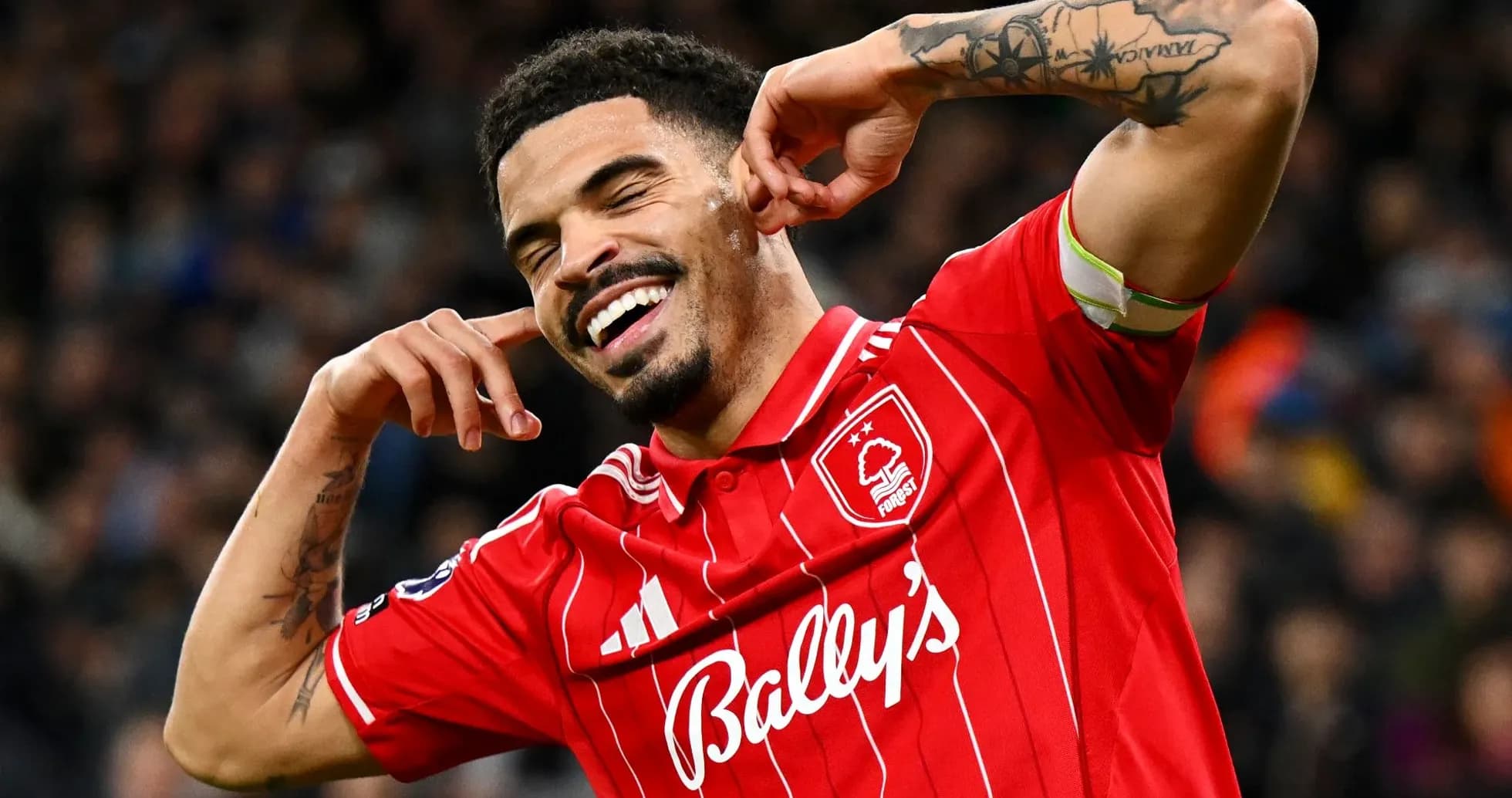
Morgan Gibbs-White: Nottingham Forest's Premier League Talisman
On the banks of the Trent, Morgan Gibbs-White is more than a No.10. He is the face on the billboard, the name on the back of the shirts, the player Nottingham Forest have quietly built a new identity around.
Since arriving in 2022 in a deal that could climb to £42 million, Forest have been happily triggering the add-ons. Every clause ticked off has felt less like a burden and more like confirmation: this is their talisman, their risk that paid off.
The numbers back that up. Last season he hit personal bests, scoring 18 times in all competitions. Fifteen of those came in the Premier League, the rest sprinkled through a Europa League run that carried Forest all the way to the semi-finals. In a side still learning to walk tall among England’s elite, he often looked like the one player already used to the spotlight.
He has worn the captain’s armband in Ryan Yates’ absence. He has become a reference point in the dressing room and in the stands. When Forest need something, the eyes go to Gibbs-White.
That is precisely why the questions will not go away.
Tottenham tried to prise him away before that breakout campaign, only for owner Evangelos Marinakis to slam the door. Gibbs-White stayed, signed a new contract and doubled down on his commitment. The reward he really wanted, though, never arrived. When the England squad for the 2026 World Cup was announced, his name was missing.
The omission has reopened an old debate. Can a player with his ambition achieve everything he wants at Forest? Or will the path to the very top eventually force him through another club’s door?
Des Walker, a man who understands both Forest and the weight of big decisions, did not dress it up when speaking to GOAL in association with World Cup betting.
“It depends on the individual people's egos, doesn't it really?” he said. “And once you go to the big clubs, you have to have enough confidence to go into squads and really walk in there and think, ‘I'm the man’. And if you have that, then it works.
“He's got ability, he's got very good ability and at Forest they love him. And some of his games where he's not as consistent get overlooked. When you go to the big clubs, they don't overlook them, you're under constant scrutiny.”
That is the tension at the heart of Gibbs-White’s story. At Forest, he is indulged when the tricks do not quite come off, forgiven when the final pass is half a yard short. Superstars live with that margin for error at clubs where they are adored. Superclubs rarely offer the same luxury.
“So, it depends on how far he thinks he can go,” Walker continued. “Because these number 10s in this world, they're superstars and they like to be the centre of attention. He does.
“So, sometimes people look at Forest, he's got all the centre of attention he needs. But sometimes people want that big move and that gives them centre of attention as well. But it becomes a bit of a noose around your neck as well at times.”
For now, Gibbs-White remains one of the first names on the Forest team sheet. Under new Austrian head coach Oliver Glasner, he will again be the creative axis, the player tasked with turning possession into purpose. His influence is so strong that other playmakers are struggling to find a way in.
James McAtee knows that better than most.
Forest spent around £30m to bring the former Manchester City prospect and England U21 captain to the East Midlands in the summer of 2025. On paper, it looked like a statement signing: a gifted left-footer, schooled in Guardiola’s passing patterns, arriving to add another layer of craft behind the striker.
The reality has been harsh. McAtee’s first season yielded just one goal – a penalty in continental competition – and a mere 289 minutes of Premier League football. In a team that often had to scrap and suffer, his City polish rarely had the platform to shine.
Walker understands why the transition has been so jarring.
“Any move is difficult,” he said. “It's always easier when you're Manchester City, primarily they've got the ball for 70% of the time. So, if you're getting your lines, it's easier to look more comfortable than when you've got to work to get it and the ball's missing you out. Sometimes the ball's at 50-50 and you're getting kicked up in the air, and Forest are just trying to stay in the game.”
That is the reality shift: from a side that dominates the ball to one that must fight for every touch. From a development environment to a survival battle.
McAtee enters 2026-27 at a crossroads. Either he forces his way into Glasner’s plans by changing games, or he risks becoming an expensive footnote to Forest’s rebuild.
Gibbs-White stands at a different kind of junction. He has already proved he can carry a club like Forest, already shown he can be the centre of gravity in a Premier League side. The next step is not about survival or minutes. It is about legacy, ceiling, and whether the roar of the Trent can ever be loud enough to drown out the call of the game’s biggest stages.