Morocco Holds Brazil to Draw with Tactical Mastery at World Cup
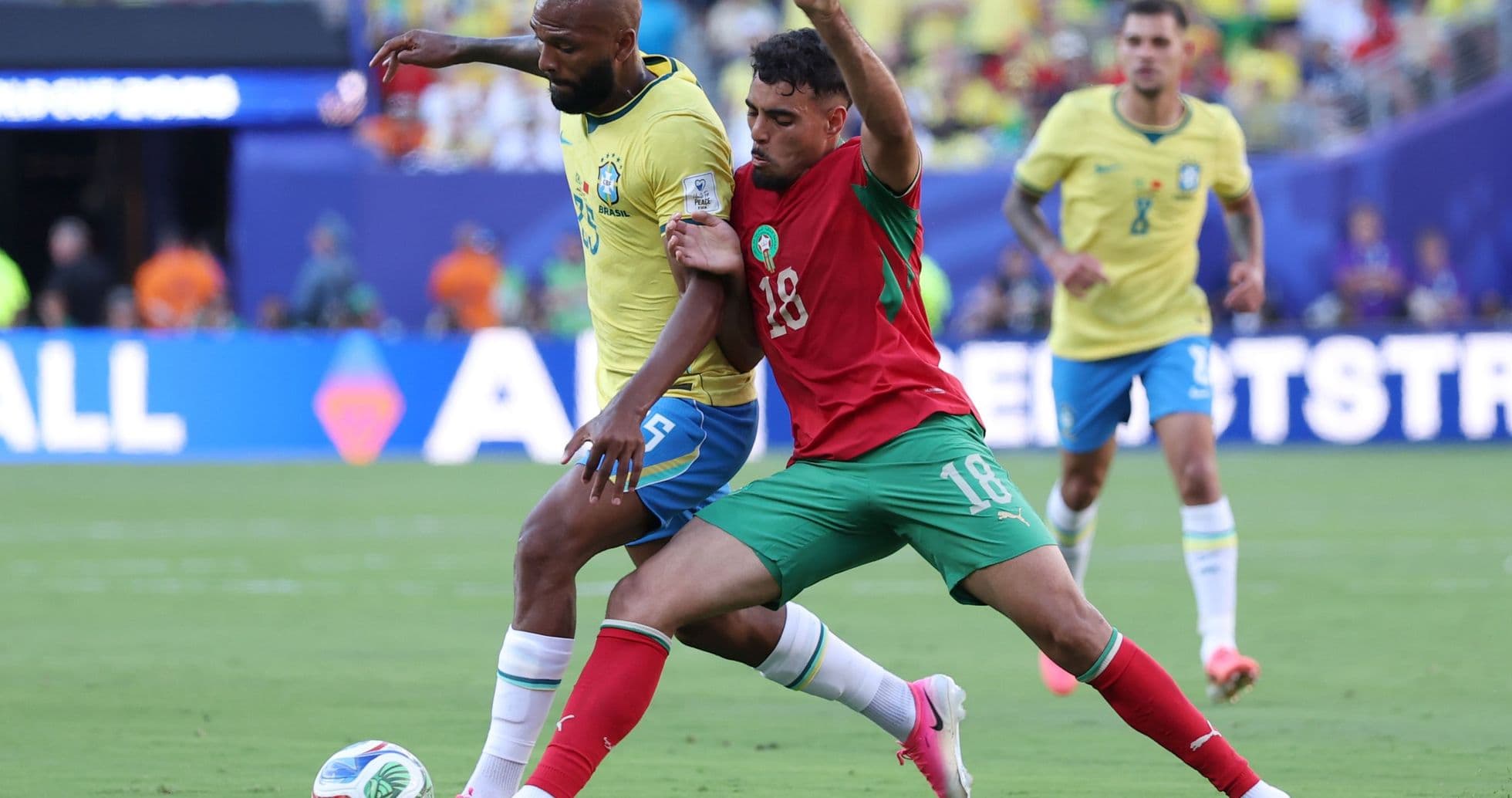
The match between Brazil and Morocco ended in a 1-1 draw, revealing a clash between individual brilliance and team organization. Morocco’s fast start wasn’t accidental; it was a well-planned tactical setup that caught Brazil off guard.
Brazil deployed a 4-2-3-1 formation: Allison in goal, a defensive line of Ibanez, Marquinhos, Gabriel, and Santos, while Casemiro and Guimaraes formed the midfield pivot. Ahead of them were Paqueta, Raphinha, Vinicius, and Thiago Silva as the lone striker.
Morocco lined up similarly with a 4-2-3-1: Bono guarded the net, backed by Mazraoui, Riad, Diop, and Hakimi. Their midfield featured Aynaoui, Bouaddi, and Ounahi, supporting a front line of El Khannous, Saibari, and Diaz.
A Compact Defensive Setup Pays Off
Despite being underdogs, Morocco controlled the first half hour through rapid counterattacks and a tight mid-block defense. Their shape resembled a compact 4-4-2 block, minimizing gaps between lines. Instead of pressing high, Morocco focused on protecting central channels and forcing Brazil to play wide.
This strategy led to Morocco’s goal after intercepting a Brazilian attempt on the left flank. Quickly transitioning, they found Diaz, who assisted Saibari to score. The goal reflected Morocco’s ability to switch from defense to attack in moments.
Brazil’s Struggles with Coordination and Progression
Brazil's challenge wasn't holding possession but moving forward effectively. Their midfield often failed to connect with forwards due to wide spacing and poor cohesion. They tried a 3-2 build-up with Santos, Gabriel, and Marquinhos at the back and Ibanez slightly advanced, but distances between lines remained too large.
Casemiro and Guimaraes anchored midfield but lost the ball cheaply at times. Defensively, Brazil’s structure faltered as Morocco’s fluid passing created spaces. Casemiro appeared slower physically, leading to his replacement by Fabinho early in the second half. Morocco targeted Brazil’s midfield and fullbacks with success, exploiting these weaknesses.
Vinicius Shines Amid Brazil’s Final Third Issues
Brazil lacked a player to link midfield and attack consistently. This absence caused many attacks to stall before reaching danger zones. Vinicius and Raphinha showed flashes of skill, but the team missed a creative force in the final third.
Thiago Silva played as a traditional target man, waiting for service rather than actively creating chances. Players like Cunha might have offered better balance upfront, so it was surprising he wasn’t in the starting lineup.
Final Thoughts
Brazil’s individual talent was clear, but their familiar problems persisted. Their buildup lacked precision, and defensive lapses after losing possession could cause trouble against stronger teams. Meanwhile, Morocco reinforced their reputation as one of football’s most disciplined and tactically sharp teams. Their organized defense and quick transitions allowed them to stand toe-to-toe with a top-tier squad. This draw was no accident but the result of careful planning and execution.