Morocco's Prime Minister Issues Warning on 2030 World Cup Final Hosting
Morocco’s Prime Minister has publicly rebuked one of the country’s most powerful football figures, firing a warning shot that cuts straight to the heart of the 2030 World Cup power game.
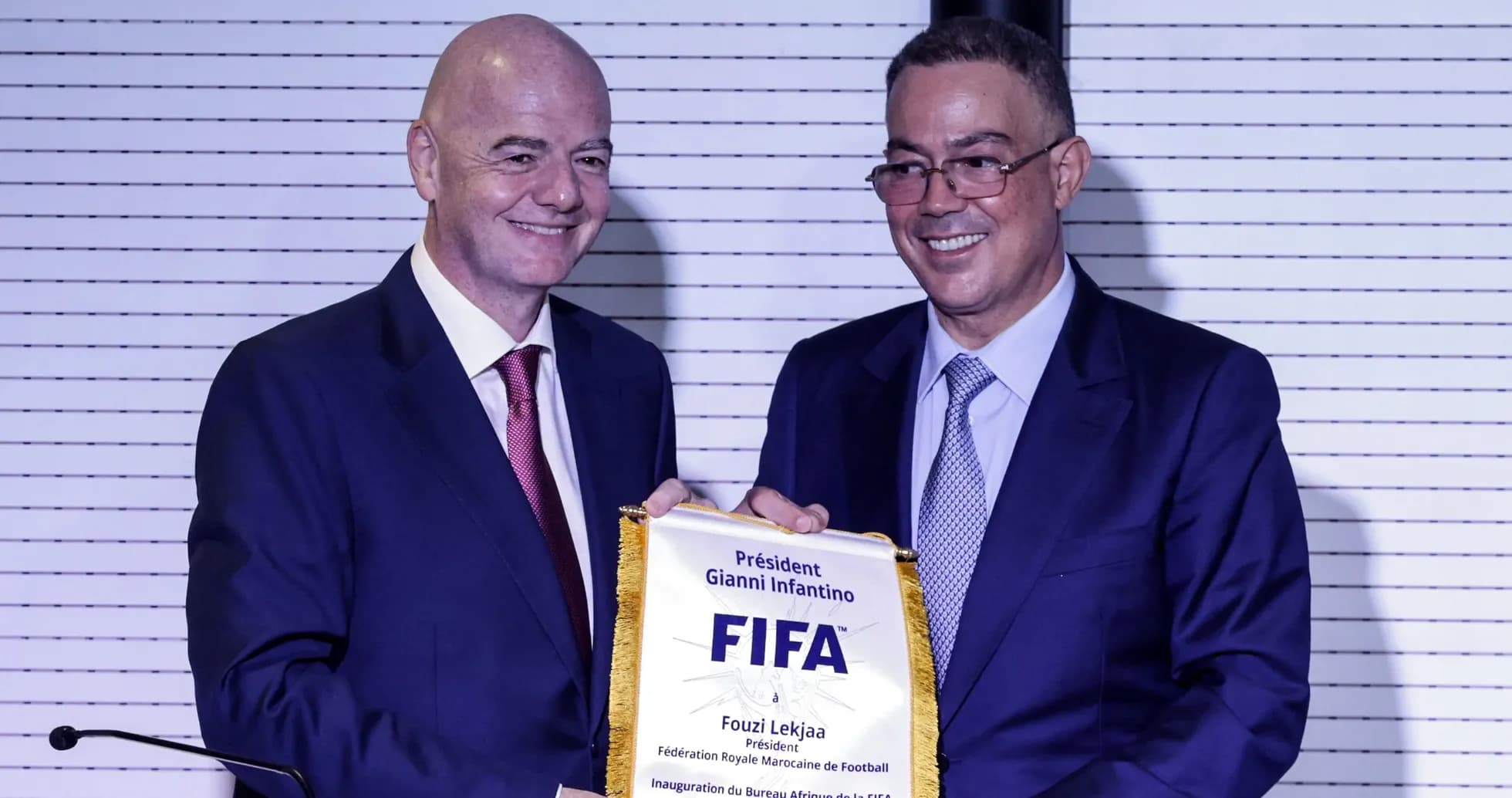
At a political rally, Prime Minister Aziz Akhannouch told Royal Moroccan Football Federation (RMFF) president Fouzi Lekjaa to stop making public promises that Casablanca will host the World Cup final, with the venue still not agreed and tensions simmering with co-hosts Spain and Portugal.
“Do not offer to host the big final game in Morocco while we still have not discussed the matter with our allies, Spain and Portugal,” Akhannouch said, in comments reported by BBC Sport. “There should be some respect, brothers. Stop using electoral promises to pull the rug out from under us. These are huge matters. Deciding where the final will be held is a major issue.”
His intervention followed Lekjaa’s bold claim at a political party event that Morocco’s planned new stadium in Casablanca would have the “honour” of staging the 2030 showpiece. The remark played well domestically, tapping into a wave of national pride around the co-hosting bid, but it also risked inflaming delicate diplomacy with Europe.
A centenary World Cup, a political tightrope
The 2030 World Cup, marking 100 years since the first tournament, will be spread across three continents. Morocco, Spain and Portugal will share hosting duties, with additional opening fixtures in South America to honour the competition’s origins.
Where the final lands is more than a logistical detail. It is a statement of power, prestige and footballing status.
Morocco is pushing hard to bring the final back to Africa for the first time since Johannesburg staged the 2010 decider. The government, though, clearly wants that push to be coordinated, not driven by unilateral promises that could alienate Madrid and Lisbon.
FIFA has so far stayed above the fray, offering only a stock line that “a decision will be made in due course.” That vacuum has left room for national federations to stake their claims in public – and Spain has wasted no time.
Spain turns up the volume
Rafael Louzan, president of the Spanish football federation (RFEF), has spoken with the confidence of a man who believes the answer is obvious.
“Even though no decision has been taken, I believe Spain is the place because it cannot be any other way,” he told Cadena SER radio. “As you know, we are currently world champions. I believe Spain’s organisational capacity for major events is beyond question and that is why reality dictates that the grand final cannot and must not be held anywhere other than in Spain.”
Spain’s case rests on two pillars: recent success on the pitch and heavyweight infrastructure off it.
Their men’s national team, fresh from beating Argentina to claim a second World Cup title this past summer, has restored the aura around Spanish football. Behind them stands a network of elite stadiums, including the transformed Santiago Bernabeu in Madrid and the expanding Spotify Camp Nou in Barcelona, both designed to host the game’s biggest nights with minimal adaptation.
From the RFEF’s point of view, the message is simple: Spain is ready now.
Morocco’s giant gamble
Morocco, by contrast, is building its argument in steel and concrete.
The country has embarked on the construction of a vast 115,000-seat stadium, intended to become the largest football-specific venue on the planet. The Casablanca project is designed as a direct answer to Spain’s historic arenas – a modern colossus that would symbolise Africa’s rise on the global stage.
Lekjaa’s eagerness to present that future stadium as the natural home of the 2030 final reflects Morocco’s ambition. Akhannouch’s reaction underlines the political sensitivity of saying it out loud before partners and FIFA are on board.
For now, Rabat’s stance is clear: dream big, but don’t jeopardise the alliance.
Decision on ice
The timeline offers both hope and uncertainty. For the 2026 World Cup, FIFA did not confirm New Jersey’s MetLife Stadium as the final venue until early 2024, long after the host countries were known. A similar drawn-out process for 2030 would give all three European and African partners time to lobby, negotiate and posture.
In the meantime, Morocco’s government appears intent on cooling the rhetoric, managing domestic expectations and keeping relations smooth with Spain and Portugal.
The stadiums are rising, the political messages are hardening, and FIFA remains silent. When the centenary World Cup finally kicks off, whose capital will the world be watching on that last, golden night?