Mukesh Kumar's Control Redefines T20 Bowling
Mukesh Kumar’s quiet rebellion against T20 excess is unfolding one hard length at a time.
On a Delhi afternoon built for batters and big reputations, the 32-year-old seamer from Gopalganj has muscled his way into the centre of Delhi Capitals’ plans for IPL 2026, not with pace theatrics or mystery variations, but with something far less glamorous and far more valuable: control.
Eyebrows at the toss, answers with the ball
At the toss in Delhi Capitals’ opening game against Lucknow Super Giants, the reaction was almost unanimous. Surprise. Confusion. A few raised voices in the press box.
Where was Aquib Nabi?
The young quick, signed for Rs 8.40 crore after a standout domestic season, had been pencilled into many predicted XIs. Instead, the Capitals handed the new ball to a man who arrived at the franchise in 2023 for Rs 5.50 crore, has toiled for Bengal, and quietly earned an India cap across all three formats on the 2023 tour of the Caribbean.
Many forgot that part. The Delhi management did not.
Mukesh repaid that faith with a spell that turned heads for all the right reasons. In his first two outings of the season, he has bowled just six overs. Only 36 balls. Yet 20 of them have been dots. That’s not a cameo. That’s a message.
Against Lucknow, he even made his own captain work for runs. Rishabh Pant, usually a destroyer of rhythm, found himself fenced in by probing lengths and stubborn discipline. Mukesh sent down 18 balls to him. Eleven were dots. That’s how you earn the right to keep your place in a side stacked with options.
“This isn’t just one or two matches. It’s a 14-match tournament. If the team doesn’t back you, it becomes difficult,” Mukesh told reporters after Delhi’s six-wicket win over Mumbai Indians at the Arun Jaitley Stadium. The subtext was clear: they backed him, and he is backing them right back.
Adjustments on the fly
The Mumbai game showed why coaches trust him. It also showed why batters are beginning to hate facing him.
In the afternoon heat, Mukesh started by searching for swing, going fuller at Ryan Rickelton. The South African left-hander cashed in. Boundary. Two balls later, another fuller one. Another boundary. In a league where panic can spread quickly through a bowler’s spell, this was the moment that usually triggers the slower ball, the bouncer, the desperate change.
Mukesh chose something simpler. He pulled his length back.
What followed looked more like a Test match than a T20 powerplay. The ball sat on that awkward spot, just short of driving length, just too close to off stump. Rickelton suddenly looked trapped. The strokes that had come easily now came with risk. Mukesh kept hammering that hard length until the mistake came and the wicket followed.
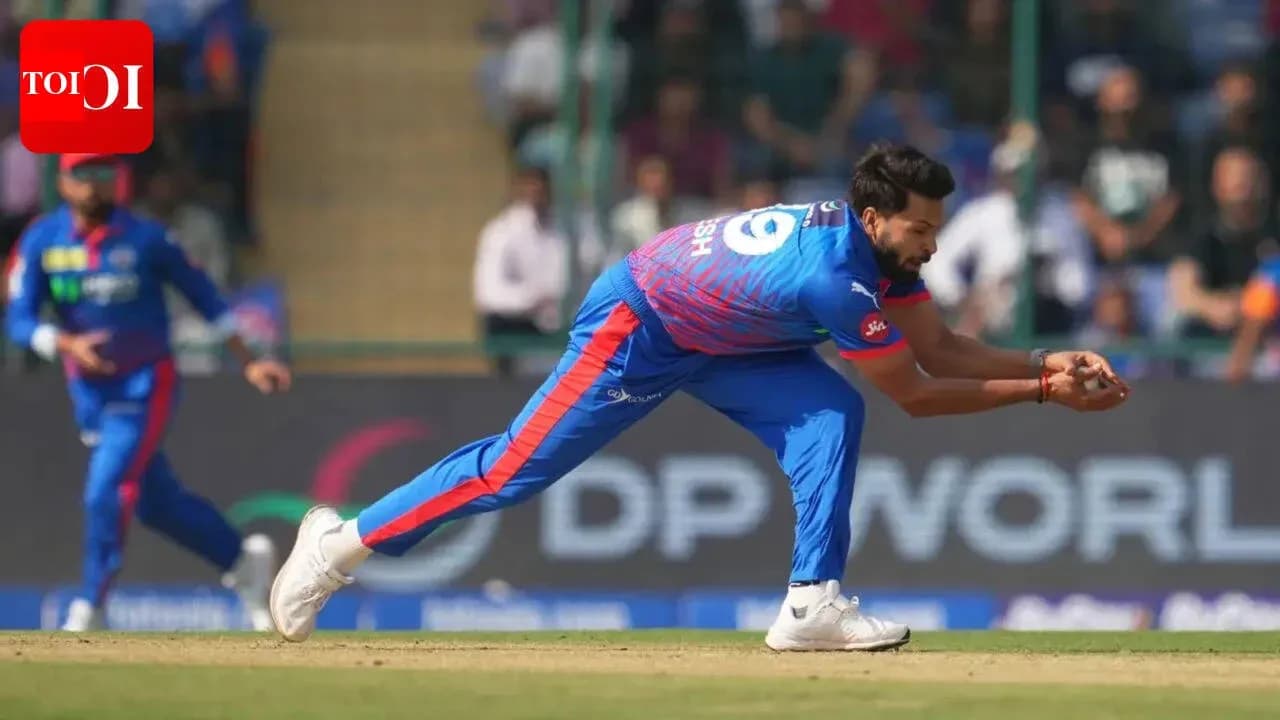
Tilak Varma arrived and saw something different. Same run-up, same intent, but this time a change of pace did him in. Mukesh stuck out his hands to complete a sharp caught and bowled. Two set batters, two very different dismissals, one common thread: a bowler in complete control of his plan.
The performance drew a playful but telling compliment from Jasprit Bumrah, who dubbed him “Mukesh McGrath” in a light-hearted chat after the game. Behind the joke sat a serious nod to what Mukesh is trying to be in this format: relentless, precise, unflustered.
Built on scars and long spells
The last year has not been kind to him. A hamstring injury, then a calf strain, cut through his domestic season and slowed the momentum he had built with India and Bengal. For a seamer who relies on overs, rhythm, and repetition, those breaks sting.
But Mukesh has never had it easy.
He played his early cricket in Bihar against the wishes of his father, the late Kashinath Singh. Family pressure pulled him towards responsibility, not risk. In 2012, he moved to Kolkata to help with his father’s struggling taxi business. The days were long, the money tight, and the future anything but certain.
Frustration nudged him back to the game. He began turning out in second-division matches on the maidans for Rs 400 or 500 a game. No lights, no cameras, no guarantees. Just overs. Lots of them.
Those overs caught the eye of Arun Lal, then Bengal’s head coach. Lal loved him for the one quality captains crave and batters dread: endurance. Mukesh could bowl long spells without letting the intensity drop. Lal called him a captain’s dream and a nightmare for batters because he simply did not give them an inch.
That appetite to learn and keep going, ball after ball, did not go unnoticed beyond Bengal either. During the Cricket Association of Bengal’s Vision 2020 programme in 2014, the likes of VVS Laxman, Waqar Younis and Muttiah Muralitharan saw the same thing: a seamer who understood his craft and wanted to refine it.
The art in his hand
The Delhi Capitals setup has tried to protect and polish that art.
Before this season, bowling coach Munaf Patel sat down with Mukesh for a long conversation. The message stayed with him.
“He always talks about my skills. He keeps telling me that tere haath mey jo kala hai wo kisi aur ke pass nahi hai (The art you have is very unique). He keeps saying that I am the best bowler,” Mukesh recalled in a pre-season interaction.
That kind of backing matters to a bowler coming off injuries and fighting for a spot in an IPL XI that could easily have gone with a newer, flashier name. It also dovetails neatly with the technical adjustments he has made.
Last season, watching Josh Hazlewood operate for Royal Challengers Bengaluru, Mukesh found a template that matched his own strengths. Hazlewood, Australia’s metronome, lived on Test-match lengths in T20 cricket and refused to blink even when batters went after him.
“Last year, I observed how Hazlewood bowled. He consistently hit Test-match lengths. Our coach advised me to focus on my strengths and target that area. It’s a difficult length to score off, especially if the ball is moving. If someone hits you on a good day, that’s fine, but generally it’s a safe and effective option,” Mukesh said after the Mumbai game.
So he has doubled down on that plan. Hard lengths. Tight channels. A small margin for error, but an even smaller margin for the batter.
India on his mind
Mukesh last played for India in 2024. That gap nags at him.
He forced his way back into the conversation as the leading wicket-taker on India A’s tour of Australia near the end of 2024, just before the Border-Gavaskar Trophy. The senior Test squad had already been picked, but the tour still mattered.
“I spoke to the selectors,” he said of that stint. “The team had already been selected by then, but it was a good thing to be around the group. I spoke to the selectors and they said if I perform in domestic cricket and in the IPL, I will make a comeback.”
The path is clear. Brutally simple, like his bowling plans. Perform, again and again, in places where the game is stacked against you. Make it impossible to ignore the dot balls and the wickets hidden inside them.
His story has already drawn nods from the very top. During his first IPL season, MS Dhoni took note of his journey, another quiet endorsement that carries weight in Indian cricket’s dressing rooms.
One dot at a time
Now, as Delhi Capitals search for early-season momentum, Mukesh Kumar is no longer the name that surprises you at the toss. He is the bowler who shapes powerplays, squeezes middle overs and forces batters to take risks at the wrong time.
In a league obsessed with six-hitting and strike rates, he is a reminder that there is still room for old-fashioned virtues: discipline, length, and the courage to be predictable in a format that worships variation.
One dot ball at a time, Mukesh isn’t just repairing his body or reviving his India dream. He is bending T20 contests his way, with nothing more than the art Munaf Patel keeps telling him is his alone.