NASCAR Warns Most Drivers at Talladega Over Minimum Speed Concerns
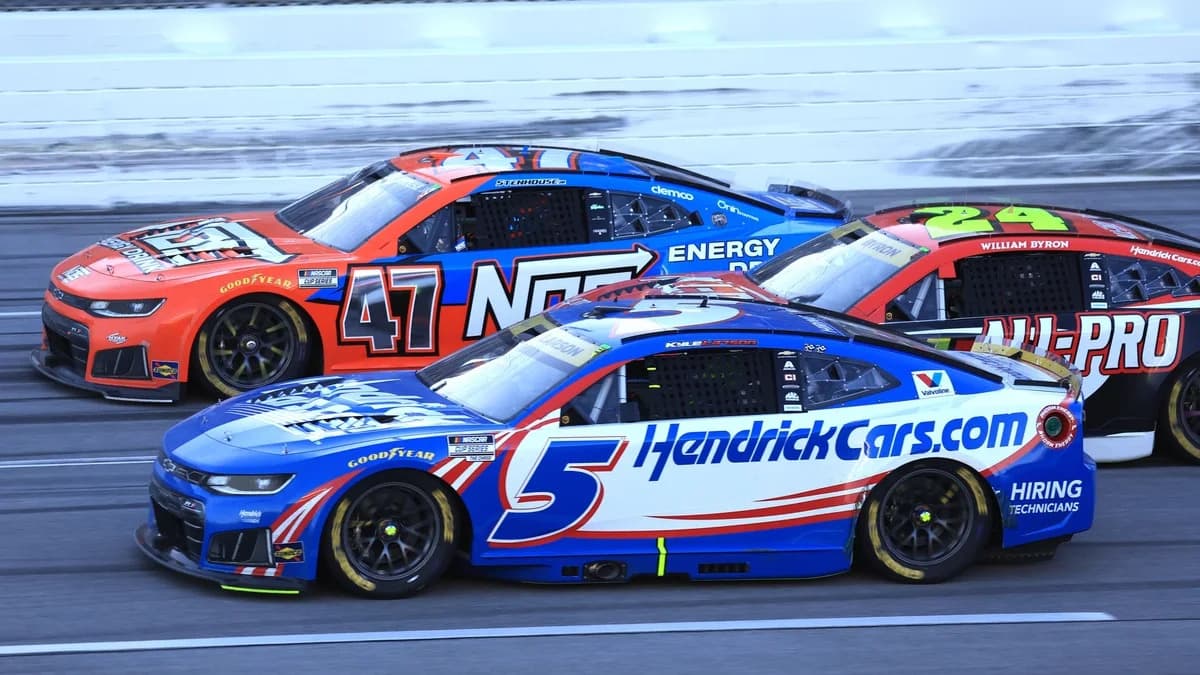
During Sunday’s Cup Series race at Talladega, NASCAR threatened many drivers with a black flag warning if they did not increase their speed to meet the minimum requirements. Nearly the entire field, except the three RFK Racing drivers, was moving too slowly around the 2.66-mile superspeedway as part of fuel-saving tactics. This triggered automatic alerts from race control for cars falling below minimum speed.
Mike Forde, NASCAR's vice president of racing communications, explained on the Hauler Talk podcast how race control intervened. "We can send instant messages to individual teams or everyone on pit road," he said. "We messaged all of pit road, pointing out that several cars had not reached minimum speed and warned that if they didn’t pick it up, we’d have to step in. Soon after, the pace increased, so no black flags were issued." The minimum speed at Talladega is set within 12.5 percent of the pole position lap time, and black flag timing is ultimately at NASCAR’s discretion, often allowing drivers a lap or two to comply.
Forde added, "Our goal isn’t to remove cars from the race. Sponsors invest heavily, and fans want to see their drivers compete, even if they’re not winning. So we aim to keep cars on track."
The Double Yellow Line Incident with Kyle Larson
Kyle Larson’s final lap pass on Todd Gilliland sparked debate over whether he went below the double yellow line. NASCAR reviewed the incident thoroughly after the race before deciding that Larson stayed within the bounds. "The tire must fully cross below the yellow line to merit a penalty," Forde said. "Even if half an inch remains on the line, no penalty is called. Our judgment was clear that Larson did not go below the line."
NASCAR follows a decision flow chart for such situations: first determining if the tires crossed the line, then if the position improved, and finally whether the driver was forced down there. All three conditions must be met for a penalty. Since Larson’s tires never fully crossed, no penalty was applied.
Denny Hamlin reacted on social media, saying, "My goodness. This is horrible officiating or horrible comms. I think it might be both."
Allegations of Team Tactics Debunked
There was speculation that Chevrolet teams slowed down on the frontstretch to help Larson secure stage points and the race win, boosting his chances for the Cup Series championship. Some fans thought Ricky Stenhouse Jr. and William Byron intentionally reduced speed to aid Larson’s comeback from behind.
Forde dismissed these concerns, stating that Scott Miller, a veteran crew chief now serving as a race official, monitored the race from remote control in Concord, North Carolina, and found no suspicious activity. No teams reported any doubts to NASCAR either, and since all teams have access to SMT data, any irregularities would likely have been noticed.
While some teams inquired about Larson’s tires and the yellow line rule, no complaints arose regarding last-lap off-throttle tactics benefiting Larson or Hendrick Motorsports.
Summary of Key Points
- Minimum Speed Warning: Most drivers at Talladega were warned for running below minimum speed; no black flags issued after warnings.
- Minimum Speed Standard: Set within 12.5% of the pole time at Talladega.
- Double Yellow Line Rule: Penalty only applies if tires fully cross below the line, improve position, and are forced down.
- Kyle Larson Incident: No penalty; tires remained on the line during his final pass.
- Denny Hamlin’s Reaction: Called the officiating or communication "horrible" on social media.
- Team Tactics Allegation: No evidence of deliberate slowing by Chevrolet teammates to assist Larson.