Newcastle Faces Tough Decisions as Champions League Hopes Dwindle
Newcastle United are bracing themselves for a summer of hard decisions, with chief executive David Hopkinson making it clear that star players could be sacrificed if the club miss out on the Champions League.
In blunt, business-first language, Hopkinson set out a future in which Newcastle will not only spend, but sell – and sell big.
The message was unmistakable: nobody is untouchable.
Selling to grow
The sale of Alexander Isak to Liverpool last summer still stings on Tyneside. Supporters hated it, Eddie Howe publicly questioned it, and it became a symbol of ambition colliding with accounting.
Hopkinson, who was not in the job when that £125 million deal was done, sees it very differently.
“To me, Isak was a good sale,” he said, holding it up as a template rather than a warning. “Going forward our strategy is to buy well and sell well. Buying well does not necessarily mean spending the most money. It means working in the market place for the players that generate the most value for this club rather than the fee paid for them.”
That line – “buy well and sell well” – is the new reality at a club that once felt like it had bottomless backing from Saudi Arabia’s Public Investment Fund. The money is still there. The rules have changed.
With domestic and European financial regulations biting, Newcastle are now operating with a calculator never far from the conversation. Champions League qualification would ease the pressure. Missing out would tighten it.
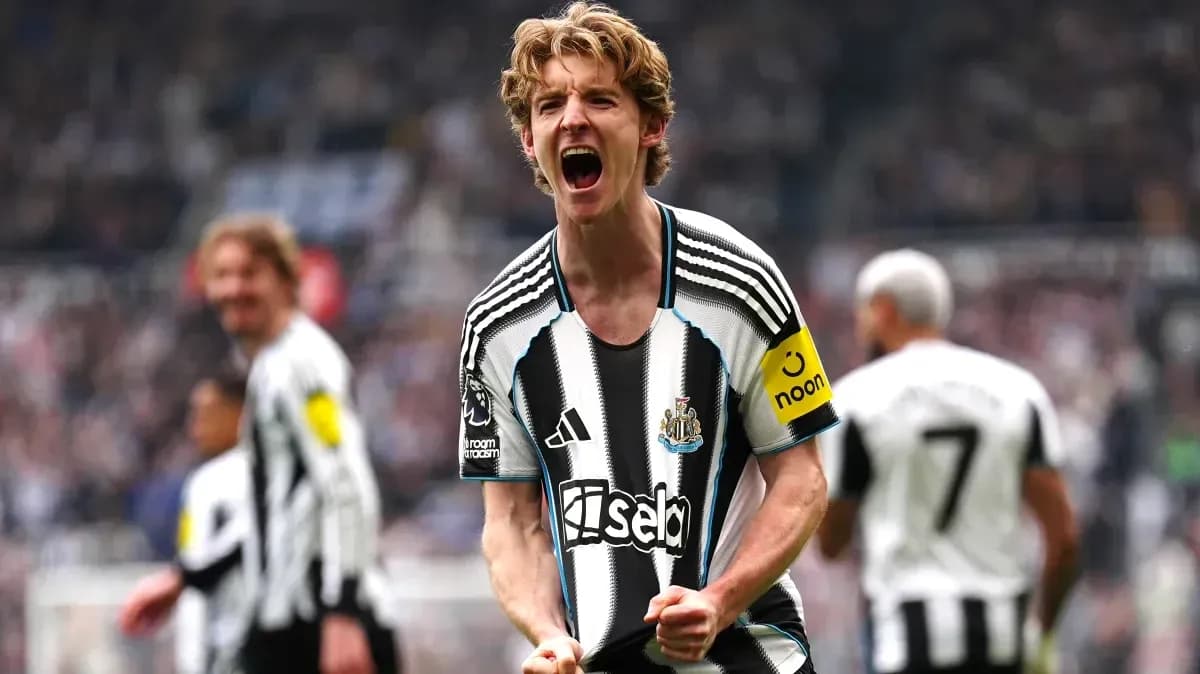
The implications are obvious. Sandro Tonali. Anthony Gordon. Bruno Guimarães. Tino Livramento. Names that were supposed to form the spine of Newcastle’s rise are now regularly floated in discussions about who might be cashed in to keep that rise on track.
Hopkinson refused to put individual players in the shop window, but he did not pretend the situation was simple.
“We are not ready to answer that,” he said when asked directly about potential departures. “We can make a box-office signing but we might not be able to do that without selling somebody. What I do know is that players that leave this club will need to do so on our terms.”
On our terms. A line designed to reassure a fanbase that has watched too many eras end with fire sales and retreats. The difference this time is that the push to sell is not driven by a lack of ambition, but by the cost of sustaining it.
Howe under scrutiny, but not on the brink
The financial backdrop is only one part of the tension around the club. The other is on the pitch, and it exploded with the demoralising home derby defeat to Sunderland.
That result cut deep. It fuelled criticism of Eddie Howe from sections of the support and sparked inevitable speculation about whether Newcastle’s owners might be tempted by a change in the dugout.
Hopkinson moved to dampen that talk, while stopping short of offering any grand, long-term guarantees.
“I would not frame it that way,” he said when asked if Howe’s future was being left open. “We are not looking to make a change at the moment. We are not having those conversations. We are still in the midst of the season.”
The emphasis, he insisted, is on the run-in, not the rumour mill.
“Right now we are focused on the seven matches we have remaining and not distracting ourselves with speculation about what we may or may not do in the summer. Right now, all of us have only got so much bandwidth and we are focused on this season and finishing strongly.”
He did not dress up the derby loss as a mere blip.
“What I can tell you is that the derby loss hurt. We take it seriously. There’s nothing within us that thinks, ‘Well, it’s just three points and on we go.’ It has resonated.”
Hopkinson revealed he recently spent “a couple of hours” in a one-on-one lunch with Howe, talking through “a multitude of things”, including that defeat. The manager, he stressed, remains very much in post.
“Eddie’s our manager. I expect to have a great run to the end of the season here and we’ll talk about the future when it’s time. Right now we’re focused on this season’s competition.”
No vote of eternal confidence. No hint of an imminent axe. Newcastle are choosing to live in the uncomfortable middle ground: backing Howe while leaving the long-term conversation parked until the season’s fate is clear.
Profits, pressure and a fragile step forward
Hopkinson was speaking as Newcastle released their accounts for the year ending June 2025, a campaign without European football but crowned by a Carabao Cup triumph.
The numbers tell a story of progress. Turnover climbed by £15 million to £335.3 million. Commercial income surged by 44 per cent. The club posted a post-tax profit of £34.7 million.
For a fanbase that remembers scraping along under previous ownership, those figures are a sign of a club finally flexing its commercial muscle.
Yet that growth comes with a warning attached. If this is what Newcastle can generate without Europe, the gap to a Champions League season is enormous – and that gap is exactly why star players may have to be sold to keep the project compliant with financial rules.
The owners want a “sound business footing”. The chief executive wants to “buy well and sell well”. The manager wants to keep his best players and push on. The supporters want to believe that the club can compete at the top without being stripped for parts.
All of those aims are now colliding in the same tight space: seven league games, one Champions League chase, and a summer window that could define how far, and how fast, Newcastle can really go.