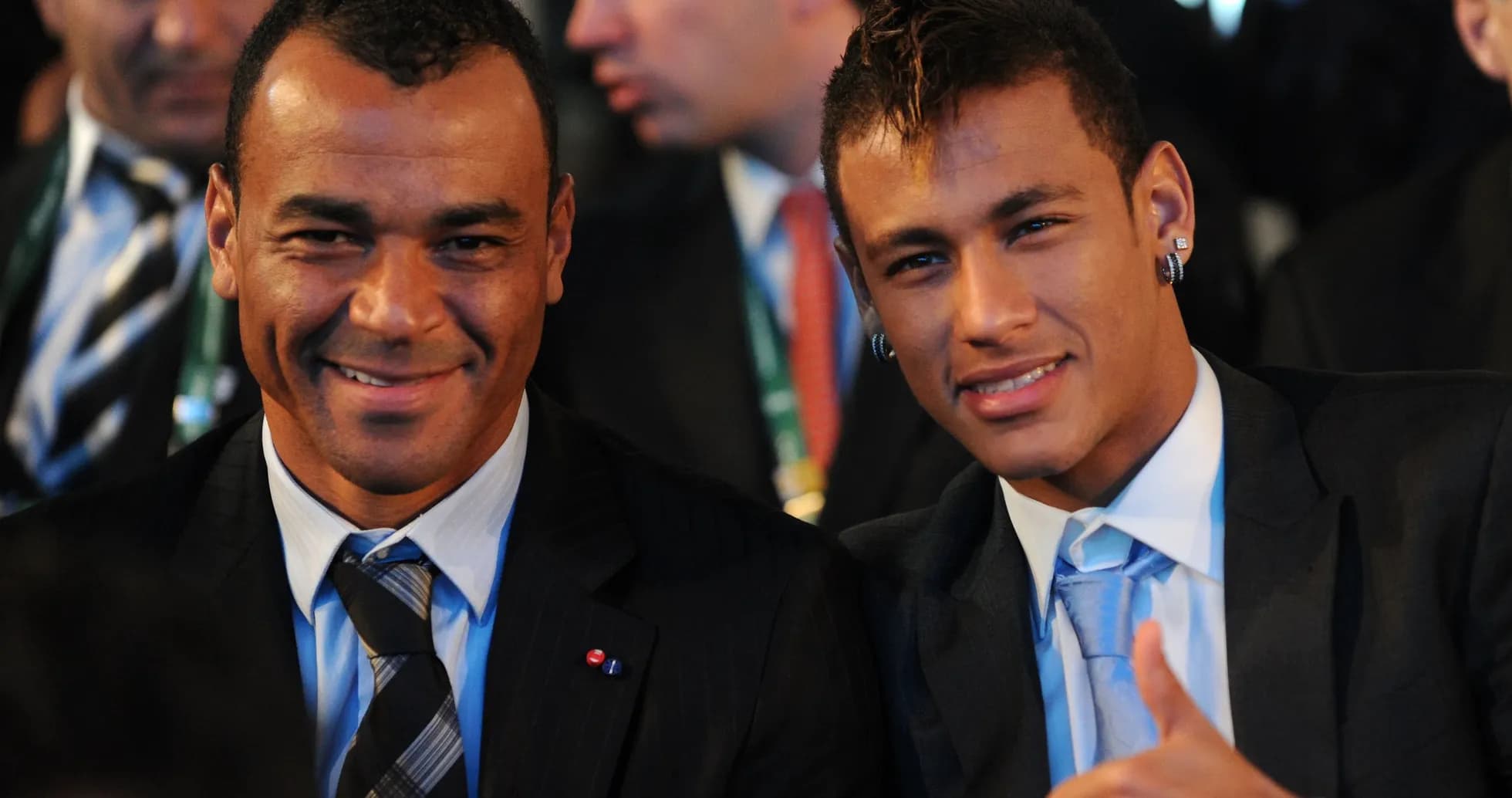
Neymar's Battle for Relevance in Brazil's New Era
Neymar was supposed to be next. The heir. The bridge between the age of Lionel Messi and Cristiano Ronaldo and whatever came after.
The Ballon d’Or never arrived. The injuries did.
Now, at 34 and back where it all began at Santos, Neymar is fighting a very different battle: not for global supremacy, but for rhythm, sharpness and relevance in a Brazil side moving into a new era without any guarantees he will be part of it.
Neymar, the unfulfilled crown
From his first electric spell at Santos, Neymar carried the weight of a country on his shoulders. The flicks, the feints, the swagger – he became a Brazilian football icon before he was fully formed as a professional. The talent was never in doubt. The maturity, the focus away from the pitch? Those questions have followed him his entire career.
The World Cup is just around the corner, and the clock is ticking. Brazil are chasing their first world title since 2002, a drought that feels almost unthinkable for a nation that measures itself in stars above the crest. To join that quest, Neymar has to do something he has rarely managed in recent years: stay fit, stay sharp, and convince Carlo Ancelotti he is worth a place in a squad that is no longer built around him.
The pressure hasn’t eased with age. It has simply changed shape.
Cafu’s verdict: a higher ceiling than Messi and Ronaldo
Not everyone is ready to move on. For Cafu, the legendary former Brazil and AC Milan right-back, Neymar remains a player whose pure talent stood above even the two men who defined an era.
“For me, Neymar was technically even better than [Cristiano] Ronaldo and [Lionel] Messi,” Cafu told The Times. “He’s had a brilliant career.”
It is a striking assessment, not from a pundit seeking headlines but from a captain who lifted the World Cup and knows what greatness looks like up close. Cafu has seen Neymar’s story from the inside: the early explosion, the big move to Barcelona, the world-record transfer to Paris, the near misses, the constant injuries that cut into his prime.
The question now is not about talent. It is about timing and trust.
Pressed on Neymar’s World Cup prospects, Cafu did not hesitate to underline his importance – with one clear condition.
“Any team that has a decisive player like Neymar needs that player. If Neymar is in good shape – physically fit, tactically fit, technically fit – it’s obvious he’s a player who decides games. But only Ancelotti can decide and only Neymar can know if he’s ready.”
That is the reality. Brazil no longer revolve around Neymar, but if he turns up in form, he still has the power to tilt a tournament.
Ancelotti’s Brazil: foreign coach, familiar ambition
This Brazil, though, is different. For the first time, a foreign coach will take sole charge of the Seleção at a World Cup. Carlo Ancelotti, the most decorated club coach of his generation, steps into a job that carries as much expectation as any in world sport.
Some traditionalists in Brazil have bristled at the idea. The national team, they argue, should be led by one of their own. Cafu doesn’t share that view.
“I’m comfortable with it,” he said. “Ancelotti is the most Brazilian Italian coach there has ever been because he has worked with so many Brazilian players. Brazil has modernised. Most of the best Brazilian players are playing in Europe and Ancelotti is European, but that doesn’t mean Brazilian football is European football. The Brazilian essence will always be there.”
Ancelotti himself has already sketched out the blueprint. He wants “an Italian defence and a Brazilian attack” – organisation at the back, improvisation and flair up front. Cafu is convinced that blend “can work well.”
If it does, Brazil might finally end a run that cuts deep into the national psyche: five straight World Cups without lifting the trophy, stretching back to that night in Yokohama in 2002 when Cafu climbed the podium, kissed the trophy and told Brazil’s favelas that anything was possible.
Golf, laughter and the weight of a nation
Pressure is never far from the Seleção. Every tournament is framed as a referendum on Brazilian football itself. Yet the players who actually won the thing in 2002 found their own way of dealing with the suffocating expectation.
Cafu’s memory of the eve of that final against Germany is not of tactical meetings or tense silence. It is of laughter echoing down a hotel corridor and a group of superstars hunched over a makeshift putting game.
“We played golf,” Cafu recalled. “We were in our hotel before the final in 2002 and everyone was sitting around chatting. Ronaldinho had a ball and a club in his room, which a team had given him as a gift. He got a plastic cup and put it in the corridor and started trying to hit the ball into the cup. I’m terrible at golf but everyone was playing – me, Ronaldo, Roberto Carlos, Lúcio, Roque Júnior, Edmilson – we stayed in that corridor for maybe an hour and a half. It was the night before the World Cup final and we were playing golf to have fun.”
That scene says as much about champions as any tactical breakdown. Relaxed. United. Sure of themselves when it mattered most.
Brazil have spent more than two decades trying to recreate that feeling. Ancelotti will attempt it in his own way. Neymar, if he can drag his body and form back to somewhere near his old level, still has time to be part of it.
The throne he once chased has long gone. The Ballon d’Or is almost certainly out of reach. But one more World Cup, one more shot at history with the Seleção – that is still on the table.
The only question left is whether Neymar can convince himself, and then Ancelotti, that he is ready to take it.