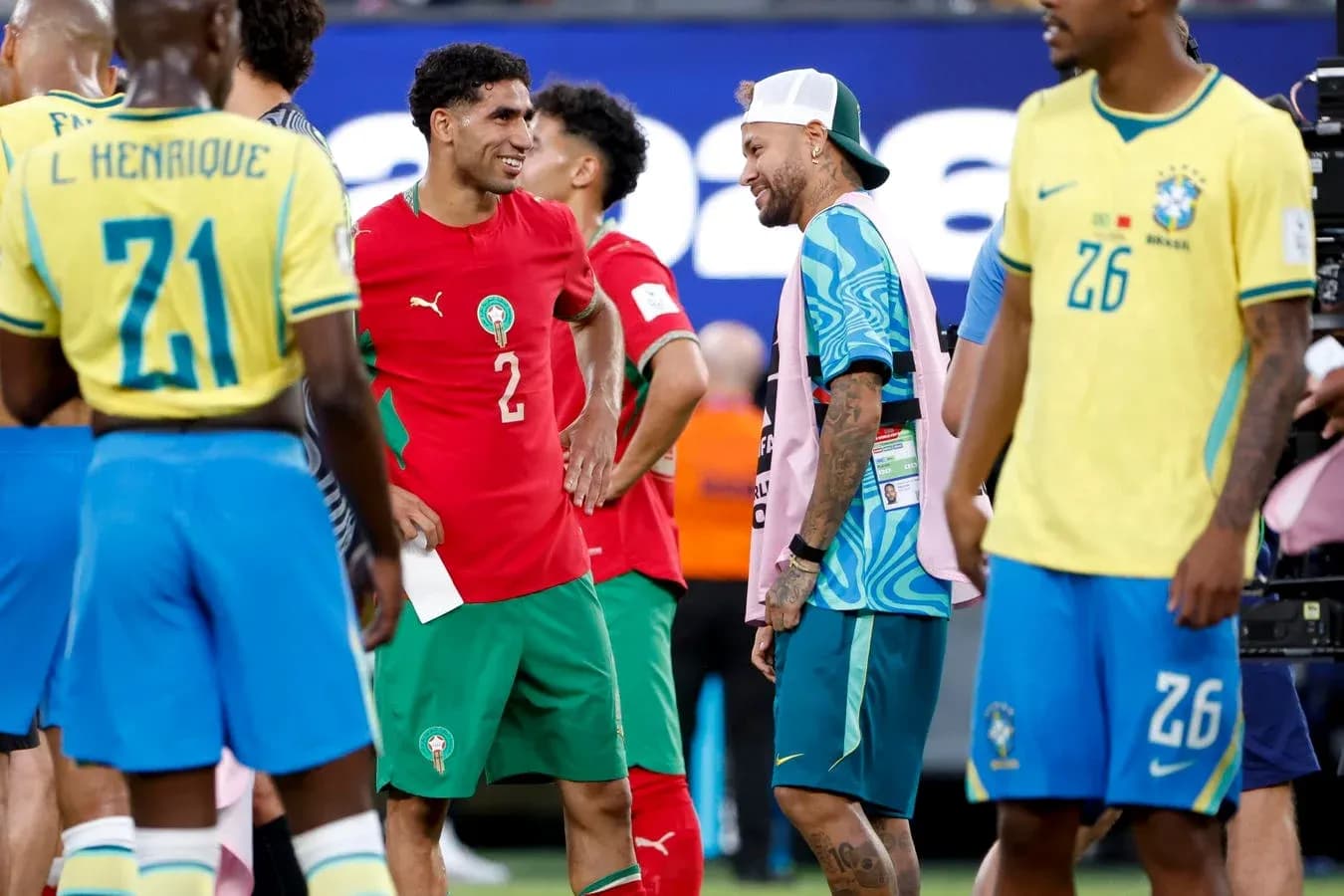
Neymar Out, Pulisic Doubtful: Calf Injuries Impact World Cup
Brazil and the United States head into a crucial stretch of the 2026 FIFA World Cup with their star forwards limping through the storyline rather than leading it.
Two calf muscles. Two nations holding their breath.
Neymar’s World Cup On Pause
Neymar, 34, has been stuck in neutral for a month. He injured his right calf on May 17 while playing for Santos and, since then, his World Cup has existed only on training pitches and medical reports.
He worked alone on the sideline on Tuesday, then joined his Brazil teammates briefly on Wednesday. That glimpse of involvement raised hopes. The medical verdict quickly dampened them.
He has already been ruled out of Brazil’s next Group C match against Haiti.
Inside the Brazil camp, there is a growing acceptance that he may not feature at all in the group stage. The logic is brutal but simple: protect him now, unleash him later in the knockout rounds. That is, of course, if Brazil get there.
A 1-1 draw with Morocco on Saturday has left the five-time world champions with work to do. Haiti on Friday, Scotland on June 24 – those fixtures now carry extra weight, not just for qualification, but for how long they can afford to wait on their No. 10.
Neymar has not played for Brazil’s senior national team since October 17, 2023, when he tore the anterior cruciate ligament and meniscus in his left knee against Uruguay in South American qualifying. That long road back now has another detour, this time in his right calf.
The diagnosis is serious enough: a second-degree calf strain, a moderate tear that stops short of being complete but is far more than a niggle.
For that kind of injury, the usual return window is around three to six weeks. In tournament football, that’s an eternity.
Pulisic’s Tournament Suddenly Complicated
On the other side of the draw, the United States are dealing with their own calf crisis.
Christian Pulisic, 27, arrived at this World Cup as the focal point of the USMNT attack. Then training bit back. He first injured his left calf last week in practice, then aggravated it during the Americans’ Group D opener – a 4-1 dismantling of Paraguay.
He didn’t make it to halftime.
Forced off before the break, Pulisic watched from the sideline as his teammates finished the job. Now the question is whether he will be there at all when the U.S. face Australia on Friday.
The exact grade of his strain remains unclear. Medical staff are still weighing whether it’s a milder first-degree issue or something closer to Neymar’s moderate second-degree tear. That gap in detail matters: a first-degree strain can sometimes clear in one to three weeks; a second-degree can take two or three times as long.
For a player who thrives on explosive bursts, sharp cuts, and sudden acceleration, any hesitation in that left calf could blunt the edge of the U.S. attack.
The Brutal Mechanics Of A “Pulled Calf”
Strip away the drama, and both stories come down to the same unforgiving reality of elite sport: the calf muscle.
A “calf strain” is essentially a pulled muscle – an overstretch or tear of one or more of the muscles in the back of the lower leg, or the tendons that anchor them to bone. In football, it’s almost an occupational hazard.
Sprinting off the mark, leaping for a header, changing direction at full tilt – every action demands a violent push-off from the feet. The calf takes that load. When the muscle isn’t flexible enough or hasn’t fully adapted to the strain, it can go from tight to torn in a heartbeat.
Doctors typically break these injuries into three degrees:
- First degree (mild): Less than five percent of the muscle is affected. Painful, but often manageable, with a potential return in one to three weeks if rehab goes well.
- Second degree (moderate): A more significant tear, but not a complete rupture. This is what Neymar is reportedly dealing with. Recovery usually runs about three to six weeks.
- Third degree (severe): A full-thickness tear of the muscle or the muscle-tendon unit. That’s season-altering, often sidelining a player for months and sometimes requiring surgery.
Neither Neymar nor Pulisic is believed to be in that nightmare third category. Their treatment, for now, is rooted in the familiar RICE approach: rest, ice, compression, elevation.
Stop the activity. Cool the area with ice for 20 minutes at a time every couple of hours. Wrap the calf to limit swelling. Keep the leg raised above heart level to reduce fluid build-up.
It’s basic, but it’s the foundation of almost every soft-tissue comeback story.
Two Teams, One Shared Anxiety
For Brazil, the equation is ruthless. Can they navigate Haiti and Scotland without their most gifted individual and still preserve him for the games that define tournaments, not just group tables?
For the United States, the dilemma is different but just as sharp. Push Pulisic too soon and risk losing him for the rest of the World Cup, or hold him back and gamble on getting through Australia without their talisman?
Two calves, two timelines, and one common thread: until Neymar and Pulisic are back sprinting, every step their teams take in this World Cup will feel just a little less certain.