Nmecha's Celebration Sparks Controversy at Dortmund
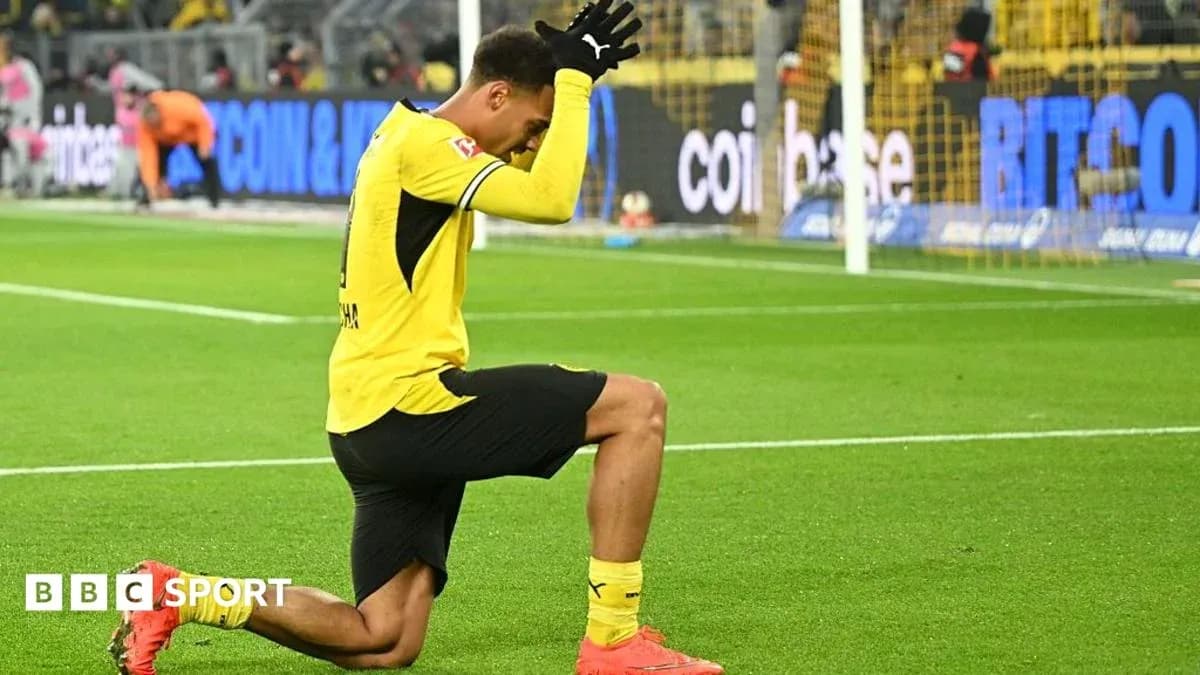
Felix Nmecha’s celebration was supposed to be simple. Two goals in a 2-1 win over Elversberg on Saturday, a point to the sky, then a slow, deliberate motion: taking an imaginary crown from his own head and placing it on the ground.
For some Borussia Dortmund fans, it was anything but simple.
A supporters’ group publicly objected to the midfielder’s celebration, arguing it referenced The King’s Return, a campaign associated with the Christian organisation Ballers in God. In their view, that link dragged a culture war straight onto the pitch.
The group pointed to reporting by German broadcaster ARD, saying the campaign promotes “extremely conservative positions against homosexuality and transgender identity”, portrays abortion as “Satan’s plan” and clashes directly with Dortmund’s long-stated values of tolerance and diversity.
Nmecha moved quickly to cool the storm. He insisted there had been “misunderstandings” around the gesture and stressed it was “not intended to promote myself or any organisation”. “My message has never been about promoting intolerance, discrimination, or hate in any form,” he said.
The symbolism, though, had already been seized upon.
Ballers in God Responds
Ballers in God, founded by former Crystal Palace and Tottenham midfielder John Bostock, sits at the centre of the controversy. The organisation promotes Christian beliefs within football and has attracted a notable following: England internationals Marc Guehi and Bukayo Saka, and former Brazil star Kaka among them.
The supporters’ group argued that the The King’s Return movement, linked to Ballers in God, runs counter to what Dortmund say they stand for. The Christian group pushed back.
In a statement, Ballers in God said: “We are encouraged by player-led movements such as The King’s Return, where footballers themselves take the initiative to express their faith in Jesus.
“Our desire is not only to share our hope, but to demonstrate love and respect towards everyone, including those who do not share our beliefs.
“Our focus has always been, and will always be, to point people to Jesus with grace and love.”
The tension is clear: one side sees a personal expression of faith; the other sees a symbol tied to a campaign they believe marginalises parts of the fanbase.
A Wider Fault Line in Modern Football
Nmecha’s case does not stand alone. It drops into a growing pile of flashpoints where personal belief, institutional campaigns and club identities collide.
Last year the Premier League stepped back from the Rainbow Laces initiative and ended its formal partnership with LGBTQ+ charity Stonewall, a move that raised questions about how top-level football chooses to engage with equality campaigns.
In 2024, then Ipswich captain Sam Morsy, a Muslim, said he did not wear a rainbow armband because of his “religious beliefs”. At Crystal Palace, Marc Guehi wrote “I [heart] Jesus” on his rainbow armband when he captained the side, blending a league-backed inclusion symbol with his own faith.
Manchester United, for their part, abandoned plans to wear a jacket supporting the LGBTQ+ community after a player refused to take part.
Each incident has its own context, its own nuance. Together they sketch a clear picture: footballers are increasingly assertive about their personal convictions, while clubs and leagues try to present themselves as spaces that welcome everyone, regardless of identity or belief.
That balance is proving harder to hold with every gesture, every armband, every celebration.
Dortmund’s Dilemma
For Dortmund, the Nmecha episode cuts to the heart of how a club with a loud, politically engaged fan culture responds when a player’s public expression of faith is linked, fairly or not, to a movement accused of discrimination.
Nmecha insists his celebration was about his relationship with God, not about endorsing an agenda. Ballers in God insists its purpose is to share hope “with grace and love”. The supporters’ group insists the campaign stands against LGBTQ+ and reproductive rights.
Somewhere between those positions lies the question that will not go away: in a sport that sells itself as global, inclusive and for everyone, how far can personal conviction stretch before it clashes with the badge on the shirt?