Nobby Stiles: World Cup Hero and Brain Injury Controversy
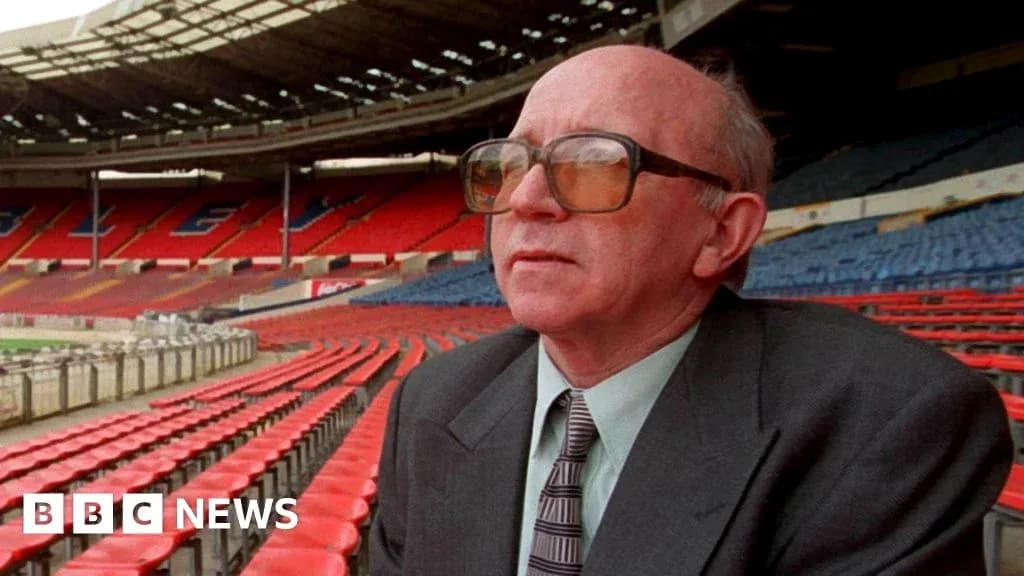
Nobby Stiles, the toothless terrier who danced with the World Cup at Wembley in 1966, has become a central figure in football’s most uncomfortable debate once again.
A coroner has ruled that an inquest must be held into his death after it emerged the England and Manchester United legend died with a traumatic brain injury, chronic traumatic encephalopathy (CTE), and other serious brain disease.
World Cup hero at the heart of a modern crisis
Stiles died in 2020 at the age of 78. He had long been remembered as the combative, tough-tackling defensive midfielder who shadowed Eusebio out of the 1966 World Cup semi-final and helped deliver the greatest day in English football history. Now his name is being spoken in courtrooms rather than stadiums.
Chris Morris, area coroner for Greater Manchester South, told Stockport coroner’s court that a full inquest is required after a brain specialist reviewed Stiles’s medical records and confirmed the presence of high-stage CTE, a disease closely associated with repeated head trauma.
The diagnosis goes to the heart of a battle that Stiles’s family – and many others – have been fighting for years: that repeated heading of a football and concussive blows suffered in an era with little to no protection have left a generation of former players with devastating neurological damage.
A case that slipped through the net
Morris revealed that Stiles’s death had not originally been referred to the coroner’s office in 2020.
“For reasons not entirely clear to me,” he told the court, the case was not investigated at the time and only came before the coroner after new information was supplied by the Stiles family. That prompted a fresh examination of his medical history and, crucially, the formal identification of a traumatic brain injury as part of the cause of death.
The court heard that Stiles’s death was attributed to high-stage CTE alongside “stage three limbic predominant age related TDP-43” and small vessel cerebrovascular disease – a grim cluster of conditions affecting the brain.
Morris was unequivocal: “On the basis of that cause of death, particularly the inclusion of a traumatic injury included in the cause of death, I’m satisfied an inquest is required into the sad death of Mr Stiles.”
The full inquest will be held on Wednesday at the same court, a hearing that will be watched closely by families and legal teams across the game.
From Old Trafford icon to symbol of a wider fight
Born in Manchester in 1942, Norbert “Nobby” Stiles was the archetypal old-school midfielder: ferocious in the tackle, relentless in his work, and utterly fearless. He won 28 caps for England, played nearly 400 times for Manchester United and formed part of the club’s first European Cup-winning side in 1968.
That fearlessness, his family believe, came at a terrible cost.
They have become prominent voices in a growing movement demanding that football’s authorities confront the long-term consequences of heading and repeated head impacts. John Stiles, Nobby’s son, now heads the Football Families for Justice (FFJ) group, which is pushing for better support and recognition for former professionals suffering with brain disease.
He is one of dozens of relatives and ex-players involved in legal action against the Football Association, the Football Association of Wales and the English Football League. The claimants argue that the governing bodies were “negligent and in breach of their duty of care” by failing to protect players from the risks posed by repeated heading and head injuries.
Science, responsibility and a game under scrutiny
Lawyers representing the families have argued that football’s leaders knew, or should have known, for decades that repeated heading in training and matches was likely to cause brain injuries. They say the dangers were not new, but ignored.
The governing bodies reject that accusation. In March, lawyers for The Football Association told the High Court that “it has not been established by science” that heading a ball or “occasional” concussion leads to permanent brain damage. That line – the gap between emerging medical evidence and what is deemed conclusive proof – now sits at the heart of a legal and moral storm.
The Stiles inquest will not decide that wider argument, but it will add another layer of detail to a picture that is becoming harder to dismiss.
Earlier this year, an inquest into the death of Gordon McQueen, the former Scotland, Manchester United and Leeds United defender, found that heading the ball was “likely” to have contributed to a brain injury that played a role in his death at 70. McQueen, like Stiles, was a towering presence in the air in an era when defenders were expected to attack every cross with their head.
Each of these rulings tightens the focus. Each one raises the same uncomfortable question: what did football know, and what did it do about it?
On Wednesday, as the court in Stockport turns to the final years of Nobby Stiles’s life, the sport will again be forced to look back at the way he played – and ask how many more of his generation are still to be heard.