Nottingham Forest vs Burnley: Premier League Relegation Battle
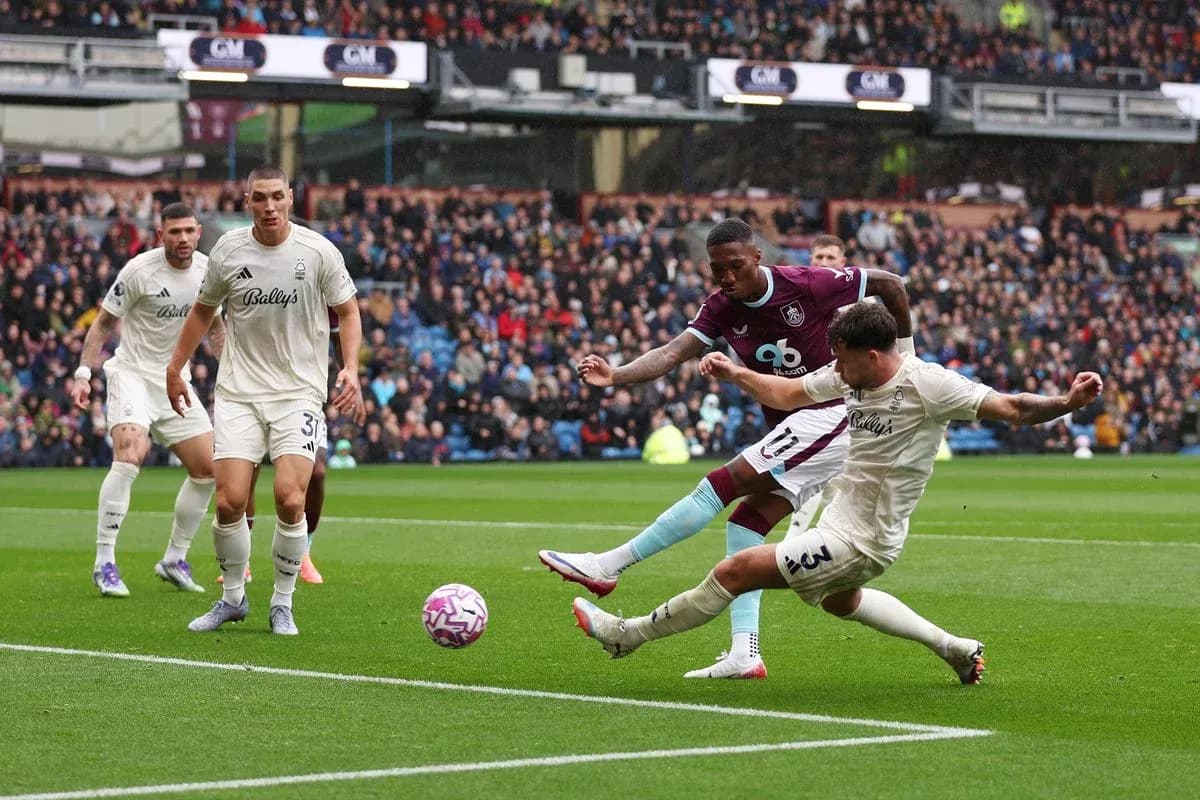
City Ground hosts a relegation six-pointer in the Premier League in April 2026 as 16th-placed Nottingham Forest welcome 19th-placed Burnley. With Forest on 33 points and Burnley marooned on 20 after 32 matches, the stakes are brutally clear: the hosts can take a huge step towards safety, while defeat could all but condemn the Clarets to the drop.
Context and stakes
Across all phases, Forest have put together a record of 8 wins, 9 draws and 15 defeats, with a goal difference of -12 (32 scored, 44 conceded). Their recent league form reads “DWDDL” – not spectacular, but steady enough to keep them just above the bottom three.
Burnley arrive in far deeper trouble. They sit 19th with only 4 wins, 8 draws and 20 losses, and the division’s worst defence by some distance: 63 conceded for a goal difference of -30. Their recent form line of “LLDLL” underlines a side stuck in a cycle of defeats, with only one point from the last five in the league.
At this stage of the season, that 13-point gap between the sides makes this less of a straight shootout and more of a must-not-lose for Forest and a must-win for Burnley. A home victory would likely push Forest out of realistic reach for the Clarets.
Forest: pragmatic and streaky, but hard to kill off
In the league, Forest’s profile is that of a low-scoring, risk-managed side. Across all phases they average 1.0 goals for and 1.4 against per game. At City Ground, that drops to 0.9 scored and 1.3 conceded, which explains why so many of their home games are tight affairs.
The goals data is revealing. Only 5 of their 32 league matches have gone over 2.5 goals, with 27 finishing under 2.5. That is a very strong under trend, driven by:
- Modest attacking output (32 goals in 32 games).
- A defence that, while far from watertight, rarely allows games to become basketball scores.
Forest’s timing patterns matter tactically. They are most dangerous early and late in halves:
- 0–15 minutes: 8 goals scored (22.86% of their total).
- 46–60 minutes: 8 goals.
- 76–90 minutes: another 8 goals.
This suggests a side that starts aggressively, targets the reset after half-time, and often throws late numbers forward. Defensively, however, they are vulnerable around the interval and in the closing stages:
- 31–45 minutes: 11 goals conceded (26.83%).
- 76–90 minutes: 13 conceded (31.71%).
That late fragility could be a concern against a Burnley team that will likely chase the game if behind.
Tactically, Forest are heavily wedded to a 4-2-3-1, used in 28 of their 32 league matches. That structure puts a creative burden on the No 10 – and in this side, that means Morgan Gibbs-White.
Gibbs-White is Forest’s standout attacking figure this season:
- 32 appearances, 31 starts.
- 9 league goals and 2 assists.
- 48 shots, with 24 on target.
- 44 key passes and over 1,000 completed passes at 81% accuracy.
He is not just their top scorer; he is their primary chance creator and ball-progressor between the lines. His penalty record this season is clean (1 scored, 0 missed), and Forest as a team are 2 from 2 from the spot across all phases.
The concern for Forest is depth. They are missing three players definitively:
- W. Boly – Knee injury.
- John Victor – Knee injury.
- N. Savona – Knee injury.
On top of that, several key names are questionable:
- C. Hudson-Odoi – Injury.
- Murillo – Injury.
- C. Wood – Injury.
- E. Anderson – Personal reasons.
If Hudson-Odoi and Wood are not fit, Forest lose pace on the flank and a natural focal point in the box. If Murillo is absent, their build-up from the back and defensive mobility both suffer. That could nudge the manager towards a more conservative interpretation of the 4-2-3-1, with extra emphasis on compactness and set pieces.
Burnley: expansive shapes, soft centre
Burnley’s season has been defined by defensive collapse. Across all phases they concede 2.0 goals per game, including a bruising 2.4 per game away from home (38 conceded in 16 away matches). They score at the same 1.0 goals-per-game rate as Forest, but their defensive numbers are far worse.
Interestingly, Burnley have experimented tactically far more than Forest. Their most-used formations:
- 4-2-3-1 – 9 matches.
- 3-4-2-1 – 8 matches.
- 5-4-1 – 7 matches.
- 4-3-3 – 3 matches.
- 4-4-2 and 3-4-3 – 2 matches each.
- 4-5-1 – 1 match.
That spread suggests a coaching staff searching for balance and not quite finding it. The more expansive shapes (4-2-3-1, 3-4-2-1, 4-3-3) have not been backed by a stable defensive platform, especially away, where their record stands at 2 wins, 3 draws and 11 defeats, with 18 scored and 38 conceded.
Burnley’s clean sheet numbers are telling: 4 in total, but none away from home. On the road they concede in virtually every match, often heavily – their biggest away defeat is 5-1, and they have shipped 5 away from home at least once.
Discipline is another undercurrent. They pick up a lot of late yellow cards, with notable spikes between 76–90 and 91–105 minutes, and three red cards spread across the 31–45, 76–90 and 91–105 ranges. That hints at a team that becomes ragged when chasing games, which is a risk in a high-stress relegation fixture.
Burnley’s penalty record is perfect this season (2 scored, 0 missed), but with key attacking and creative players unavailable, their ability to reach the box consistently is in question. They are without:
- Z. Amdouni – Knee injury.
- J. Cullen – Knee injury.
- H. Mejbri – Hamstring injury.
- J. Beyer – Hamstring injury.
- C. Roberts – Muscle injury.
That is a spine ripped out: centre-back (Beyer), right-back/wing-back (Roberts), central midfielder (Cullen), attacking midfielder/forward (Amdouni) and a versatile midfielder (Mejbri). It restricts Burnley’s options both in terms of ball progression and defensive stability, particularly if they had hoped to switch between a back three and back four during the game.
Head-to-head: Forest with the edge in competitive meetings
Looking only at competitive fixtures and excluding the cancelled friendly, the last four meetings between the sides read:
- September 2025 (Premier League, Turf Moor): Burnley 1-1 Nottingham Forest.
- May 2024 (Premier League, Turf Moor): Burnley 1-2 Nottingham Forest.
- September 2023 (Premier League, City Ground): Nottingham Forest 1-1 Burnley.
- August 2023 (League Cup, City Ground): Nottingham Forest 0-1 Burnley.
That gives, across these four competitive matches:
- Nottingham Forest wins: 1.
- Burnley wins: 1.
- Draws: 2.
The pattern is of tight contests, with no side able to dominate. Forest’s only win in this run came away from home, while Burnley’s came in the League Cup at City Ground. In the league specifically over this period, Forest are unbeaten against Burnley (1 win, 2 draws).
Tactical keys
- Forest’s 4-2-3-1 vs Burnley’s shape-shifting Forest’s continuity in 4-2-3-1 should give them structural clarity. Expect a double pivot screening a back four, with Gibbs-White operating between the lines, drifting into half-spaces to link play. Burnley must decide whether to mirror that with their own 4-2-3-1 or add an extra centre-back to shore up their fragile away defence.
- Gibbs-White vs Burnley’s midfield screen With Cullen and Mejbri out, Burnley’s central midfield options are thinner and less balanced. If the visitors cannot field a disciplined double pivot, Gibbs-White will find pockets to turn and run at a back line that already concedes too many high-quality chances.
- Set pieces and late-game scenarios Forest’s late goals for and against, combined with Burnley’s late cards, point towards a match that could swing in the final 15 minutes. With both sides relatively low-scoring, dead-ball situations and penalty-box scrambles may decide it.
- Psychology and risk Forest can afford to be pragmatic; a draw keeps Burnley at arm’s length. Burnley, by contrast, are running out of road. That imbalance of necessity may force the Clarets to open up earlier than they would like, exposing their soft underbelly on the counter.
The verdict
All the data points towards a tight, low-scoring contest, in line with Forest’s season-long under-2.5 trend. Burnley’s defensive record, especially away, tilts the balance towards the hosts, but Forest’s own attacking limitations and injury doubts argue against a rout.
With home advantage at City Ground, a more settled tactical identity, and a genuine match-winner in Morgan Gibbs-White, Nottingham Forest look better equipped to handle the pressure of this relegation battle. Burnley’s need to chase three points could ultimately play into Forest’s hands.
A narrow home win, perhaps by a single goal in a game that stays under 2.5 goals, is the logical expectation based on the numbers and recent history.