Nottingham Forest vs Aston Villa: A Tactical Analysis of the 1-1 Draw
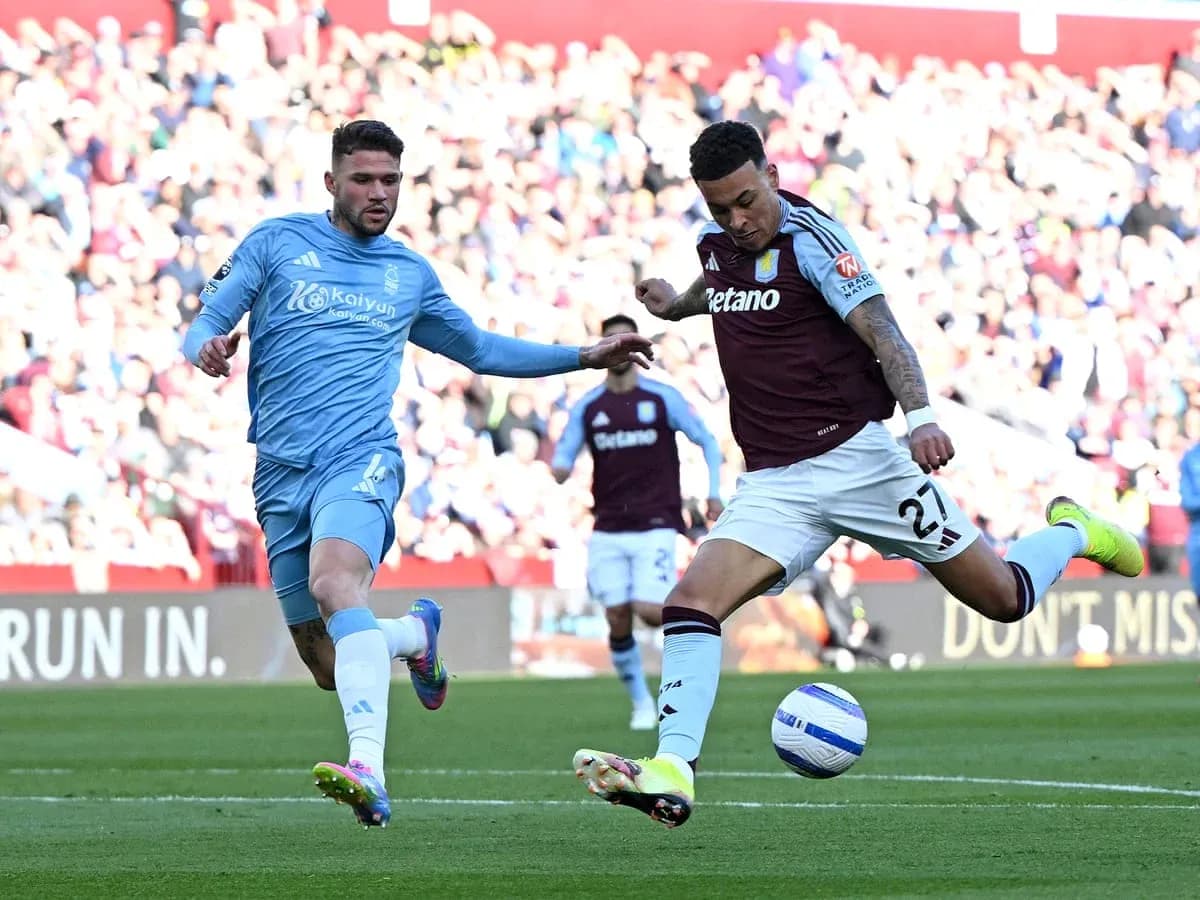
The City Ground played host to a meeting of opposites in the Premier League table, and yet the 1-1 draw between Nottingham Forest and Aston Villa felt entirely in keeping with both sides’ statistical DNA this season.
Forest, 16th with 33 points from 32 matches, have lived on the margins all year: 32 goals scored, 44 conceded, an attack that averages 1.0 goal per game against a defence that gives up 1.4. At home they have been even more cautious and constrained, with just 14 goals in 16 outings. Villa arrived as the Champions League-chasing heavyweight — 4th with 55 points, 43 goals scored and 38 conceded — but also a side whose away numbers (1.3 scored, 1.4 conceded per match) betray more vulnerability on the road than at Villa Park.
The 1-1 at the City Ground did not distort those patterns. Forest again found a way to take something without ever threatening to become a free‑scoring side, while Villa’s away campaign remained defined by narrow margins and a defence that cannot quite shut the door.
The Butterfly Effect: Absences and Structural Shifts
Both managers had to negotiate important absences that shaped the tactical landscape.
For Vitor Pereira, the defensive core has been eroded by injury all season, and here he was again without W. Boly and N. Savona, both sidelined with knee injuries, and John Victor with a similar issue. Cunha’s foot injury removed another option higher up the pitch. The result was a back line anchored by Murillo and Nikola Milenković, with Ola Aina and Neco Williams as the full-backs.
Williams’ presence is significant beyond the teamsheet. He is among the league’s most carded defenders in terms of red cards, with one dismissal to date, and his defensive profile is combative: 81 tackles, 14 blocked opponent attempts and 37 interceptions. Forest’s yellow-card distribution this season peaks between 61-75 minutes (24.00%), with substantial spikes also from 31-45 and 46-60 (both 20.00%). That tells you this is a side that tends to live on the disciplinary edge as games become stretched, and Williams is usually at the heart of that aggression.
Unai Emery’s problems were different but just as consequential. B. Kamara’s knee injury deprived Villa of their primary screening midfielder, while the absence of J. Sancho (shoulder) removed a potential one‑v‑one outlet in wide areas. Alysson’s injury trimmed defensive depth. Emery responded by leaning into physicality in midfield: Amadou Onana and Youri Tielemans flanking John McGinn and Ross Barkley, with Morgan Rogers and Ollie Watkins ahead.
Villa’s own card profile underlines how combustible that midfield can become. They see their highest yellow-card share between 46-60 minutes (26.53%), with notable peaks from 61-75 (18.37%) and 91-105 (16.33%). This is a team that often ramps up the intensity straight after half-time — and occasionally loses control. Their single red card this season has come in the 61-75 window.
Narrative Matchups: The Chessboard Across the Pitch
At the sharp end, this was billed as “The Hunter vs. The Shield” in both directions.
For Forest, Morgan Gibbs-White is the creative and scoring hub. With 9 league goals and 2 assists, 44 key passes and 48 shots (24 on target), he is not just their top scorer but also their primary conduit between midfield and attack. His 286 duels, with 115 won, and 38 fouls drawn underline how much of Forest’s attacking identity flows through his ability to receive under pressure and turn.
Gibbs-White’s task here was to prise open a Villa defence that, over the season, has been solid but not impermeable: 38 goals conceded, including 23 away. Pau Torres and Victor Lindelöf offer composure on the ball but can be exposed when dragged into wide or transitional spaces, especially without Kamara’s cover.
On the other side, Watkins arrived as Villa’s leading scorer with 9 goals and 1 assist, built on 44 shots and 27 on target. His penalty record — no attempts taken, none missed — means all his threat is from open play. Watkins’ movement between the lines is designed to exploit the channels between Forest’s centre-backs and full-backs, particularly when Williams or Aina step out aggressively.
The key duel, though, was in the engine room. Rogers, who sits among the league’s higher-ranked creators with 5 assists and 41 key passes, is Villa’s modern hybrid: part wide forward, part No.10. His 105 dribble attempts (35 successful) show a player constantly probing. Opposite him, Forest rely on Ibrahim Sangaré’s positional discipline and the work of Elliot Anderson to clog central lanes and deny those half-spaces.
Rogers’ yellow-card tally (6) and 39 fouls committed reveal the other side of his influence: he is as likely to stop counters as he is to start them. In a match where Forest’s best route to goal often comes in transition, his ability to tactically foul without tipping into red-zone indiscipline is critical.
From the bench, both managers had genuine game-changers. Pereira could turn to Chris Wood as a classic penalty-box focal point, Dan Ndoye and Dilane Bakwa for direct running, or James McAtee as a late technician between the lines. The substitution vector offers clear tactical pivots: Wood on for Igor Jesus would signal a more direct, crossing-heavy approach; Ndoye or Bakwa for Omari Hutchinson or Callum Hudson-Odoi would tilt Forest towards pure verticality.
Emery’s options were arguably deeper in pure talent. Douglas Luiz and Emiliano Buendía can instantly raise the technical ceiling in midfield, while Leon Bailey and Tammy Abraham offer different profiles in attack: Bailey as a one‑v‑one winger, Abraham as a penalty‑area specialist. A late introduction of Bailey for Morgan Rogers, for instance, would shift Villa from a possession‑based left side to a more direct, dribble-heavy flank.
Statistical Verdict: Why It Ended Level
The underlying numbers point to why this fixture settled at 1-1 rather than tilting decisively either way.
Forest’s season-long profile — low scoring, moderate concession, eight clean sheets split evenly home and away — describes a team that can frustrate but rarely dismantle opponents. They have failed to score in 14 matches to date, including 9 at home, so even managing one goal against a top-four side fits their pattern of scraping rather than surging.
Villa, for all their lofty position, are not a juggernaut on their travels. Twenty goals scored and 23 conceded away, with only three away clean sheets, frame them as an away side that almost always offers the opposition a chance. Their biggest away win is 2-0; they are more grinders than flat‑track bullies on the road.
In that context, a tight match in which Forest’s structured 4-2-3-1 resisted Villa’s layered 4-2-3-1/4-4-2 hybrid is no surprise. The decisive factors were always likely to be:
- Gibbs-White’s ability to dictate Forest’s counters against Villa’s away‑day frailties.
- Watkins and Rogers testing a Forest back line that concedes 1.4 goals per game overall.
- The disciplinary tightrope in the 46-75 minute band, where both teams tend to accumulate cards and risk momentum-swinging incidents.
In the end, neither side managed to fully exploit those danger zones. Forest added another point to a survival campaign built on fine margins; Villa dropped two in a top-four chase that keeps inviting jeopardy away from home. The numbers had warned of a stalemate balanced on detail, and the City Ground delivered exactly that.