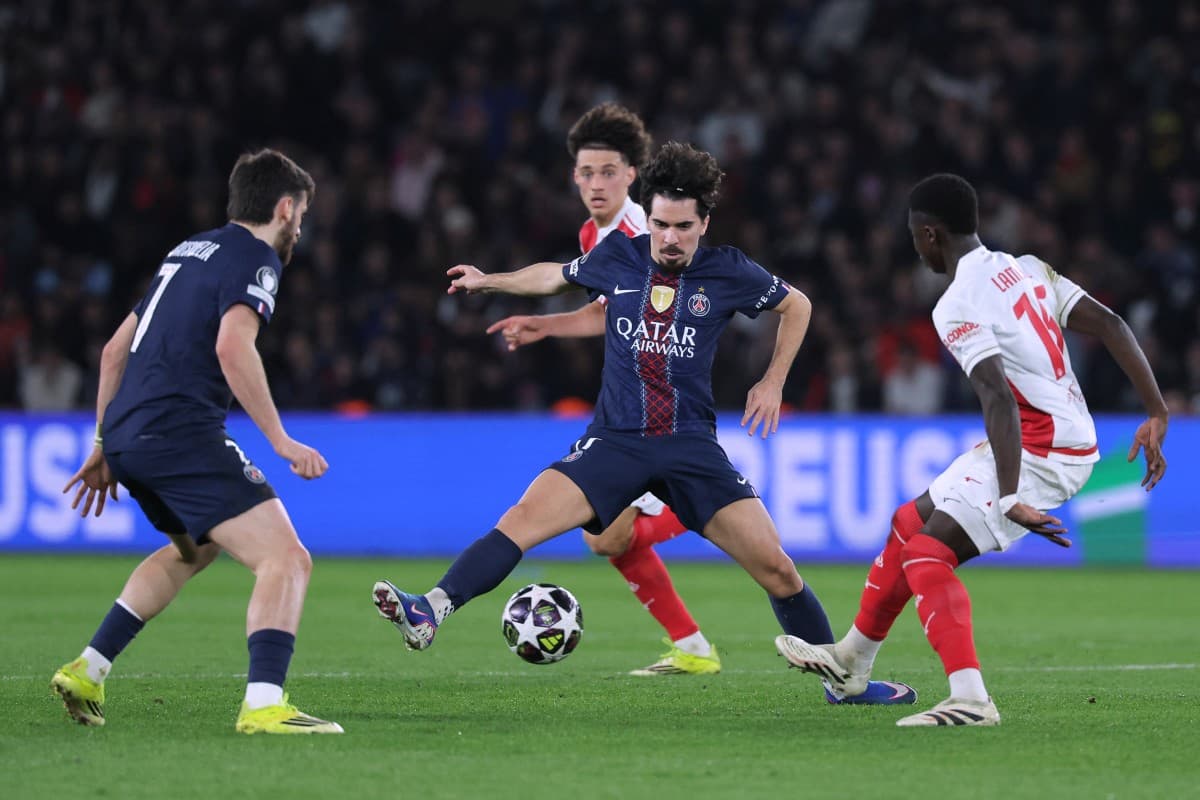
Paris Saint Germain 2–2 Monaco: Late Equalizer Shocks PSG
At Parc des Princes on Wednesday night, Paris Saint Germain let a commanding position slip as ten-man Monaco stole a 2–2 draw in this UEFA Champions League Round of 32 first leg. Istvan Kovacs oversaw a contest that swung dramatically after the break: PSG overturned a half-time deficit and Monaco’s red card to lead 2–1, only for Sebastien Pocognoli’s side to level at the death. The result leaves Enrique Luis’s team, 11th in the overall Champions League standings, still favoured over 21st-placed Monaco, but the tie remains finely poised.
First-half analysis
The opening period was tight and largely attritional, with Monaco’s defensive 3-5-2 structure holding firm against PSG’s 4-3-3. The only disciplinary flashpoint before kick-off came unusually early: Monaco substitute Samuel Nibombe was booked at -5' for unallowed field entering, underlining the tension on the visitors’ bench even before the game officially began.
On the pitch, Denis Zakaria collected Monaco’s first in-game yellow card at 24' for a foul, an early indicator of how much work the visitors’ back line and screening defenders were being asked to do. PSG, despite their attacking trident of Khvicha Kvaratskhelia, Désiré Doué and Bradley Barcola, could not translate territorial pressure into a breakthrough before the interval.
Instead, Monaco struck at the perfect psychological moment. At 45', Maghnes Akliouche finished a move created by Mamadou Coulibaly’s assist, giving Pocognoli’s side a precious 1–0 lead with virtually the last action of the half. For a Monaco team that has conceded heavily in this European campaign, going in ahead at the break in Paris was a significant platform.
Second half & tactical shifts
The second half erupted almost immediately into a story of discipline and momentum. Vanderson was booked for time wasting at 48', a sign Monaco were already trying to manage the clock. Coulibaly then picked up a yellow for a foul at 55', and just three minutes later, at 58', he received a second yellow for another foul, swiftly followed by a red card. Reduced to ten men, Monaco’s carefully constructed game plan was ripped up.
PSG and Enrique Luis capitalised quickly. At 60', captain Marquinhos equalised, converting after an assist from Désiré Doué to make it 1–1 and tilt the entire tie. Just six minutes later, the turnaround was complete: at 66', Kvaratskhelia struck PSG’s second, finishing a move set up by Achraf Hakimi. From 0–1 down, PSG were 2–1 up and facing a ten-man opponent.
Both coaches reacted with a flurry of substitutions. At 62', Pocognoli tried to shore up his defence by withdrawing Aladji Bamba and sending on defender Jordan Teze. Luis then freshened his attack at 69', taking off Barcola for Lee Kang-In, adding creativity between the lines.
Monaco responded with a triple change at 74': Zakaria went off for Christian Mawissa, Folarin Balogun made way for Mika Biereth, and goalscorer Akliouche was replaced by Simon Adingra. The pattern suggested Pocognoli was simultaneously reinforcing his back line and searching for fresh legs up front to chase an equaliser despite the numerical disadvantage.
Luis, seemingly intent on protecting the lead, turned to his bench late on. At 80', Nuno Mendes was replaced by Lucas Hernández at left-back. At 87', Warren Zaïre-Emery came off for Dro Fernández, adding fresh energy in midfield, and a minute later Doué was withdrawn for Gonçalo Ramos, a like-for-like attacking switch that kept PSG’s front line dangerous while offering a more direct focal point.
Deep in stoppage time, PSG’s game management came under scrutiny. Goalkeeper Matvey Safonov was booked for time wasting at 90+5', reflecting an increasingly nervous attempt to see out the win. Monaco, however, had one final twist. At 90', Teze – the defensive substitute introduced at 62' – scored to make it 2–2, a remarkable late intervention that completely changed the narrative of the tie. Even a final substitution at 90+4', with Vanderson going off for S. Nibombe, could not overshadow Teze’s impact.
Statistical deep dive
The numbers underline how harsh the result will feel for PSG. Enrique Luis’s side controlled 73% of the ball and attempted 708 passes with a superb 93% accuracy, compared to Monaco’s 27% possession and 266 passes at 78% accuracy. For long stretches, the hosts dictated where and how the game was played.
In attack, PSG produced 21 total shots to Monaco’s 9, with 6 shots on goal versus Monaco’s 4. The expected goals figures – 2.13 for PSG and 1.16 for Monaco – broadly reflect a game where the hosts generated more and better chances, yet both sides finished with two goals. Monaco’s ability to score twice from relatively limited attacking volume, particularly with ten men, speaks to their clinical edge at key moments.
Discipline was a decisive theme. Monaco committed 12 fouls to PSG’s 8 and collected five yellow cards plus Coulibaly’s red. PSG, by contrast, received only one yellow – Safonov’s late booking for time wasting. Yet it was the side playing with eleven men that failed to close the game out, a reminder that control of territory and discipline do not always guarantee control of the scoreboard.
Standings & implications
PSG remain in a stronger position. They sit 11th in the overall standings on 14 points with a +10 goal difference (21 scored, 11 conceded), firmly in the promotion zone for the 1/16-finals. Monaco, 21st with 10 points and a -6 goal difference (8 scored, 14 conceded), continue to punch above their statistical profile. Their away draw in Paris, especially achieved with ten men for over half an hour, keeps them firmly in contention to progress and adds real intrigue to the second leg.