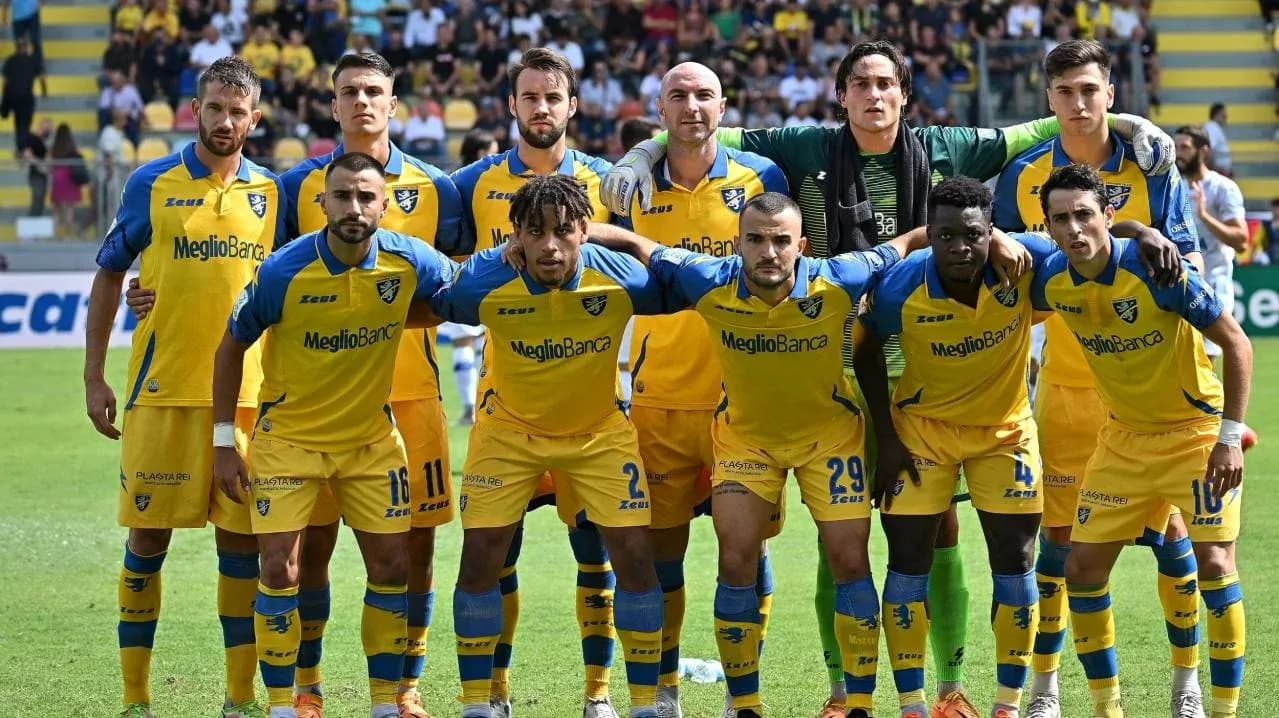
Pisa vs Genoa: Tactical Analysis of a 2–1 Defeat
Pisa’s 2–1 home defeat to Genoa at Arena Garibaldi – Stadio Romeo Anconetani unfolded as a contest defined by structural contrast: Pisa’s 3-4-2-1 trying to compress the game vertically against Genoa’s more balanced 3-4-1-2, which gradually asserted control through superior possession, cleaner progression and more efficient penalty-box play. Despite leading early and matching Genoa for shots inside the box (9–9), Pisa’s inability to sustain pressure and their higher foul count (21 to 16) underlined a reactive, increasingly stretched second-half performance that the visitors exploited with a decisive penalty and then game-state management.
The scoring opened on 19' with a classic set-piece-style centre-back goal that reflected Pisa’s early directness. From the left side, wing-back S. Angori (shirt 3) delivered a targeted ball that found S. Canestrelli (5) attacking the space aggressively. The defender’s finish for 1–0 rewarded Pisa’s willingness to commit their back line forward and exploit Genoa’s zonal gaps in the first phase.
Genoa’s equaliser at 41' was more in line with their positional structure. Operating behind the front two in the 3-4-1-2, T. Baldanzi (8) found a pocket between Pisa’s midfield and defensive lines, then released J. Ekhator (21) with a vertical pass that exposed the outside shoulder of Pisa’s back three. Ekhator’s composed finish for 1–1 highlighted Genoa’s capacity to play through rather than around Pisa’s block.
The match pivoted at 55', when Genoa earned and converted a penalty. Centre-forward L. Colombo (29) stepped up and scored from the spot for 1–2, a moment that crystallised Genoa’s increasing territorial dominance after the interval. From that point on, Pisa’s structural tweaks and substitutions aimed to inject energy and attacking variance, but Genoa’s defensive line, anchored by L. Ostigard (5), held firm.
Disciplinary dynamics reflected Pisa’s growing frustration. The first yellow card came at 32', when Arturo Calabresi (33) was booked for a foul, signalling the physical edge Pisa were willing to bring to disrupt Genoa’s rhythm. Genoa’s only booking arrived on 67', as Leo Østigård (5) received a yellow card for a foul, a rare instance where Genoa’s back three were caught reacting late to Pisa’s forward movements. Pisa then collected two more cautions late on: Michel Aebischer (20) was booked for a foul on 80', and Antonio Caracciolo (4) followed on 87', again for a foul. The 3–1 yellow card split mirrors Pisa’s more desperate defending in transition and around their own box as they chased the game.
Both coaches leaned heavily into their benches to reshape the tactical picture once the score turned. For Pisa, the first structural shift came at 56', immediately after going behind: H. Meister (9) (IN) came on for F. Loyola (35) (OUT), signalling a desire for a more mobile and possibly more penalty-area-focused forward presence ahead of S. Moreo (32). At 61', Oscar Hiljemark made a double change to re-energise the right side and central lanes: J. Cuadrado (11) (IN) replaced E. Akinsanmiro (14) (OUT), adding experienced ball-carrying and crossing threat, while I. Vural (21) (IN) came on for A. Calabresi (33) (OUT), refreshing the right defensive flank and potentially pushing Pisa into a more aggressive wing-back orientation.
On 70', Pisa further tilted the structure toward attack. G. Piccinini (36) (IN) replaced I. Toure (15) (OUT), adding fresh legs and likely more vertical running from midfield, and R. Durosinmi (17) (IN) came on for M. Tramoni (10) (OUT), introducing another forward profile to crowd Genoa’s back line. Functionally, Pisa’s 3-4-2-1 morphed into a more fluid, striker-heavy shape, with multiple players occupying the last line and wing-backs tasked with sustained high positioning.
Daniele De Rossi’s response from the Genoa bench was more about maintaining control than chasing additional goals. On 65', he made a double substitution in the attacking band: Junior Messias (10) (IN) came on for T. Baldanzi (8) (OUT), swapping a classic No. 10 for a more direct, dribble-oriented forward-midfielder, while J. Onana (14) (IN) replaced J. Ekhator (21) (OUT), adding more defensive work rate and ball-winning from the front. These changes helped Genoa better protect central zones and threaten in transition.
At 78', Vitinha (9) (IN) came on for Amorim (4) (OUT), further rebalancing Genoa from a midfield-heavy to a more forward-oriented configuration, ideal for counter-attacking against a stretched Pisa. One minute later, on 79', C. Ekuban (18) (IN) replaced Colombo (29) (OUT), preserving Genoa’s ability to run the channels and hold up play while resting the penalty scorer. Finally, on 86', S. Otoa (34) (IN) came on for S. Sabelli (20) (OUT), a late defensive refresh to protect the flanks and manage the closing stages.
In goal, both keepers were solid rather than spectacular. Pisa’s A. Semper (1) registered 3 saves, matching Genoa’s J. Bijlow (16), who also recorded 3 saves. With Pisa conceding 2 goals from an expected goals figure of 1.65 for Genoa, and Genoa conceding 1 from Pisa’s xG of 1.07, the “goals prevented” metric at 0 for both sides aligns with the eye-test of a match where finishing and penalty conversion, rather than extraordinary goalkeeping, determined the scoreline.
Statistically, Genoa’s 56% possession to Pisa’s 44% reflects the visitors’ superior control, especially after the equaliser. Total shots were close (13–12 in Genoa’s favour), and shots inside the box were level (9–9), but Genoa’s slightly higher xG (1.65 vs 1.07) indicates better shot quality and more dangerous central occupation. Passing data reinforces the territorial pattern: Genoa completed 326 of 405 passes (80% accuracy), while Pisa completed 250 of 315 (79%), but Pisa’s higher foul count (21 to 16) and three yellow cards suggest that much of their defensive work came in emergency situations.
Overall, Pisa’s structure gave them an early platform and a set-piece-style advantage, but Genoa’s 3-4-1-2, anchored by a disciplined back three and a flexible attacking trident, gradually imposed itself. The penalty at 55' was the logical outcome of that territorial and qualitative edge, and from there Genoa managed the game-state with intelligent substitutions and compact defending, closing out a 2–1 away win that the underlying numbers fully support.