Premier League 2026/27: A Tactical Reset Without Guardiola
The Premier League is back this weekend, and for once it doesn’t feel like just another season. It feels like a reset.
Chelsea, Liverpool and Manchester City all arrive with new head coaches and radically different ideas about how the game should be played. Pressing, control, domination – three big clubs, three distinct blueprints. For the tactics obsessives, this campaign promises to be a laboratory.
There’s a neat symmetry to it all. The last time the league felt this charged by managerial change was 2016/17, when Pep Guardiola walked into Manchester City, Jose Mourinho took over at Manchester United and Antonio Conte landed at Chelsea. That season altered the league’s trajectory.
This one might define the next decade.
Life after Pep
For the first time in 10 years, the Premier League kicks off without Guardiola on the touchline. His numbers at City are absurd: six titles from 10 attempts, a 60% win rate, and a seven-year stretch in which he collected six league trophies, including an unprecedented four in a row between 2021 and 2024.
He didn’t just win. He bent the competition around his ideas.
Rivals spent a decade trying to solve a Guardiola problem that has finally disappeared. Six titles in seven years is the sort of dominance that leaves scar tissue. His departure changes everything – psychologically as much as tactically. For the first time in a long time, the title race does not begin with one obvious favourite in sky blue.
The throne is empty. Someone is going to grab it.
Arsenal: the team to beat, and to test
Right now, that someone looks like Arsenal.
Mikel Arteta’s side enter as defending champions, and crucially, as the most settled of the traditional top six. The squad is stable, the patterns of play are ingrained, and while others scramble to install new systems, Arsenal can largely pick up where they left off.
Their 3-0 dismantling of Enzo Maresca’s Manchester City in the Community Shield underlined the point. It wasn’t frantic, it wasn’t emotional. Arsenal barely moved out of second gear and still brushed aside last season’s runners-up. That performance didn’t just send a message; it confirmed a reality. They know exactly who they are.
But the picture is not flawless. The 2026 World Cup lingers over this season like a shadow. Players are returning with miles in their legs and fatigue in their muscles. William Saliba and Jurrien Timber are already ruled out for the start of the campaign, and the rest of the squad has to be managed with care.
That is where the story might twist.
Arsenal’s depth will be tested, and Arteta has another obsession to balance: the UEFA Champions League. They were a penalty shootout away from lifting it last season, losing agonisingly to PSG in the final. That kind of defeat doesn’t fade. It burns. It shapes decisions.
If the title race starts to squeeze the squad, Arteta may decide the moment has come to chase the one trophy the club has never won. Arsenal have never been European champions. That hunger could tilt priorities when the schedule tightens.
The lurking threat of the “free” weeks
While Arsenal juggle domestic and European demands, two London clubs sit quietly in the weeds with a different kind of advantage.
Chelsea under Xabi Alonso and Tottenham under Roberto De Zerbi have no European football to worry about. No midweek flights, no Thursday night away days, no need to rotate half a team every three days. For two coaches defined by detailed, philosophical work on the training ground, that is gold dust.
They can drill, refine and repeat. They can live on the training pitch.
Chelsea know this script well. The last time they won the Premier League, in 2016/17 under Antonio Conte, they had just finished 10th and were free of European distractions. Conte turned that blank midweek calendar into a weapon and stormed to the title.
A decade on, Alonso steps into an eerily similar scene. Chelsea have just finished 10th again. They are out of Europe again. They have a coach with a clear, possession-based identity and time to implement it.
This doesn’t guarantee a title charge. But it does remove excuses. Chelsea have been here before and squeezed every drop from the situation. If the pieces fall into place, nobody at Stamford Bridge will be surprised if history rhymes.
Tottenham, meanwhile, will feel the same pull. De Zerbi’s football demands structure and repetition. He now gets both without the chaos of European travel. For two ambitious projects, the calendar might be their biggest signing.
A league in tactical transition
The managers are new, but the tactical backdrop is already shifting. Last season, the Premier League felt like it had entered a new phase.
Direct football surged back into fashion. Teams became far more comfortable skipping the first phase of the press instead of insisting on playing through it. Goalkeepers went long more often. Attacks became more vertical. Coaches started to accept that losing the possession battle didn’t mean losing control of the game.
Man-oriented pressing drove that change. With defenders tightly matching up and pressing high, short build-up from the goalkeeper became a risk rather than a virtue. One bad touch, one sloppy angle, and the whole structure collapsed. The simplest solution was to go over it.
The numbers tell the story. The league averaged around 713 completed passes per match last season – down 4.68% from 2024/25 and 8.59% from the record high two years earlier. Teams weren’t chasing sterile domination any more. They wanted efficient possession, not endless possession.
That shift revived a figure some had already tried to write out of the modern game: the traditional centre-forward.
The return of the number nine
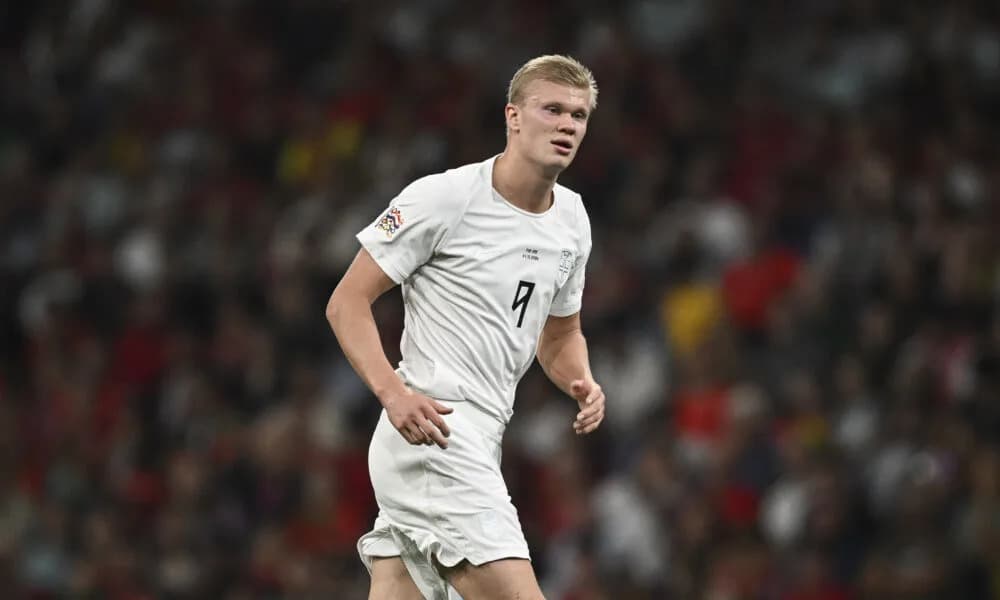
Erling Haaland remained the benchmark, a one-man cheat code for direct attacks and penalty-box finishing. But he wasn’t alone. Igor Thiago, Dominic Calvert-Lewin, Danny Welbeck and others thrived in more old-school striker roles.
It wasn’t just about goals. These forwards became structural solutions. They gave goalkeepers a long option. They pinned centre-backs. They occupied the box. They turned hopeful clearances into platforms. They became key targets at set pieces.
At one stage last season, 21.3% of Premier League goals had come from headers after 11 matchweeks. The previous season’s figure at that point was 15.6%. That is not a small tactical wrinkle. That is a league-wide recalibration.
If the last decade was built around false nines and fluid front threes, the new era looks ready to be led by big, brutal, penalty-box specialists again.
Set pieces: from restart to weapon
The dead ball also came alive.
Set pieces – corners, free kicks, long throws, deep throw-ins – were treated less like restarts and more like choreographed attacking phases. Teams poured time into routines, screens and blocks. They hunted marginal gains and found them.
Long throws became a particular obsession. Opta recorded 14 goals from long throws in 2024/25, the highest total since records began. That spike changed behaviour. By the start of 2025/26, Premier League teams were averaging 3.03 long throws into the opposition box per game, almost double the highest rate of the previous decade.
Every touchline became a chance to launch chaos into the area. Centre-backs had to defend wrestling matches as much as crosses. Goalkeepers had to fight through traffic. Coaches built mini playbooks just for throw-ins.
Those trends – direct play, man-oriented pressing, set-piece aggression – defined last season. They will not just vanish because a few new managers have arrived.
The next tactical arms race
So the real question for 2026/27 is not whether those patterns survive. They will. The question is who solves them first.
How do you disarm man-oriented pressing without simply lumping it long? How do you control games in a league that is increasingly happy to bypass midfield? How do you defend against sides that treat every throw-in like a corner?
This is where the new generation comes in. Alonso at Chelsea. Andoni Iraola. Maresca at City. De Zerbi at Spurs. Arteta at Arsenal now elevated from the apprentice era into the role of benchmark. They all arrive with strong ideas about structure, pressing, build-up and control.
But they are stepping into a league that has tilted towards chaos, directness and dead-ball brutality.
Guardiola once dragged the Premier League towards his vision of positional play and relentless control. With him gone, the stage is open. The next tactical era is up for grabs.
By the time this season ends, we may know which philosophy will define the next chapter – and which clubs are ready to live with the consequences.