Premier League Trophy: A Weighty Symbol of Success
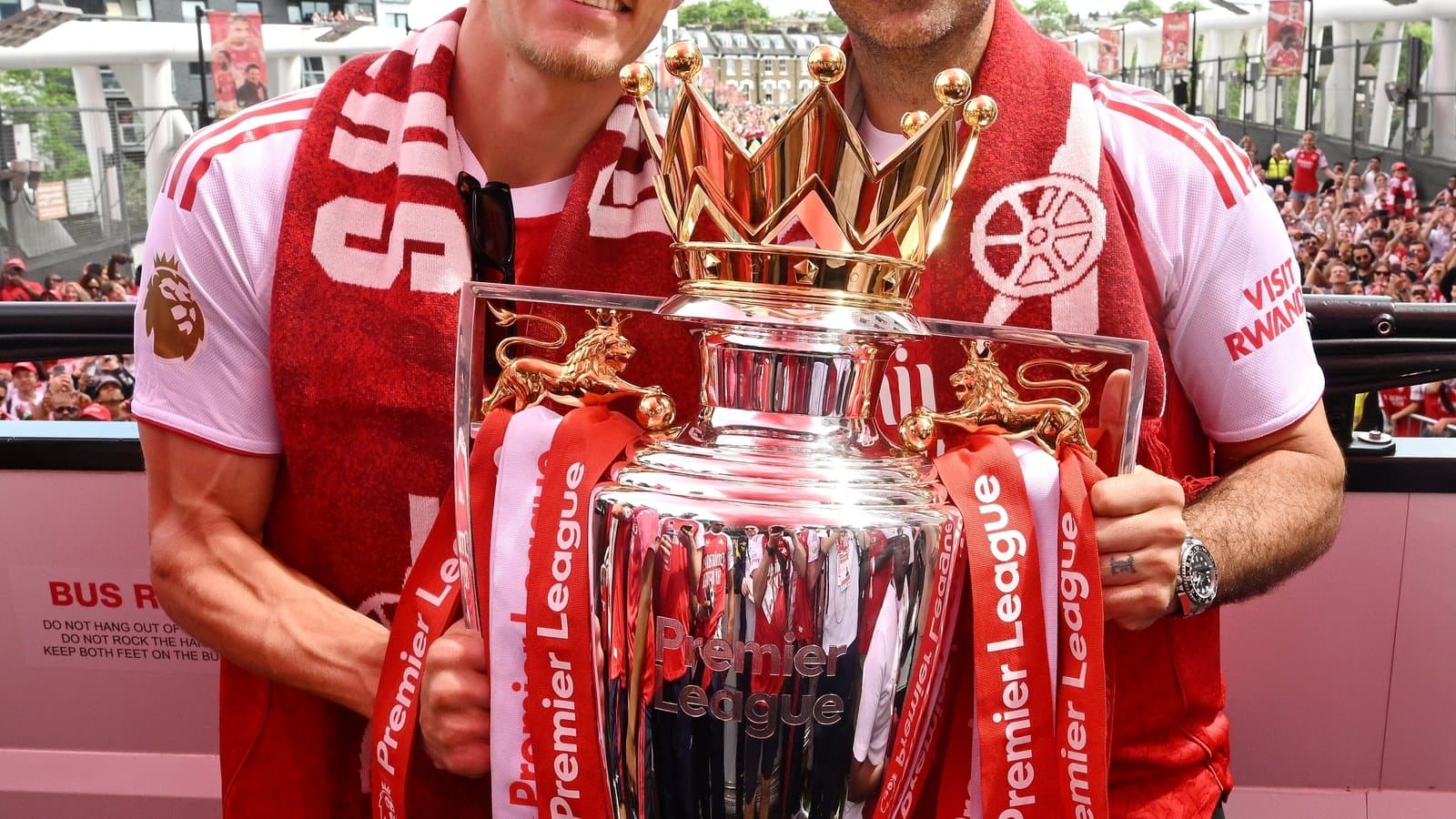
The Premier League trophy finally belongs to them again, 22 long years after they last finished on top of English football. At Selhurst Park last month, under a sky heavy with noise and colour, Martin Ødegaard raised the silver crown above his head and let the away end drink it in. The scenes that followed – the open-top bus, the streets jammed with red, the trophy glinting above a sea of phones and flags – sealed it. Champions, at last.
Now the trophy sits in their cabinet, no longer a distant ambition but a very real, very weighty piece of metal. And weighty is the word.
A trophy that really makes you earn it
Every player wanted their turn with it, of course. Every photo, every selfie, every slow walk back to the dressing room came with the same centrepiece: a 9.5kg chunk of Premier League history. That’s 1.4 stone in old money – enough to feel in your forearms after a few minutes of posing.
Add the engraved base, though, and the numbers jump. Fully assembled, the trophy and base together come in at 25.4kg, or 4 stone. No wonder captains often grip it with both hands and brace themselves before that famous lift. It doesn’t just look substantial. It is.
Built to dominate the room
Up close, the trophy’s size is just as striking as its weight. From the bottom of the engraved base to the very tip of the crown, it stands 104cm tall – around 3ft 5in. It’s 61cm wide, roughly 2ft across, giving it a presence that fills a table, a dressing room, a bus parade.
What many supporters don’t realise is that there are actually two identical Premier League trophies. Both carry the roll call of champions around the base, both are indistinguishable in design. One lives with the reigning champions during the season. The other stays with the Premier League, ready for official duties and, when needed, the decisive presentation on the final day.
The materials of a modern crown
Look down to the base and you find the story of the competition etched in metal. Every champion since 1993 is there, the list running all the way through to the new name carved in for 2025/26.
That base sits on Malachite, a semi-precious stone sourced from Africa. Its deep green band around the bottom isn’t just decoration; it symbolises the pitch itself, the field of play on which every title is won and lost.
The main body of the trophy is the work of Asprey London, the Crown Jewellers. Cast from solid sterling silver, it carries a polish and sharpness that television cameras love and players recognise instantly. At the top, the crowns are made from 24-carat silver gilt, adding a regal finish to what is already the most coveted piece of silverware in the English game.
The design follows a clear theme: “The Three Lions of English Football”. Two golden lions stand proud on either side of the trophy. The third? That’s the captain, arms locked around the handles, lifting the title into the air as the final lion of the set. It’s a small detail, but on days like Selhurst Park, it turns a design concept into a living image.
How long does the dream stay on the shelf?
For now, one of the two trophies is theirs to display, to tour, to photograph with every squad member and staffer who played a part in the season. It will be in dressing rooms, on plinths, in reception areas and media shoots – the permanent reminder of a campaign that ended exactly where they wanted it to.
But it is never truly permanent. By rule, the champions must hand their trophy back to the Premier League at least three weeks before the final league match of the following season. At that point, it’s prepared for whatever drama the next campaign brings – cleaned, checked, ready to be lifted again, by them or by someone determined to take their crown.
The metal stays the same. The names around its base do not.