Premier League Weekend Preview: Key Storylines and Player Updates
The Premier League steps back into the spotlight this weekend, but the game’s storylines are scattered far beyond England’s touchlines.
In South Korea, the fallout from a dismal World Cup has rolled on into an autumn of discontent. Coach Hong Myung-bo has gone. KFA president Chung Mong-gyu has gone. Both men have faced questions from parliament, and police have even raided the federation’s offices. It is not just a crisis; it is a reckoning.
At the centre of it all stands Son Heung-min. Or at least he used to. The captain, the star, the guaranteed starter – that status no longer feels untouchable. Debate around the former Spurs forward has shifted from how to build a team around him to whether he should start at all. A conversation that once sounded outrageous now feels uncomfortably current.
Back in England, the weekend narrative takes on a different shape.
Bruno Fernandes owes Manchester United a performance. That sense hangs over Old Trafford like a challenge and a warning. United’s captain has the armband, the talent and the responsibility, and the expectation is that he finally stitches those elements together in a game that matters.
In north London, Mathys Tel has walked through the doors at Spurs and immediately changed the tone. His arrival offers energy and edge to an attack that has occasionally looked too polite. Liverpool, meanwhile, are quietly tightening up, their improvement less about noise and more about a team rediscovering its structure and bite. All three threads feed into the list of things to watch in the Premier League this weekend.
Beyond the domestic build-up, another battle over equality is unfolding. Fifa will fall short of its own ambition on Women’s World Cup prize money. Despite generating a record $15bn (£11.2bn) in revenue from this summer’s men’s World Cup, the governing body will not deliver gender parity for the 2027 tournament.
Gianni Infantino had set the bar in 2023, talking about “equality” for the prize pot and insisting Fifa was acting, not just talking. Those words fuelled genuine hope across the women’s game that 2027 would at least match the men’s competition on a per-team basis. That hope has been checked. The money, and the message, still lag behind.
Team news, though, keeps rolling in and reshaping the weekend.
At Bournemouth, Junior Kroupi remains a long-term project rather than an instant solution. The French forward, highly rated and finally back from a foot injury that wiped out his first three months of the season, has been eased in with late cameos – first in the 3-0 win over Manchester United, then in the Carabao Cup victory over Aston Villa.
Marco Rose is in no mood to rush him. The manager wants minutes built gradually, fitness layered carefully, risk kept low. Kroupi must wait, and Bournemouth will hope patience now prevents a repeat of the lay-off that stalled his start. Alex Scott stays sidelined with a thigh problem but could return next week, another piece of the Cherries’ evolving puzzle.
Brighton, still smarting from their Carabao Cup exit on penalties at the Etihad, head straight back to Manchester City hunting payback. This time it is the league, not the cup, but the memory of midweek will sting.
Fabian Hurzeler expects to have Chema Andres and Ferdi Kadioglu back after hip injuries kept them out of that shootout defeat. Charalampos Kostoulas, rested in midweek, should also be available. The Seagulls, then, travel with more options and a sharper edge. One key absentee remains: Pascal Struijk is ruled out with an undisclosed knock, though Brighton are optimistic he will not be missing for long.
Africa, meanwhile, has redrawn its calendar.
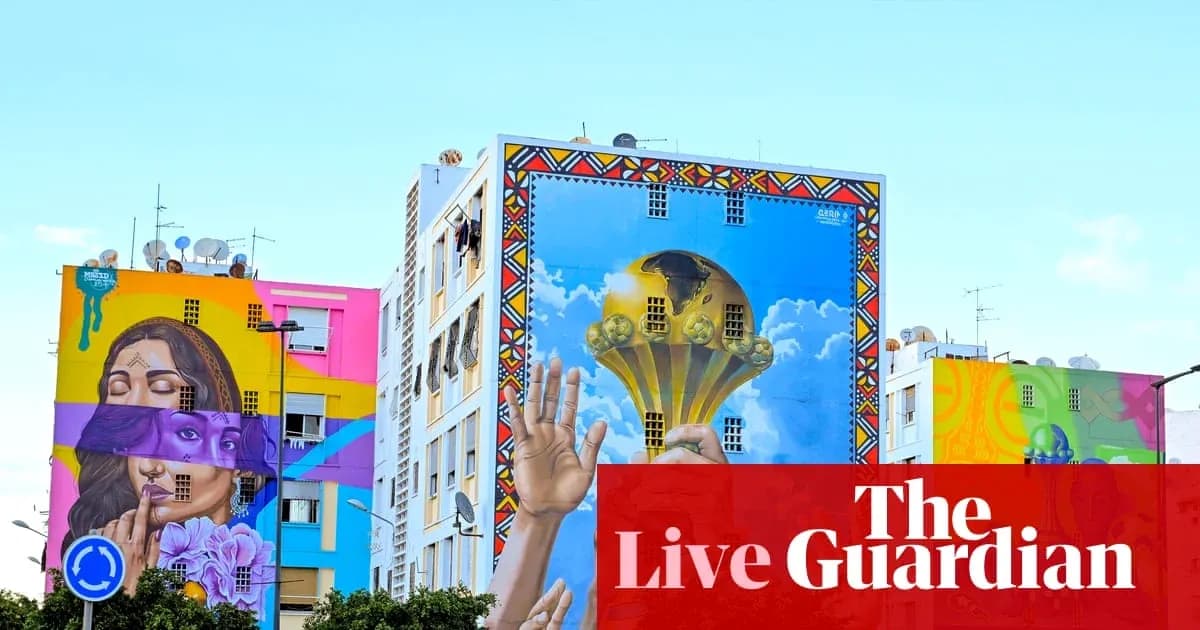
The Africa Cup of Nations will return to a two-year cycle, Caf confirming a U-turn on last year’s decision to switch to a four-year rhythm. The reasoning is blunt: money and development. The planned replacement, the Africa Nations League Pan-African Competition, would have taken years to become financially viable and deliver the kind of funding and competitive structure Caf believes African football needs.
Patrice Motsepe, the Caf president, made it clear that the confederation could not wait that long. Afcon every two years, he argued, better serves both the game and the organisation’s financial health. The move is framed as being in the interests of African players employed by clubs outside the continent, yet it will test the patience of those very clubs, who now face losing key players every two years instead of four.
Next year’s Afcon will be co-hosted by Kenya, Tanzania and Uganda. The following tournaments are scheduled for 2028, 2031 and 2033. The three-year gap between 2028 and 2031 is designed to clear space for the 2030 Fifa World Cup, in line with the long-standing convention that continental championships do not clash with the global showpiece.
In the women’s game, Manchester City’s European campaign has grown complicated. A late strike from Tara Elimbi Gilbert handed City a third straight draw in the Women’s Champions League league phase. The English champions dominated but failed to kill the contest; they were punished. Now they probably need to win all three of their remaining group matches to avoid the so-called “punishment round” – the February play-offs that lie in wait for those who stumble.
Manager Andrée Jeglertz summed up the mood with a mix of frustration and realism. City had the chances. They did not take them. In this competition, that usually carries a price.
And then there is the Carabao Cup, which closed its latest chapter last night and opened a few more wounds.
Everton beat a poor Newcastle side to reach the quarter-finals, and they did it without Jack Grealish. The England international was dropped for what the club labelled a breach of discipline. David Moyes backed the decision, offered no detail, and left the intrigue hanging in the air. Everton now travel to Newcastle on Monday night. Whether Grealish travels with them will be one of the stories of the round.
At Old Trafford, the drama is of a different flavour. Michael Carrick delivered a six-minute monologue last Friday. His Manchester United side then collapsed at home to Bournemouth. Carrick remains in place, the pressure cranking up as United prepare for a trip to Chelsea that used to feel like a defining clash in the top-four race. It still matters, but the sheen has dulled, the stakes tinged with a hint of melancholy.
Across the country, managers step up to their pre-match press conferences, shape the narrative and shade in the weekend’s talking points. Injuries, returns, tactical hints, veiled frustrations – all of it feeds into the next 90 minutes.
The cups have had their say. Europe has issued its warnings. Governance battles rage on in Zurich, Cairo and Seoul. Now the league takes centre stage again.
What happens over the next few days will not just decide points. It will decide who walks into November with momentum – and who walks in answering questions they hoped not to hear.